


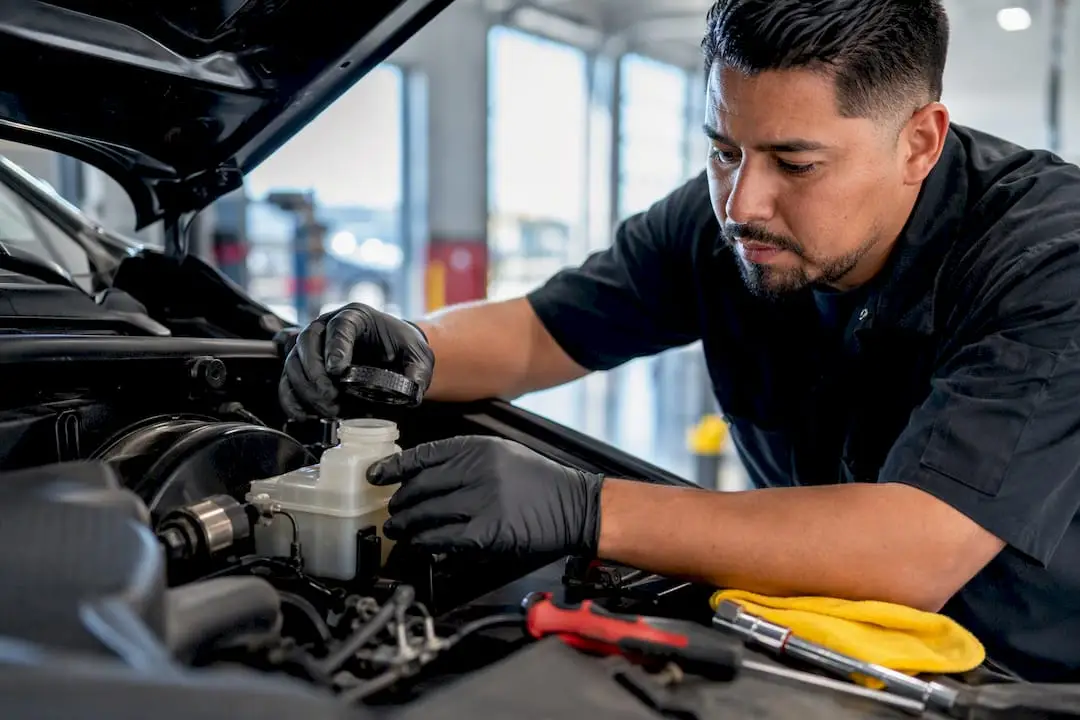
A spongy pedal, dark fluid, or a flickering ABS light means the same thing: treat it as urgent. If your vehicle has ABS or complex electronics and you’re not confident testing it yourself, professional service is the safer call.
TL;DR:
- A brake fluid flush replaces all fluid in the system, including trapped old fluid in ABS modules, unlike bleeding which only removes air bubbles from one wheel.
- Moisture content above 3% in brake fluid reduces its boiling point, causing brake fade and corrosion; testing moisture with strips or a device is more reliable than visual checks.
- Most vehicles require a brake fluid change every two years, but high-humidity areas or aggressive driving may demand more frequent or condition-based testing.
- Professional flush costs typically range from $100 to $200 and include moisture testing, ABS valve cycling, and a warranty; DIY costs are lower but less thorough.
- Proper home flushing involves confirming fluid type, protecting the vehicle, bleeding each wheel correctly, and avoiding reservoir dryness; professional service ensures complete fluid exchange and component protection.
Table of Contents
- What Is a Brake Fluid Flush, and How Is It Different From Bleeding?
- Why Does Brake Fluid Go Bad, and What Are the Warning Signs?
- How Often Should You Change Brake Fluid?
- How Much Does a Brake Fluid Flush Cost?
- How Do You Flush Brake Fluid Safely at Home?
- What Should You Expect From a Professional Shop?
- Why We Treat Brake Fluid Like a Safety System, Not an Upsell
- Get Your Brake Fluid Checked the Right Way
- Sources
- FAQ
What Is a Brake Fluid Flush, and How Is It Different From Bleeding?
A brake fluid flush replaces every drop of fluid in your brake system, from the master cylinder down to all four calipers. Bleeding, on the other hand, only removes air bubbles or a small amount of fluid at one wheel, usually right after a repair like a caliper or line replacement.
We rely on pressure or vacuum equipment to push fresh fluid through the entire system during a proper flush, and on vehicles with ABS, we cycle the valves with a scan tool so old fluid trapped inside the module actually gets pushed out. Skipping that step leaves contaminated fluid sitting where you can’t see it.
Here’s why topping off the reservoir never solves the real problem:
- Adding fresh fluid to old fluid just dilutes contamination, it doesn’t remove it.
- Moisture and corrosion collect at the lowest points in the system, far from the reservoir.
- ABS modules can hold old fluid that a simple top-off never reaches.
Why Does Brake Fluid Go Bad, and What Are the Warning Signs?
Brake fluid is hygroscopic, meaning it pulls moisture out of the air through microscopic seams in your brake lines, hoses, and reservoir cap. That absorbed water lowers the fluid’s boiling point and speeds up rust inside steel lines and calipers, which is exactly the kind of damage you can’t see from the driver’s seat.
Moisture content above 3% is the commonly cited threshold where fluid stops protecting your brakes reliably. Past that point, boiling point drops enough that hard braking on a mountain grade or in stop-and-go traffic can cause fade, where the pedal sinks toward the floor and stopping power fades away.
Watch for these signs that your fluid has crossed the line:
- A spongy or sinking brake pedal, especially after repeated braking.
- Fluid that looks dark brown or black instead of clear to light amber.
- An ABS or brake warning light that comes on without an obvious cause.
- Inconsistent stopping, where the car pulls or grabs unevenly.
A visual check alone won’t catch everything, since fluid can look fine while moisture content is already dangerous. That’s why we recommend test strips or a digital moisture tester rather than eyeballing it through the reservoir window.
How Often Should You Change Brake Fluid?
Some European brands specify a strict two year interval regardless of mileage, so your owner’s manual is the final word for your specific car.
That schedule shifts depending on how and where you drive:
- Humid climates accelerate moisture absorption, so shorten the interval if you live somewhere with high humidity or coastal air.
- Frequent towing or mountain driving generates more brake heat, which stresses fluid faster than city commuting.
- Track days or aggressive driving call for annual checks at minimum.
If you’d rather not guess, a moisture test turns this into condition-based maintenance instead of a calendar guess. Test once a year starting at the two year mark, and you’ll know exactly when a flush is due instead of relying on averages.
How Much Does a Brake Fluid Flush Cost?
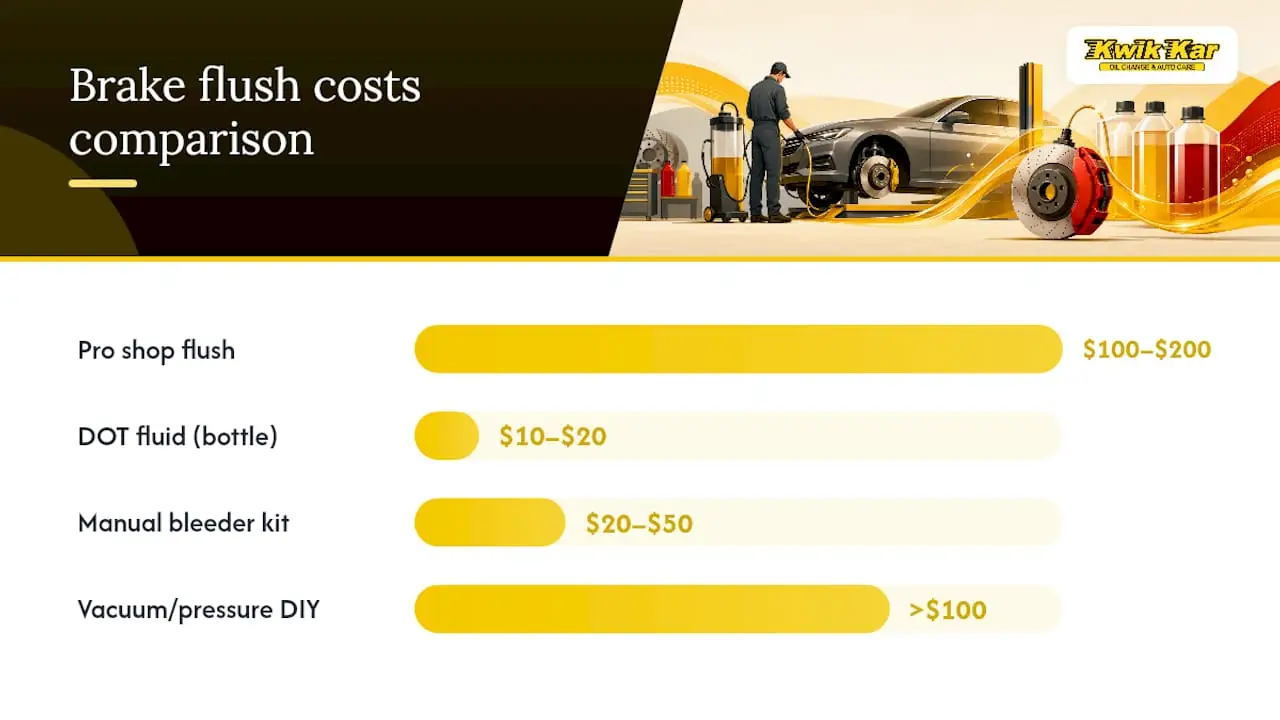
A professional brake fluid flush cost typically runs between $100 and $200, depending on your vehicle, region, and whether the system needs extra labor for ABS cycling. Trucks and vehicles with more complex hydraulic systems tend to land at the higher end of that range.
DIY costs less on paper, but the gap is smaller than most people expect; for detailed tips, see our guide to Грижи за колата с малко разходи.
- Fresh DOT brake fluid alone runs roughly $10 to $20 per bottle.
- A basic manual bleeder kit adds another $20 to $50.
- A one-man vacuum or pressure bleeder can push total DIY cost past $100.
The value in paying a shop isn’t just labor. Machine exchange and ABS valve cycling remove old fluid more completely than a manual bleed, and a shop backs the job with a warranty, something a DIY flush can’t offer if something goes wrong down the line.
How Do You Flush Brake Fluid Safely at Home?
If your vehicle has a simple, non-ABS system or you’re comfortable working around one that does, here’s the general sequence competent DIYers follow. This isn’t a substitute for your vehicle’s specific service manual, but it gives you a realistic sense of what’s involved before you commit.
- Confirm your fluid type. Check the reservoir cap or owner’s manual for DOT 3, DOT 4, or DOT 5.1. Never mix fluid types, and never substitute DOT 5 silicone fluid into a system designed for glycol based fluid.
- Gear up and protect the car. Wear gloves and eye protection, and lay rags around the reservoir and each caliper. Brake fluid etches clear coat within minutes, so keep water on hand for immediate rinsing if you spill any.
- Draw out the old reservoir fluid with a turkey baster or syringe, then refill with fresh fluid.
- Bleed each wheel in your manufacturer’s specified sequence, usually starting with the wheel farthest from the master cylinder, until the fluid running out is clear and free of bubbles.
- Top off and test. Refill the reservoir to the fill line, then pump the pedal and check for firm, consistent resistance before driving.
Pro Tip: Never let the reservoir run dry during a flush. Air that gets pulled into the lines means starting the bleed sequence over at every wheel, which is the single most common DIY mistake.
Dispose of used brake fluid at an auto parts store or hazardous waste facility, never down a drain. If you hit a wheel that won’t bleed clear, or your car has ABS and stability control you’re not confident cycling, that’s the moment to call a professional shop instead of pushing through.
What Should You Expect From a Professional Shop?
A properly done professional flush starts with a fluid test, not a guess. A trustworthy shop measures moisture content, then performs a full machine exchange or pressure and vacuum bleed at every wheel, cycling the ABS valves with a scan tool if your vehicle has them. That last step matters more than most drivers realize, since manual bleeding can leave old fluid trapped in the ABS module even when every wheel looks clear.
Look for these signals that a shop takes brake work seriously:
- ASE certified technicians on staff, not just quick-lube attendants.
- A digital inspection report showing fluid condition, not just a checkbox on an invoice.
- A clear, itemized invoice describing exactly what was tested and replaced.
- A written warranty on the service.
Red flags go the other direction. Be cautious of a shop that only tops off the reservoir, skips the moisture test entirely, or gives vague answers when you ask whether they cycle ABS valves on vehicles that have them. Our brake repair page walks through what a full inspection covers if you want to see the broader picture before booking anything.
Why We Treat Brake Fluid Like a Safety System, Not an Upsell
Brake fluid gets dismissed as a minor maintenance item more often than almost any other service we perform, and that’s backwards. It’s the one fluid in your car that directly determines how quickly you stop, and by the time a pedal feels spongy, the fluid has usually been degraded for months already.
Our ASE certified technicians test moisture content before recommending a flush, not after guessing from mileage alone. We document that reading, along with the rest of the vehicle’s condition, in a digital inspection report so you can see exactly why a service is being recommended instead of taking our word for it. Every brake fluid service we perform is backed by our 2 year, 24,000 mile warranty, because we’d rather stand behind the work than sell you something we’re not confident in.
— Kwik Kar
Get Your Brake Fluid Checked the Right Way
A professional flush includes a moisture test before the work begins, a full machine exchange with ABS cycling where the vehicle needs it, and warranty backing the work. This combination matters most on modern vehicles where trapped fluid in an ABS module is invisible until it causes a problem.
If your fluid is testing high, your pedal feels soft, or you simply can’t remember your last flush, that’s reason enough to get it looked at rather than wait for a warning light. Our general auto repair services cover brake fluid testing alongside the rest of your vehicle’s maintenance needs, so one visit can confirm whether your brakes need attention or just a clean bill of health. Drivers with European vehicles can also check our European repair services for manufacturer-specific fluid requirements. Schedule a visit and we’ll test your fluid on the spot, show you the results, and explain exactly what your car needs before any work begins.
Sources
- How to flush brake fluid | NAPA Know How
- Your brake fluid is breaking down: Why a flush isn’t just an ‘upsell’ — HowToGeek
- Brake fluid flush costs — KBB
- 7 signs your brake fluid is bad (and how to test it) — AutoMedian
FAQ
Is a brake fluid flush really necessary?
Yes. Brake fluid absorbs moisture over time, which lowers its boiling point and promotes internal corrosion, so a flush at the right interval prevents both brake fade and costly damage to calipers and ABS components.
How often should brake fluid be flushed and changed?
Most manufacturers recommend flushing every two to three years or after substantial mileage, though your owner’s manual is the final authority for your specific vehicle, and humid climates or heavy towing can shorten that interval.
Can I do a brake fluid flush myself?
DIY is realistic on older or simpler brake systems if you follow the manufacturer’s bleed sequence and never let the reservoir run dry, but vehicles with ABS are safer left to a shop with scan-tool valve cycling and proper disposal.