


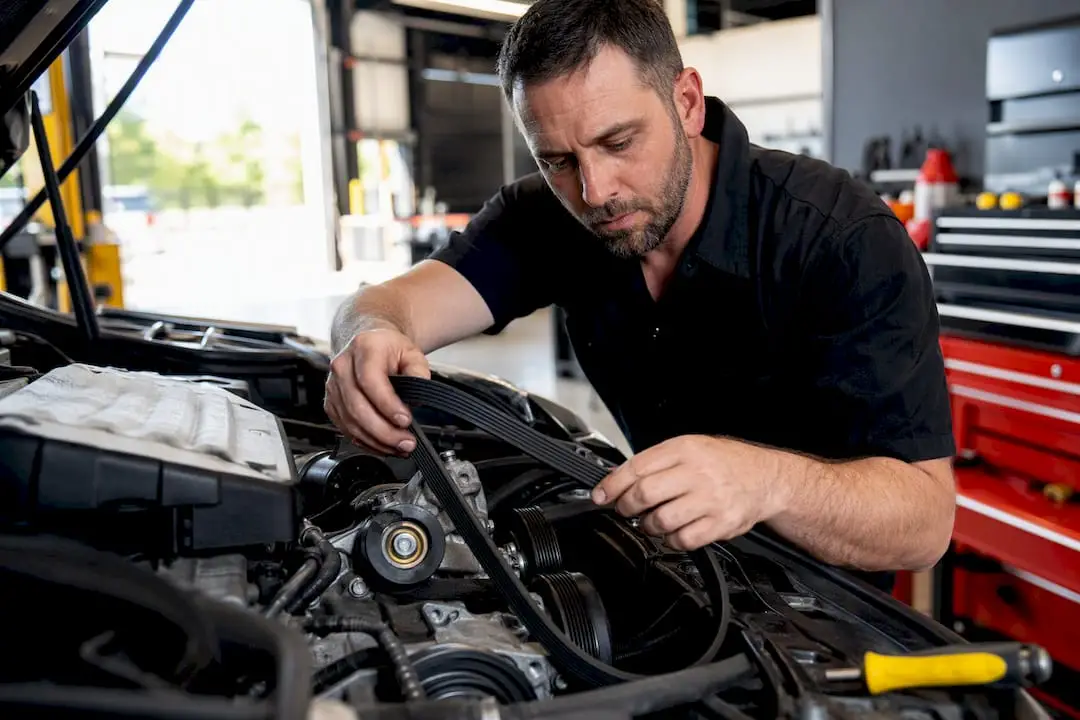
Replace most serpentine belts between 60,000 and 100,000 miles, and start checking closely once you hit that 60,000 mark. Many owners with basic tools and a free afternoon can handle the job themselves, but a seized pulley, a stuck tensioner, or difficult engine access is your signal to call a shop. Industry inspection guidance from belt manufacturers backs both numbers.
TL;DR:
- Most serpentine belts should be replaced between 60,000 and 100,000 miles, with closer inspections starting at 60,000 miles due to wear signs like rib material loss.
- A belt’s wear may not show cracks but can be identified by material shedding and slipping, especially in high-temperature environments or with oil contamination.
- Warning signs of belt failure include squealing or chirping noises, dashboard charge or temperature lights, stiff steering, or engine overheating, which demand immediate attention.
- Replacements typically cost $150 to $210 for belt-only jobs, but adding tensioner or pulley work increases costs and labor time, especially on hard-to-access engines.
- Owners doing DIY replacements should verify belt size and routing, inspect pulleys for roughness, and avoid forcing stuck tensioners, while professional inspections include measuring rib depth and tensioner force.
Table of Contents
- When Should You Replace Your Serpentine Belt?
- What Warning Signs Mean Your Belt Needs Attention?
- What Does a Professional Serpentine Belt Replacement Include?
- Can You Replace a Serpentine Belt Yourself?
- How Much Does Serpentine Belt Replacement Cost?
- What Should a Real Belt Inspection Look Like?
- Kwik Kar’s Take on Belt Replacement Timing
- Get Your Serpentine Belt Checked the Right Way
- Where This Guidance Comes From
- Sources
- FAQ
When Should You Replace Your Serpentine Belt?
Manufacturer guidance and technician practice point to the same window: belts typically last within a common mileage range recommended by industry. Heat, oil contamination, and heavy daily driving can shrink that number considerably, especially in a Texas summer where under-hood temperatures push rubber compounds harder than they were designed for.
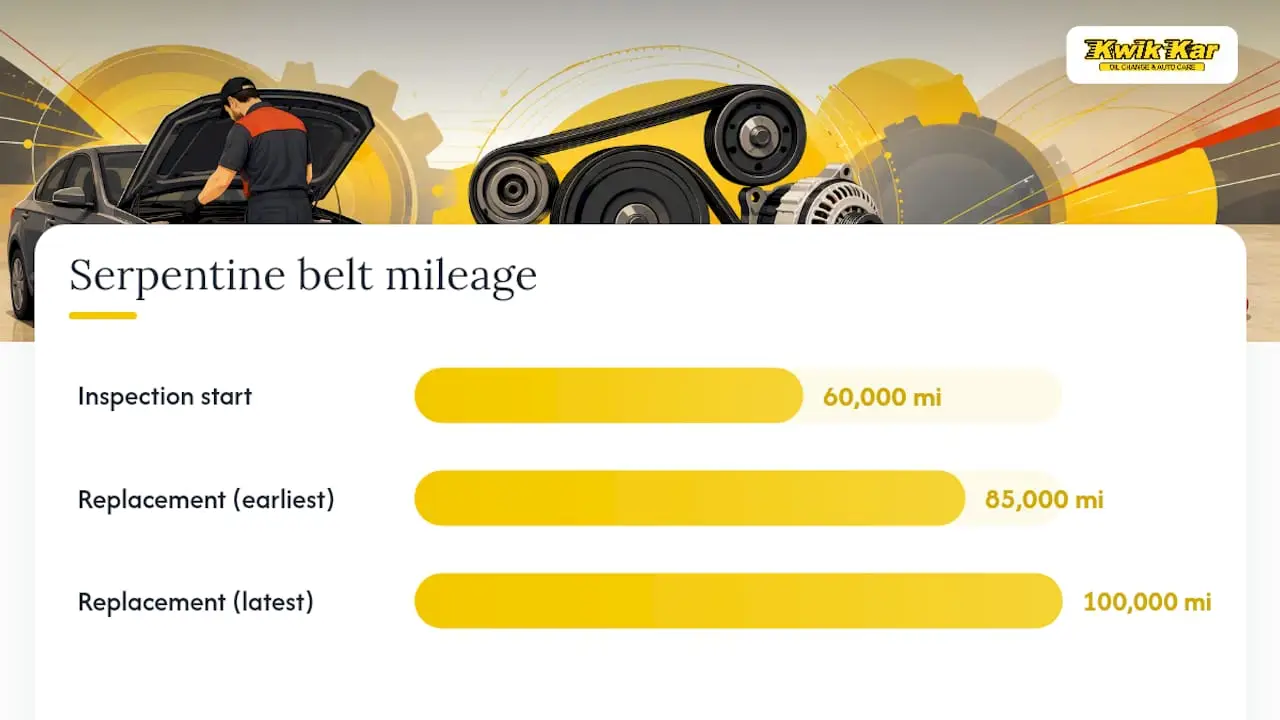
Here’s the part most owners don’t know: modern EPDM belts often skip the classic warning sign. The old advice to look for cracks doesn’t apply anymore because EPDM resists cracking even as it wears out. The real tell is rib material loss, and a belt can shed material and start slipping while looking nearly flawless to the naked eye.
That’s why we recommend a two-stage approach:
- Start closer inspections at 60,000 miles, even if nothing seems wrong yet.
- Plan for full system replacement somewhere between 85,000 and 100,000 miles, adjusted for what a technician actually finds during inspection.
What Warning Signs Mean Your Belt Needs Attention?
A belt rarely fails without warning. Learn to read the signs and you’ll avoid getting stranded.
- Squeal or chirp on startup. A high-pitched squeal usually means the belt is slipping on a pulley, often from glazing, contamination, or wear. A rhythmic chirp that changes with engine speed can point to a bad idler or tensioner bearing instead of the belt itself.
- Battery or charging light on the dash. This means the belt isn’t turning the alternator reliably, which drains your battery fast.
- Engine overheating. A slipping or broken belt stops the water pump, and temperatures can climb within minutes.
- Heavy, stiff steering. On many vehicles, the serpentine belt also drives the power steering pump, so belt failure means the wheel gets noticeably harder to turn.
A failed serpentine belt can knock out your alternator, power steering, and cooling system all at once, so if you notice more than one of these symptoms together, stop driving and get the car looked at rather than risking a breakdown on the road.
What Does a Professional Serpentine Belt Replacement Include?
A proper job goes beyond swapping out a rubber loop. Technicians typically relieve tension on the belt using a breaker bar or dedicated tool, slide the old belt off, then inspect every pulley and the tensioner before anything new goes on. Once the new belt is routed and seated, they verify tracking and listen for noise with the engine running.
Most shops will also check, and often recommend replacing, these components while they have access:
- The tensioner assembly, since a weak spring or worn bearing is a common cause of belt slip and premature failure.
- Idler pulleys, checked for roughness or play.
- The belt routing diagram, confirmed against the actual vehicle rather than memory.
Labor time varies more than people expect. A belt sitting right up front on a longitudinal engine might take 20 minutes. A transverse-mounted engine buried behind other components can eat well over an hour.
Pro Tip: Ask your shop to show you the old belt and tensioner during a Digital Vehicle Inspection. Seeing actual rib wear next to a new belt makes the difference obvious in a way no explanation can.
Can You Replace a Serpentine Belt Yourself?
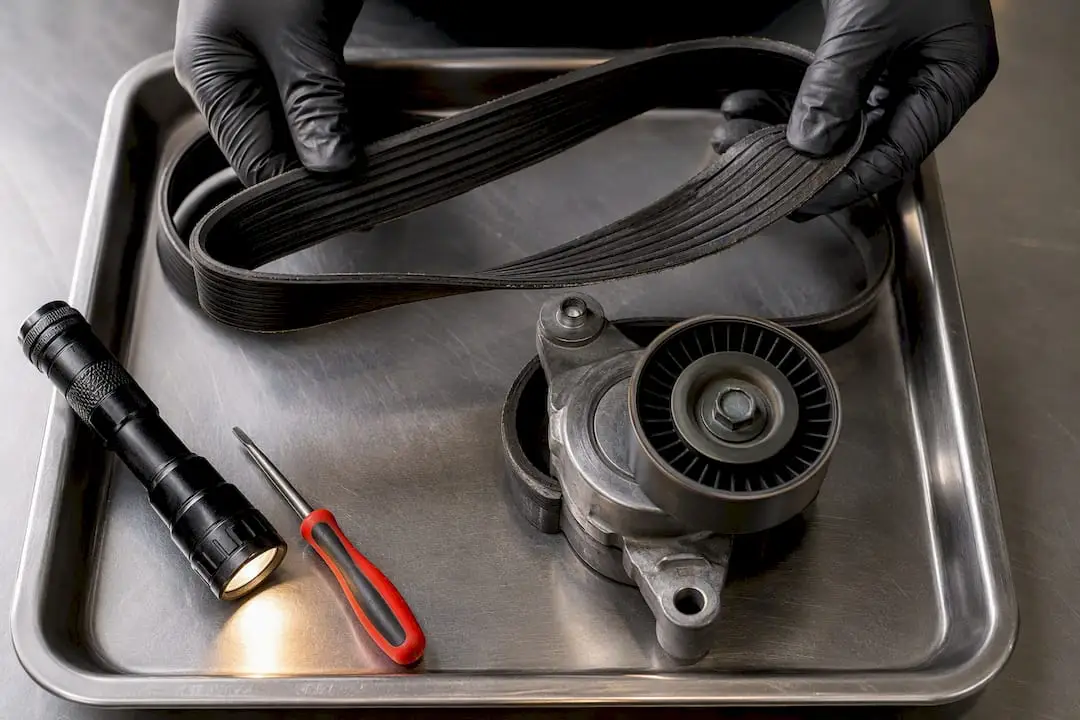
Plenty of owners do this job in a driveway, and NAPA’s own procedural guidance confirms the basic steps aren’t complicated. The trick is preparation, not muscle.
Before you touch a wrench, confirm the exact replacement belt for your engine and trim, since a belt one rib-count off simply won’t seat correctly. Snap a photo of the current routing path, or check the routing sticker under the hood, so you’re not guessing later.
Tools to have on hand:
- Serpentine belt tool or a long breaker bar sized for your tensioner
- Work gloves and eye protection
- Flashlight or headlamp for shadowed areas
- Your owner’s manual or a printed routing diagram
The basic sequence:
- With the engine off and cool, locate the tensioner pulley and relieve spring tension using your tool.
- Slip the old belt off the pulleys, noting exactly how it was routed.
- Inspect every pulley by hand, spinning each idler to feel for roughness or grinding.
- Route the new belt exactly as photographed, saving the tensioner pulley for last.
- Release the tensioner slowly and confirm it seats the belt evenly across every rib.
- Start the engine briefly and watch the belt track. It should run dead center on every pulley with no wobble.
DIY forums and installation videos suggest
, though European and transverse-engine layouts often push past that.
Stop and call a professional if the tensioner won’t move, a pulley is seized, or the spring inside the tensioner feels dead rather than springy. Forcing a stuck tensioner is how DIY jobs turn into tow-truck calls.
How Much Does Serpentine Belt Replacement Cost?
Cost swings depend almost entirely on whether the tensioner comes along for the ride. Belt-only jobs commonly cost within a moderate range around $150 to $210, while adding a tensioner replacement can add significantly to total cost due to labor.
A few things move that number in either direction:
- Engine access. A belt buried behind other components adds labor time regardless of parts cost.
- Shop type. Dealers typically price highest, independent shops tend to run lower, and chain shops land somewhere in between.
- Bundled work. Replacing the tensioner or idlers while the belt is already off usually costs less than paying for that labor twice later.
When comparing quotes, ask for the parts list by name, the estimated labor minutes, and what warranty covers the work. A quote with no labor breakdown makes it hard to know what you’re actually paying for.
What Should a Real Belt Inspection Look Like?
A quick glance under the hood tells you almost nothing about a modern EPDM belt. Real inspection means measuring, not eyeballing.
Technicians use a rib-depth gauge to measure how much material has worn away, since profile changes from material loss can cause hydroplaning across the pulleys rather than a clean cracking failure. They’ll also check pulley crown wear and rib seating directly, especially on higher mileage engines.
The tensioner gets its own test. With the belt off, a technician rotates the tensioner through its full range and feels for return force and damping. A soft, lazy return or excessive bounce usually means the internal damping has failed, even if the tensioner looks fine sitting still.
- Measure rib depth rather than counting visible cracks.
- Spin every idler bearing by hand and listen for grinding or roughness.
- Test tensioner return force, not just its resting position.
Pro Tip: If your belt is at or past 85,000 miles, ask your technician to price tensioner and idler replacement alongside the belt. You’re already paying for the labor to access them, so it rarely makes sense to wait for a second breakdown.
Kwik Kar’s Take on Belt Replacement Timing
Our ASE-certified technicians lean on Digital Vehicle Inspections precisely because rib wear hides from a quick look. We generally recommend belt-only replacement under 60,000 miles with clean components, and a full system approach, belt plus tensioner and idlers, once mileage and wear findings point that direction. It’s rarely one-size-fits-all, which is exactly why we photograph and document what we find on your vehicle.
— Kwik Kar
Get Your Serpentine Belt Checked the Right Way
A DIY belt swap saves money, but a misdiagnosed tensioner or a belt installed one size off can leave you back in the driveway within weeks. Kwik Kar handles serpentine belt inspection and replacement with the same Digital Vehicle Inspection process we use across every service, so you see exactly what’s worn before any work happens.

Our general auto repair services cover belt, tensioner, and idler replacement backed by a 2 year, 24,000 mile warranty, so you’re not gambling on a part failing again right after you paid for it. If your schedule is tight, after hours drop off and a complimentary ride service mean you don’t have to sit in a waiting room to get it done. Call or stop by Kwik Kar in Celina to get your belt inspected before it decides the timing for you.
Where This Guidance Comes From
This guide draws on manufacturer inspection standards from Gates and Dayco, cost data from RepairPal, and procedural steps from NAPA. For torque specs and exact routing diagrams, check your owner’s manual or a vehicle-specific repair manual.
Sources
- Tech Tip: Belt inspection changes (Gates)
- TechTips_Belt Maintenance & Repair Intervals (Dayco)
- Serpentine Belt Replacement cost estimator (RepairPal)
- Replacing a Serpentine Belt (NAPA KnowHow)
FAQ
How Often Should You Replace a Serpentine Belt?
Most vehicles need replacement between 60,000 and 100,000 miles, with closer inspection recommended starting at 60,000 miles.
What Does a Squealing Belt Mean?
A squeal usually means the belt is slipping on a pulley, often from glazing or contamination, while a rhythmic chirp points more toward a worn idler or tensioner bearing.
Is It Safe to Drive With a Bad Serpentine Belt?
No. A failing belt can knock out your alternator, power steering, and cooling system at once, so driving on a known bad belt risks a sudden breakdown.
How Much Does Serpentine Belt Replacement Cost?
Belt-only jobs commonly cost within a moderate range around $150 to $210, while adding a tensioner replacement can add significantly to total cost due to labor.
Can I Replace a Serpentine Belt Myself?
Many owners with basic tools and a routing diagram can do it safely, but a seized pulley or dead tensioner spring is a clear signal to bring it to a professional repair shop.