


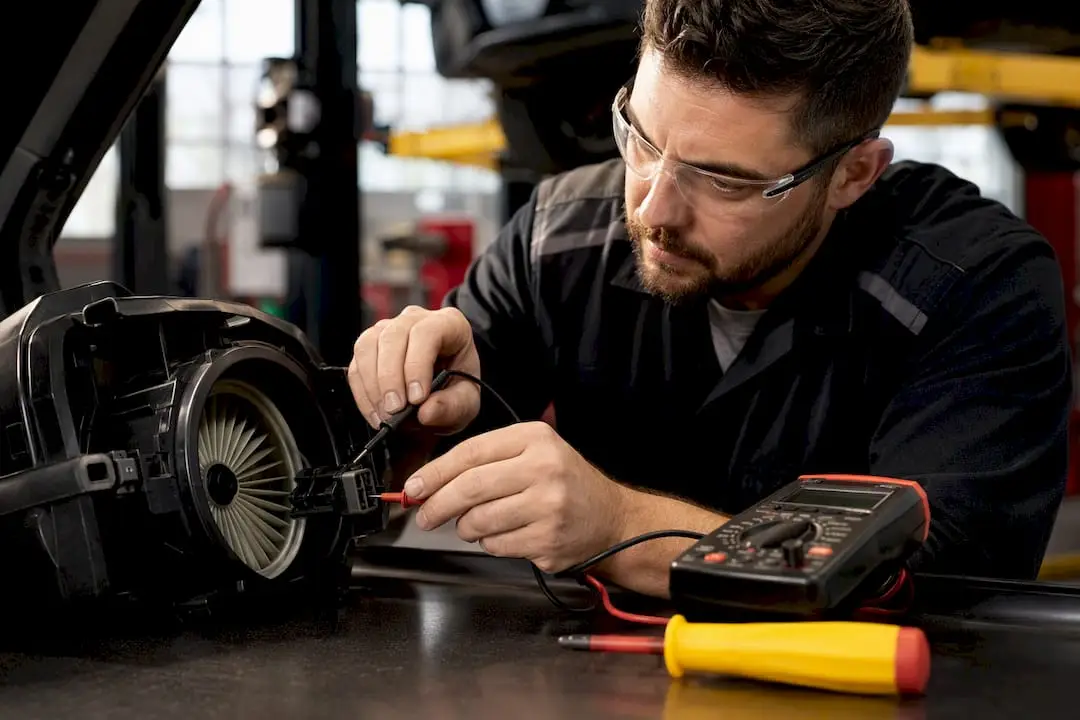
Most often, a dead cabin fan comes down to one of three things: a blown fuse or bad relay, a failed blower motor resistor, or a worn-out blower motor. If the fan is silent at every speed, suspect the motor or its power supply. If it only blows on high, the resistor is the likely culprit. Start by checking the blower fuse before you touch anything else.
TL;DR:
- Blower motor resistors typically cause the fan to only work on high speed, while a blown fuse or relay results in no airflow at any speed.
- Testing voltage at the blower connector and swapping relays can reliably pinpoint whether the issue is wiring, the motor, or a resistor failure.
- Replacing blown fuses or relays is quick and inexpensive, but resistor or motor faults usually require more labor and parts, costing more time and money.
- Extended blower motor issues can lead to moisture buildup and corrosion, increasing the risk of complete failure and HVAC system stress.
- Professional diagnostics with documented inspection help prevent repeat failures and ensure the accurate identification of faulty components.
Table of Contents
- Symptoms to confirm and a quick diagnostic checklist
- Common causes behind a failed blower
- Step-by-step tests to narrow down the fault
- Repair options, ballpark costs, and time to fix
- When to stop DIY and call a professional
- How a bad blower affects your whole HVAC system
- Temporary workarounds while you wait for repair
- Maintenance tips to prevent blower motor failure
- Why professional diagnostics often prevent repeat failures
- How Kwik Kar can help with your blower repair
- Helpful resources for diagnosing your blower
- FAQ
Symptoms to confirm and a quick diagnostic checklist
Before you start pulling fuses, take a minute to note exactly what the blower is doing. The pattern of the failure tells you almost everything you need to know.
Watch for these signs:
- No airflow at any fan speed, even with the system on
- Airflow only when the fan is set to high
- A grinding, rattling, or squealing noise from behind the dashboard
- A musty or burning smell when the blower runs
- Airflow that cuts in and out, especially over bumps or during humid weather
Once you have a clear picture of the symptom, run through this short checklist:
- Turn the ignition to the “on” position (engine off) and cycle through every fan speed, listening and watching closely.
- Note which speeds work, if any, and whether the airflow is weak or normal.
- Sniff for burning odors and listen for unusual noise, both of which point toward a motor or wiring problem.
- Locate the fuse box (check the owner’s manual for the diagram) and visually inspect the blower motor fuse for a broken filament.
- Check the relay, if your vehicle uses one, for obvious corrosion or a burnt smell.
Disconnect the battery before removing any dashboard panels or reaching near electrical connectors, since working around live circuits can cause a shock or a short.
Pro Tip: Take a photo of your fuse box diagram and the blower connector before you disconnect anything. It makes reassembly faster and gives a technician a head start if you end up booking a professional inspection.
Common causes behind a failed blower
Several different parts can cause the same basic symptom, so narrowing down the cause saves time and money.
- Blown fuse or bad relay: This is the cheapest and most common failure. A blown fuse cuts power to the entire blower circuit, so the fan will not run at any speed. The relay controls power to the motor, and a failed one often causes intermittent or total loss of blower function.
- Bad blower motor resistor: The resistor pack controls the low and medium fan speeds by reducing voltage to the motor. When it fails, the fan typically still works on high only, since high speed usually bypasses the resistor and draws power straight from the switch.
- Worn-out blower motor: A motor that has reached the end of its life may run silently at all speeds, produce a grinding or squealing noise, or even give off a burning smell as the windings overheat.
- Wiring and connector problems: Corroded, loose, or chewed wiring can interrupt power to the blower circuit. Water intrusion, often from a clogged cowl drain, is a frequent cause of corrosion at the connector.
- HVAC control module faults: On vehicles with automatic climate control, a failed control module can occasionally cause blower issues, though this is less common than fuse, resistor, or motor failures.
The “works only on high” pattern is one of the most reliable diagnostic clues available to a vehicle owner, since it almost always points to the resistor rather than the motor itself.
Step-by-step tests to narrow down the fault
With the symptom noted, you can run a few safe checks to isolate the problem before deciding on a repair path.
- Check the blower and cabin fuses. Pull the fuse and inspect the metal strip inside; a broken strip confirms a blown fuse. Replace it with an identical amperage rating and retest the fan.
- Swap the relay. If your vehicle has an identical relay elsewhere in the fuse box (often for the horn or another accessory), swap it into the blower relay slot. If the fan starts working, the original relay was bad.
- Check for voltage at the blower connector. With a multimeter set to DC volts, probe the connector pins with the fan on. Battery voltage present at the connector but no motor movement points to a bad motor; no voltage points upstream to the switch, resistor, or wiring.
- Bench-test the blower motor. Bench-testing a blower motor with 12 volts applied directly to its terminals is an effective way to confirm motor failure, but it should only be attempted with the motor removed and proper eye protection, since a failing motor can spark or throw debris.
- Write down your findings. Note which speeds worked, any noise or smell, the condition of the fuse and relay, and your voltage readings. This record shortens the time a technician needs to confirm the diagnosis.
Pro Tip: Keep a cheap multimeter in your glove box. It costs less than a single shop diagnostic fee and pays for itself the first time you catch a blown fuse yourself.
Blower motor resistor failures typically cause the fan to work on high only, while a failed blower motor usually results in no fan at any speed or a noisy fan. That distinction is the fastest way to point your testing in the right direction.
Repair options, ballpark costs, and time to fix
Once you know which part failed, the repair path becomes clear.
- Fuse or relay replacement: The cheapest and fastest fix, often completed in minutes once the part is identified.
- Blower motor resistor replacement: A moderate repair, generally requiring an hour or so depending on how easy the resistor is to reach behind the dash or glovebox.
- Blower motor replacement: Parts and labor together typically take a few hours depending on vehicle access, since some motors sit behind the dashboard and require more disassembly than others.
- Wiring repair: Cost and time vary widely depending on whether the damage is a single connector or a longer run of corroded harness.
- Control module repair: The least common but most expensive path, since it usually involves diagnostic time to confirm the module rather than a simpler component.
Professional diagnostics matter here because Digital Vehicle Inspections let ASE-certified technicians document the exact failure point before any parts are ordered, which reduces the chance of paying for a part that was not actually the problem.
When to stop DIY and call a professional
Some situations call for a shop visit rather than another hour under the dash.
- You lack the tools to safely test voltage or access the blower motor.
- Your tests show no power reaching the blower circuit at all.
- The repair requires dashboard removal or work near refrigerant lines.
Bring your test notes, any photos or video of the symptom, and your fuse, relay, and voltage findings. Ask for a written estimate, a Digital Vehicle Inspection report, confirmation of ASE-certified technicians, and clear warranty terms before authorizing work.
How a bad blower affects your whole HVAC system
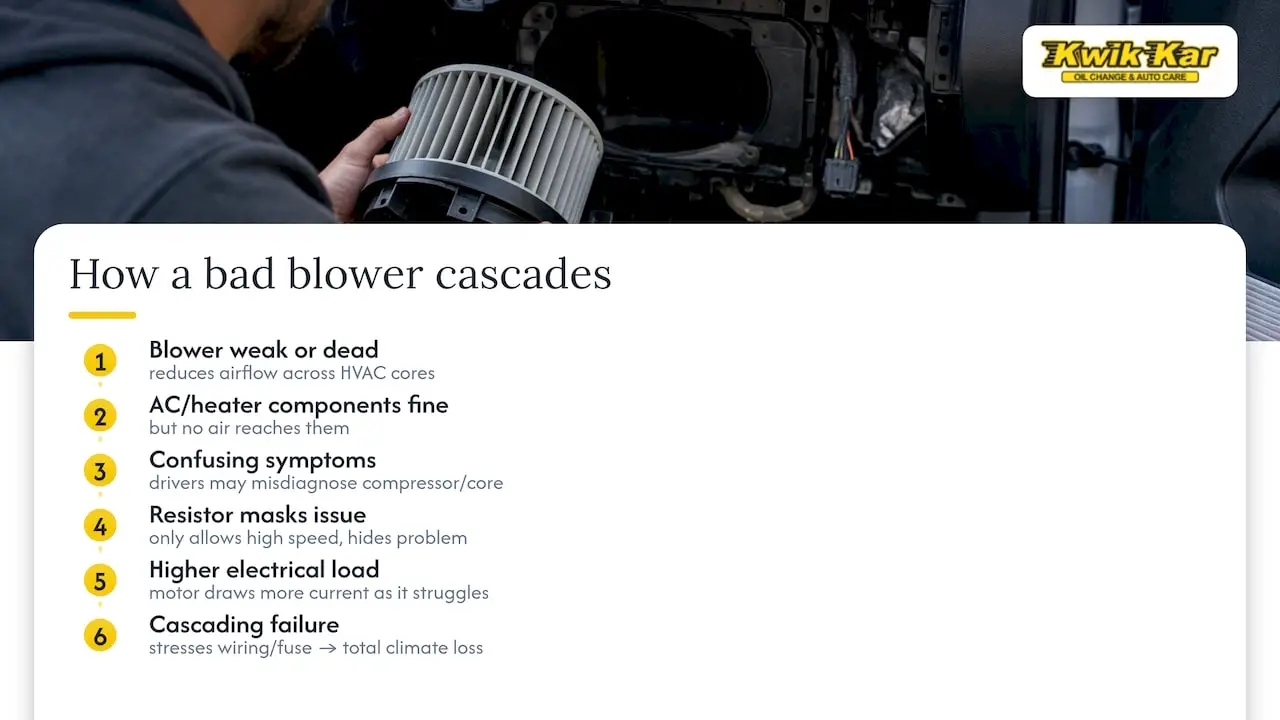
A failing blower motor does more than kill your airflow. Since the blower pushes air across both the AC evaporator and the heater core, a weak or dead fan means neither system can move conditioned air into the cabin, even if the compressor and heater core themselves are working fine.
This can create confusing symptoms. Drivers sometimes assume their AC compressor or heater core has failed when the real problem is that no air is reaching those components in the first place. A resistor that only allows high speed can also mask a developing motor problem, since the motor is working harder than it should to move air at that single setting.
Over time, a struggling blower motor draws more current trying to compensate for internal wear, which can accelerate failure of the motor itself and stress the fuse and wiring around it. Left unaddressed, what started as a minor inconvenience on low speed can progress to total blower failure and a cabin with no climate control at all, a real problem during a Texas summer or a cold snap.
Temporary workarounds while you wait for repair
If you cannot get to a shop right away, a few short-term steps can make the wait more bearable without making the underlying problem worse.
If your fan only works on high, leave it there rather than cycling through other speeds, since lower settings will not work until the resistor is replaced anyway. Crack a window instead of forcing air through a barely functioning blower, especially in warm weather, to keep some airflow moving through the cabin. Avoid running the blower on a suspected bad motor for extended periods, since a motor that is grinding or smoking can fail completely or, in rare cases, create a fire risk.
Portable USB or battery-powered fans clipped to a vent can supplement airflow for a short commute, though they are no substitute for a working blower. Keep in mind that these are stopgaps, not fixes. Driving for days with reduced climate control adds strain to a system that is already struggling, so treat any workaround as a bridge to a scheduled repair rather than a long-term solution.
Maintenance tips to prevent blower motor failure
A little routine attention goes a long way toward keeping your blower motor running for the life of the vehicle.
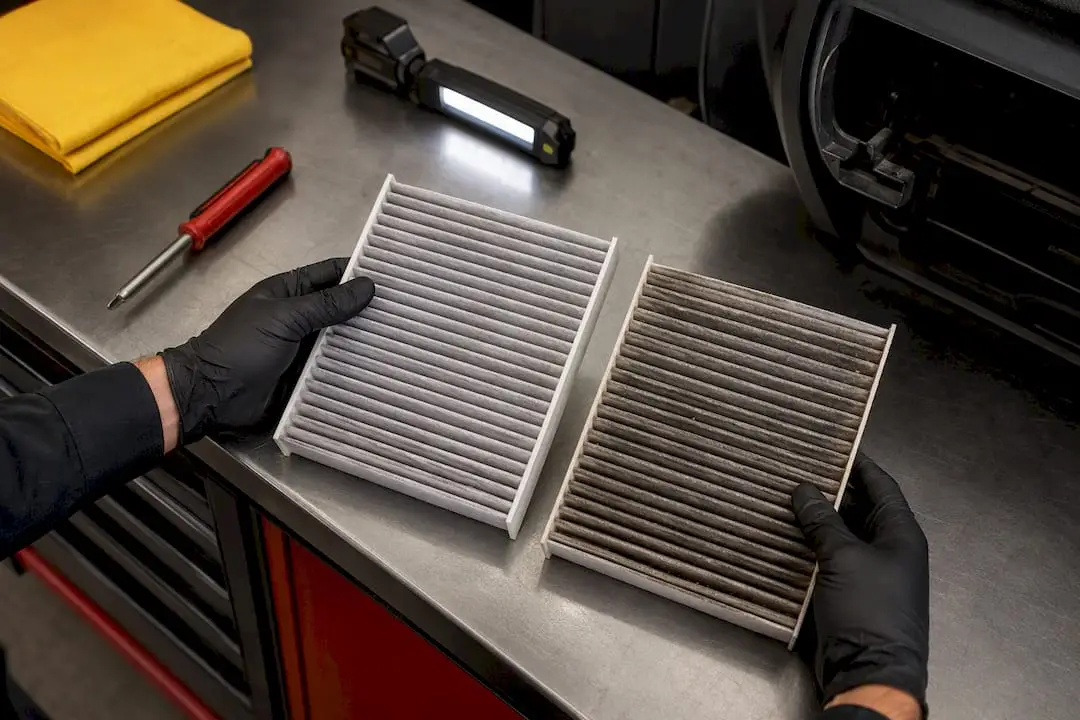
Replace your cabin air filter on the schedule your owner’s manual recommends, since a clogged filter forces the motor to work harder to push air through, which shortens its lifespan over time. Airflow restrictions from a dirty cabin filter are one of the most overlooked contributors to blower strain.
Keep the cowl drain at the base of your windshield clear of leaves and debris, since a blocked drain lets water pool and eventually seep into the blower motor housing and connectors. Address any musty smell from your vents right away, as it often signals moisture buildup that can lead to corrosion long before the motor itself fails.
Have your HVAC system checked during routine factory scheduled maintenance visits rather than waiting for a total failure. A technician can often spot early resistor wear or a fraying wiring harness well before you notice a change in fan performance.
Why professional diagnostics often prevent repeat failures
Guesswork repairs tend to create repeat visits. Our ASE-certified technicians use Digital Vehicle Inspections to document the exact failing component, whether that is a resistor, a connector, or the motor itself, before any repair begins. Paired with a 2-year/24,000-mile warranty, that documentation gives you a clear record and real protection if something related comes up later.
— Kwik Kar
How Kwik Kar can help with your blower repair
A dead cabin fan is frustrating, but you do not have to chase it down alone. We handle AC repair, electrical diagnostics, and blower and heater repair for local drivers, with work backed by warranty coverage and performed by qualified technicians.

Convenient options like after-hours drop-off and ride service mean a blower diagnosis does not have to disrupt your whole day, and repairs often come with inspection reports showing what was found and why. If your fan is stuck on high, silent, or making noise you do not trust, visit our AC Repair page or browse our full services page to schedule a diagnostic.
Helpful resources for diagnosing your blower
A few pages worth bookmarking as you work through this repair:
FAQ
Why does my blower fan only work on high?
This almost always points to a failed blower motor resistor, which controls the low and medium fan speeds while high speed typically bypasses it entirely. Replacing the resistor usually restores the other fan speeds.
Why is my HVAC blower not turning on at all?
A blower with no airflow at any speed usually means a blown fuse, a bad relay, a failed motor, or a break in the wiring supplying power to the circuit. Checking the fuse first is the fastest way to rule out the simplest and cheapest cause.
How much does it cost to fix a blower motor?
Costs vary by vehicle and by which part failed, ranging from a low-cost fuse swap to a more involved motor or resistor replacement that includes both parts and labor. A shop can give you an exact estimate after confirming the failure point with a diagnostic inspection.
Can I drive with a broken blower motor?
Yes, you can drive safely with a broken blower motor, though you will lose climate control airflow and may need to rely on cracked windows as a short-term workaround. It is worth scheduling a repair soon, since a struggling motor can draw excess current and cause further electrical strain.
How do I know if it’s the blower motor or the resistor?
If the fan works only on high, the resistor is the likely cause; if the fan is silent at every speed or making grinding noises, the motor itself is more likely at fault. A voltage check at the blower connector can confirm which component is failing before you replace anything.