


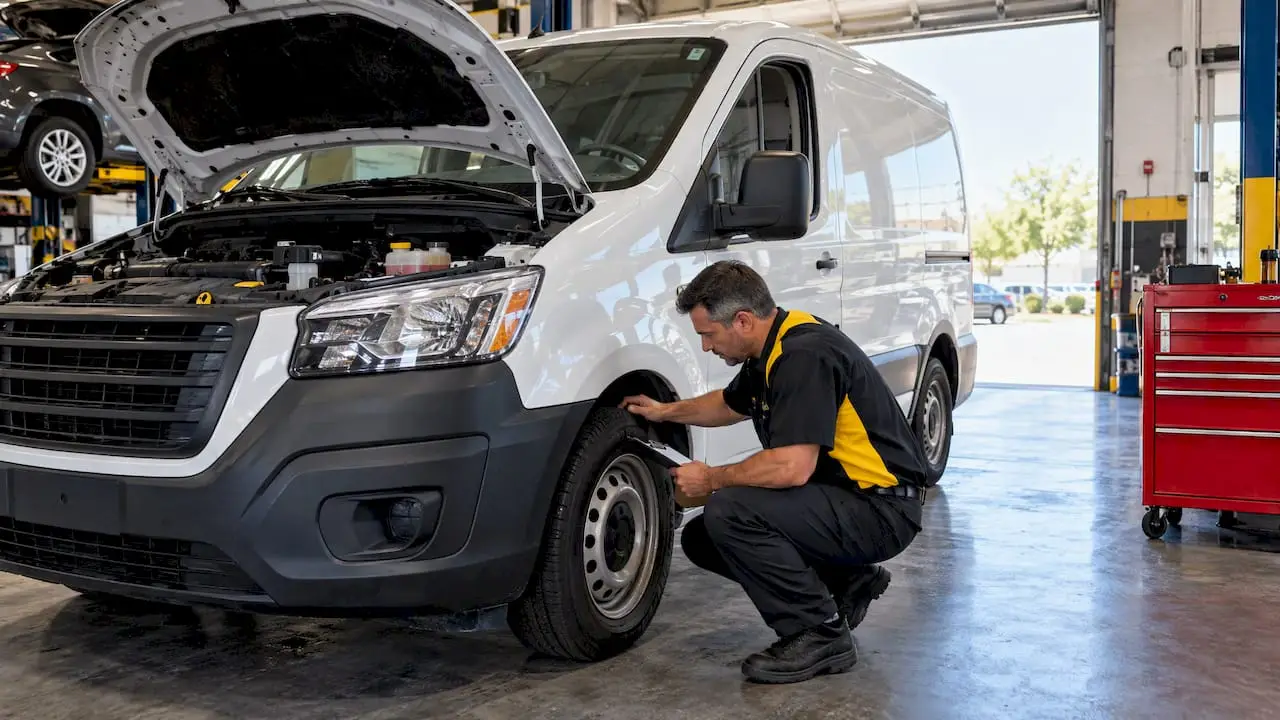
A complete fleet maintenance checklist covers four things: daily safety inspections, scheduled services like oil and filter changes, brakes and tires, deeper component checks, and organized records for compliance. The fastest way to start is simple: assign a driver to run pre-trip checks today and begin logging defects on a Driver Vehicle Inspection Report. Doing this consistently cuts unplanned downtime and keeps you ahead of regulatory trouble.
TL;DR:
- Regular driver inspections and immediate defect reporting help prevent safety issues and reduce unplanned downtime.
- Scheduled maintenance should be based on actual mileage or hours, particularly for vehicles with heavy use or extreme conditions.
- Monthly visual checks of filters, belts, and electrical systems catch early signs of failure before they cause costly breakdowns.
- Proper recordkeeping of all inspections, repairs, and service history ensures compliance and simplifies audits.
- Outsourcing repairs to certified shops with digital records smooths the process and maintains warranty coverage.
Table of Contents
- Daily Pre-Trip and Post-Trip Inspection Checklist
- Scheduled Service Checklist: Oil, Brakes, Tires, and Batteries
- Catching Component Failures Before They Cause Downtime
- Trailers, Forklifts, and Other Specialized Equipment
- Recordkeeping That Holds Up Under Compliance Review
- Building a Program That Actually Runs
- A Ready-to-Use Checklist Template You Can Print Today
- What to Expect From a Shop That Supports Fleet Maintenance
- Getting Your Fleet’s Maintenance Handled Without the Back-and-Forth
- Sources
- FAQ
Daily Pre-Trip and Post-Trip Inspection Checklist
Every shift should start and end with a walk-around. OSHA requires daily pre- and post-trip inspections that prioritize the items most likely to cause a crash or breakdown, and drivers are the first line of defense because they see the vehicle before anyone else does.
Here’s the priority order we recommend drivers follow:
- Service brakes and parking or emergency brake function
- Tires: tread depth, visible damage, and air pressure
- Lights and turn signals, front and rear
- Steering response and play in the wheel
- Fluid leaks under the vehicle (oil, coolant, brake fluid)
- Horn function
- Seat belts for wear and proper latching
- Mirrors: condition and adjustment
- Coupling devices on trucks pulling trailers
Once the walk-around is done, the driver fills out a Driver Vehicle Inspection Report noting anything found, even minor issues. Any defect that affects safety must be corrected before the vehicle goes back into service, not after the route is finished. If a truck fails on brakes, steering, or tires, it gets tagged out of service and the fleet manager or shop gets a call immediately, rather than waiting for an end-of-day report.
Pro Tip: Keep a laminated copy of the checklist in the cab and a dry-erase marker attached to it. Drivers are far more likely to complete a report that takes 90 seconds than one that requires digging through a glovebox for paper.
Scheduled Service Checklist: Oil, Brakes, Tires, and Batteries
Daily checks catch what’s about to fail. Scheduled services prevent failure in the first place, and they work best when tied to actual usage rather than a calendar alone.
- Oil and filter changes, timed to OEM-recommended mileage or hours rather than a flat interval
- Tire rotation to even out wear across axles and extend tread life
- Brake inspection, with pad and rotor replacement scheduled before they reach minimum thickness
- Battery testing and replacement before a cold snap or heavy-use season causes a failure
- Coolant, transmission fluid, and drive-line fluid checks at OEM-specified intervals
Mileage works for over-the-road trucks, but hours make more sense for equipment that idles a lot or runs stationary power takeoffs. Vehicles with hard duty cycles, frequent towing, stop-and-go routes, and extreme heat need shorter intervals than the OEM’s baseline assumes. For each scheduled service, record the odometer or hour reading, VIN, the shop or technician who performed the work, and the parts used. If you outsource this work, an oil change service that documents mileage and parts gives you a paper trail without extra effort on your end.
Catching Component Failures Before They Cause Downtime
Some of the most common breakdowns come from parts that fail slowly and give warning signs long before they quit. Filters, belts, and electrical systems fall into this category, and a quick monthly check catches most of them.
- Air and cabin filters: a visibly gray or clogged filter should be replaced on the spot, and most manufacturers recommend replacement every 12,000 to 15,000 miles
- Belts and hoses: look for cracking, glazing, or a loose feel when you press on the belt, and replace at the first sign of wear rather than waiting for a snap on the road
- HVAC, wipers, and lights: run these weekly since a failed defroster or a dead headlight often goes unnoticed until it becomes a safety issue
- Electrical system: dimming lights, slow cranking, or a battery warning light usually points to an alternator or wiring problem that needs a diagnostic scan
Pro Tip: A belt that squeals on cold mornings is usually close to failure. Don’t wait for the noise to go away on its own.
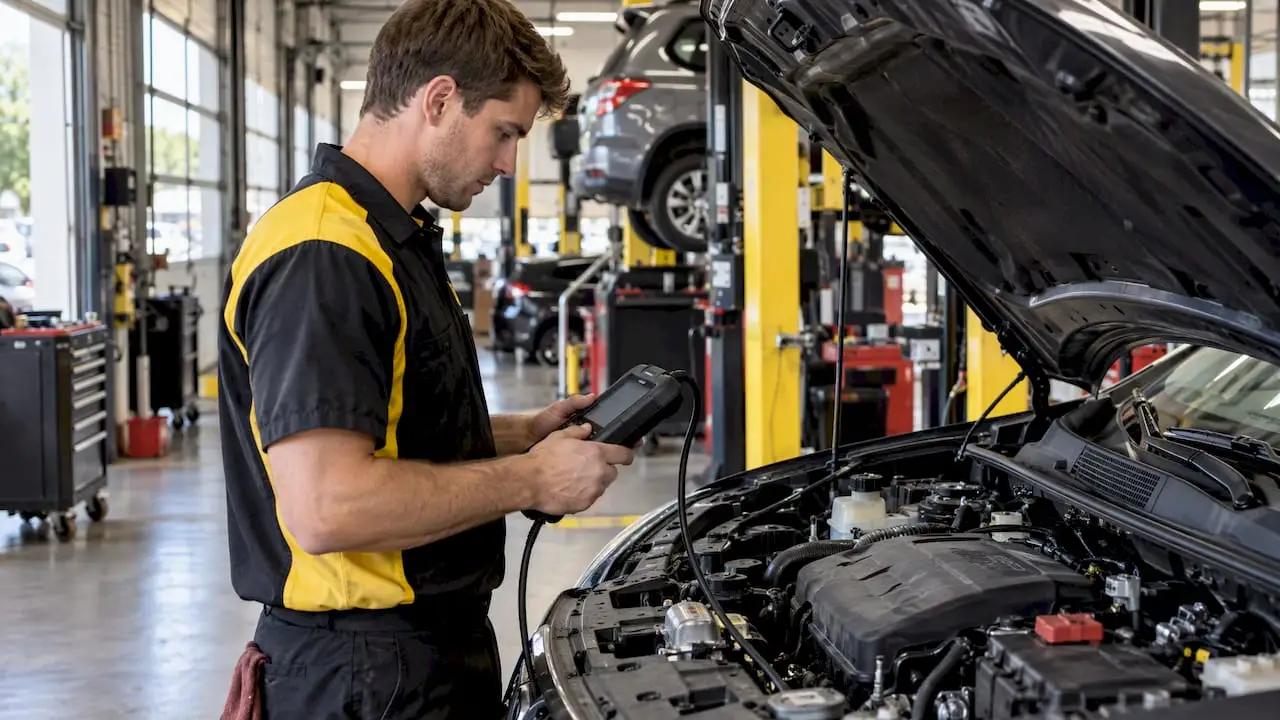
When a fault goes beyond a visual check, like an intermittent electrical issue or a check-engine light, it’s worth sending the vehicle to a shop for proper diagnostics rather than guessing. Keep repair and warranty paperwork filed by VIN so you’re not rebuilding history from memory later.
Trailers, Forklifts, and Other Specialized Equipment
Trailers and powered equipment need their own checklist items beyond the standard truck inspection.
- Trailers: coupling devices, lights and reflectors, brake connections, cargo securement, and landing gear condition
- Powered industrial trucks: battery and water level, fork condition, mast chain tension, hydraulic hose integrity, and a legible capacity plate
OSHA’s sample checklist for powered industrial trucks separates engine-off checks, like leaks, tires, and battery water, from engine-on checks, and recommends adapting the list to the specific truck model rather than using a generic form. Operators should also be trained on what to look for, since an untrained eye tends to miss hydraulic leaks and chain wear until they become expensive. Refrigerated trailers need their own pre-trip routine covering the reefer unit and door seals, and a specialized reefer pre-trip checklist is worth adopting if your fleet runs cold freight.
Recordkeeping That Holds Up Under Compliance Review
Good maintenance only counts if you can prove it happened. Under 49 CFR Part 396, motor carriers must systematically inspect, repair, and maintain every commercial vehicle they control, complete a periodic inspection at least once every 12 months, and keep those inspection reports for 14 months.
Keep these on file for every vehicle:
- Driver Vehicle Inspection Reports
- Periodic (annual) inspection reports
- Repair orders and parts receipts
- Service records tied to VIN, date, and odometer or hour reading
Maintenance defects directly affect your safety record. FMCSA’s Vehicle Maintenance BASIC explains how issues like inoperative brakes, broken lights, and worn tires show up as roadside violations, and carriers are expected to keep inspection reports, DVIRs, and repair receipts available in case of an investigation. A clean file structure, one folder per vehicle with VIN, date, odometer or hours, defect description, and repair sign-off, makes an audit a formality instead of a scramble.
Building a Program That Actually Runs
A checklist on paper doesn’t fix anything by itself. It takes people who own specific parts of the process and habits that stick past the first week.
- Assign a driver inspector for daily walk-arounds and DVIR completion
- Put the fleet manager in charge of scheduling services and reviewing defect reports
- Have a shop technician sign off on repairs and close out each defect in the record
- Track PM compliance percentage and overdue services monthly, not annually
NIST research indicates that fleets relying on reactive maintenance see far more downtime than those using preventive or predictive approaches, and PM compliance shortfalls are common: some fleets complete only a small portion of services on time, while the industry aims for a much higher compliance rate.
Digital, VIN-linked records beat paper here because they connect directly to telematics and fault codes, giving you condition-based triggers instead of guessing at intervals. A small incentive, like recognizing the driver with the most complete DVIRs each quarter, goes a long way toward keeping adherence high.
Pro Tip: Review overdue services every Monday morning. A five-minute habit catches small gaps before they become a breakdown on the highway.
A Ready-to-Use Checklist Template You Can Print Today
You don’t need special software to start. A one-page daily pre-trip checklist with pass and fail checkboxes and a notes field covers the essentials from the inspection list above, and it’s something a driver can complete before pulling out of the lot.
- Daily template fields: date, driver name, vehicle number, pass/fail per item, notes, signature
- Monthly and scheduled service template fields: VIN, odometer or hours, work performed, parts used, technician signature, next service due
- Customize both by vehicle type: trailers need coupling and securement fields, forklifts need battery and fork condition fields
Keep every completed sheet, whether digital or paper, filed by VIN so a full service history is available the moment you need it for warranty work or an audit.
What to Expect From a Shop That Supports Fleet Maintenance
A good shop partner brings ASE-certified technicians, digital vehicle inspections you can actually read, and warranty-backed repairs, which matters once your fleet outgrows what your own team can diagnose. Outsourcing makes the most sense for complex diagnostic work or when your service volume outpaces your shop time. Bring your vehicle list and service history when you reach out, it speeds up everything that follows.
— Kwik Kar
Getting Your Fleet’s Maintenance Handled Without the Back-and-Forth
Running a checklist program is only half the job. The other half is having a shop that can turn a defect report into a finished repair without three phone calls and a week of waiting. A good shop partner brings ASE-certified technicians, digital vehicle inspections you can actually read, and warranty-backed repairs, which matters once your fleet outgrows what your own team can diagnose.
Our fleet services cover the recurring work most checklists flag: oil changes, brake repair, diagnostics, and factory scheduled maintenance, all documented by VIN so your records stay audit-ready. Our full services page has the complete list if you need something beyond routine PM work.
To get started, send us your vehicle list and recent service history and we’ll put together a fleet estimate built around your actual usage, not a generic interval chart.
Sources
- Motor Vehicle Safety – Vehicle Safety Aspects | Occupational Safety and Health Administration
- Inspection, Repair, and Maintenance for Motor Carriers of Passengers – Part 396 | FMCSA
- Research suggests significant benefits to investing in advanced machinery | NIST
- FMCSA Vehicle Maintenance BASIC Factsheet
FAQ
How do you do fleet maintenance?
Fleet maintenance starts with daily pre-trip inspections covering brakes, tires, lights, and fluids, followed by scheduled services like oil changes and brake work set to OEM intervals. Keep every inspection and repair on record by VIN so you can track compliance and catch patterns before they cause breakdowns.
What is a maintenance checklist?
A maintenance checklist is a structured list of items a driver or technician inspects on a set schedule, covering safety-critical parts like brakes and tires as well as fluids, filters, and electrical systems. It gives drivers and shops a consistent way to catch problems early and document that the vehicle was checked.
What is a PM checklist?
A PM, or preventive maintenance, checklist lists the scheduled services due on a vehicle at specific mileage, hour, or time intervals, such as oil changes, filter replacements, and brake inspections. It’s built from OEM guidance and adjusted for how hard the vehicle is actually used.
What factors should you consider when planning preventive maintenance?
Key factors include OEM service intervals, actual duty cycle and mileage or hours, vehicle age and condition, past repair history, seasonal demands, driver feedback from daily inspections, parts availability, technician capacity, budget, and how each service ties into your compliance recordkeeping. Weighing these together helps you set intervals that match real wear instead of a generic calendar.