


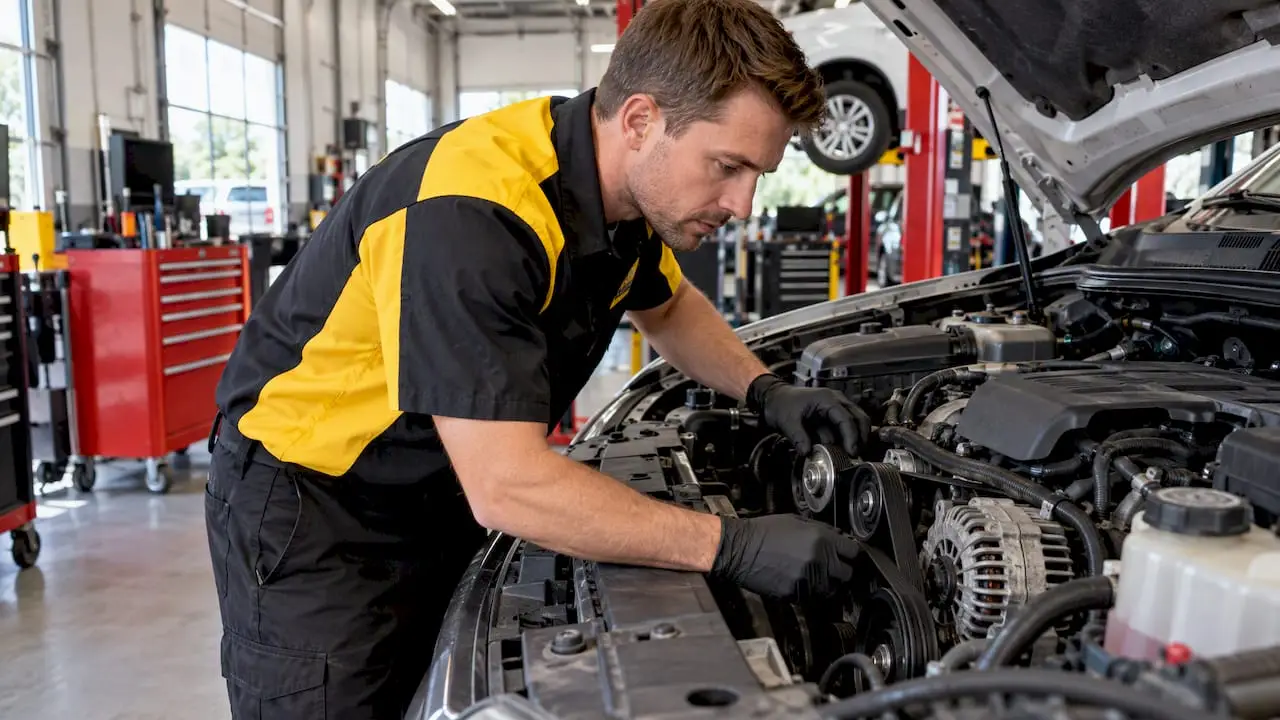
A chirp that repeats at idle usually points to pulley misalignment, while a longer squeal that rises with engine speed usually means belt slip, low tension, or contamination. Either way, skip the belt dressing or WD-40. Run a quick water test or bring your car in for an inspection before the noise turns into a bigger repair.
TL;DR:
- A squeal that increases with engine speed typically indicates belt slip, low tension, or contamination, requiring inspection of pulleys and tensioners.
- A water test can differentiate between misalignment, slip, or contamination by observing if the noise stops or worsens when water is applied to the belt.
- Visual signs like glazing, cracking, or oil on the belt suggest it needs replacement, especially if it shows oil soak or ribs are worn.
- DIY fixes like belt dressing or WD-40 are temporary and can worsen the problem by softening the belt rubber, making professional diagnosis necessary if issues persist.
- Short trips are usually safe to continue if noise is only squealing and no overheating or warning lights are present, but ongoing noise signals potential failure risk.
Table of Contents
- How to tell a chirp from a squeal
- Quick tests you can run before calling a mechanic
- What’s actually causing the noise
- What you can try yourself and what to leave alone
- Can you drive with a noisy belt?
- What a repair visit typically costs and includes
- Keeping belt noise from coming back
- Why we always check the whole system, not just the belt
- Get your belt noise checked the right way
- FAQ
- Sources
How to tell a chirp from a squeal
Before you can fix the noise, you need to describe it accurately, because the sound itself tells a mechanic most of what they need to know. A chirp is short and repetitive, often most noticeable at idle or right at startup, and it tends to stay fairly steady regardless of how hard you press the gas. A squeal stretches out longer and climbs in pitch as engine speed increases, which usually signals the belt is slipping across a pulley instead of gripping it cleanly.
Pay attention to what else is happening when you hear it:
- A flickering battery light alongside the noise can mean the belt is slipping on the alternator pulley.
- Weak or inconsistent air conditioning performance may point to the same slip affecting the A/C compressor pulley.
- Power steering that feels heavy on and off, rather than consistently, often traces back to belt tension rather than the steering system itself.
Contamination from oil, coolant, or power steering fluid changes the sound too, often turning a sharp chirp into a duller, wetter-sounding squeal because the belt’s ribs are no longer gripping the pulley surface the way they should, according to Dayco’s technical guidance.
Quick tests you can run before calling a mechanic
Three simple checks will narrow down the cause without any special tools, and they’re safe to do in your own driveway.
- Run the water test. With the engine idling in park and the parking brake set, lightly mist a small amount of water on the moving belt. If the noise stops and then quickly returns, that points to misalignment and a chirp. If it gets louder for a moment before returning, that points to slip, according to Dayco’s belt noise webinar.
- Look over the belt visually. Check for shiny or glazed surfaces, cracked or missing ribs, and any oily sheen that suggests a leak nearby.
- Spin the pulleys and tensioner by hand with the engine off. Smooth, quiet rotation is normal. Grinding, roughness, or resistance means a bearing is likely failing.
Pro Tip: Keep hands, hair, and loose clothing well clear of the belt and pulleys any time the engine is running, even briefly for the water test.
What’s actually causing the noise
Several mechanical issues create belt noise, and each one behaves a little differently.
- Pulley misalignment as small as one to two and a half degrees can noticeably raise the odds of a chirp and shorten belt life, which is why Dayco’s diagnostic research recommends checking accessory brackets and alignment rather than assuming the belt itself is bad.
- Tensioner failure is often mistaken for belt stretch. A tensioner that can’t hold proper pressure lets the belt slip, and that slip raises operating temperature enough to shorten the belt’s remaining life, according to Gates’ tensioner guidance.
- Worn ribs or glazing reduce how well the belt grips, leading to the slip that causes squealing under load.
- Contamination from an oil or fluid leak means the belt has to be replaced, since EPDM rubber that’s been soaked in oil swells and weakens permanently.
- Pulley bearing drag can eventually lock an accessory pulley entirely, which often shows up as a sudden, sharper noise rather than a gradual one.
A brand-new belt that squeals right away usually isn’t the belt’s fault. It’s a sign the tensioner, pulley alignment, or an accessory bracket needs a closer look first.
What you can try yourself and what to leave alone
A few things are safe for a confident do-it-yourselfer to handle, while others should be left to a shop.
- Checking and gently re-tensioning a manually adjusted belt is reasonable, but over-tightening strains the bearings on every pulley it touches.
- Wiping light surface dust off a belt is fine. Trying to “clean” an oil-soaked belt is not. Once EPDM rubber has absorbed oil, it needs to be replaced rather than degreased.
- Checking pulleys for play or roughness by hand is safe with the engine off and the key out.
Pro Tip: If the noise returns within days of a DIY fix, that’s usually a sign the root cause is a tensioner or pulley, not the belt itself.
Reaching for belt dressing or WD-40 might quiet things down for an hour, but both are considered harmful quick fixes rather than real repairs. Spray lubricants can soften or swell the belt’s rubber compound, and manufacturers warn that dressing products mask the real problem while accelerating belt failure, according to Dayco. If tightening or cleaning doesn’t resolve the noise within a day or two, it’s time for a professional look.
Can you drive with a noisy belt?
Short trips to a repair shop are usually fine once you’ve confirmed the noise is just noise and nothing’s smoking or overheating. But a noisy belt is an early warning, not a minor annoyance. If it fails without notice, you can lose your alternator, water pump, or power steering all at once, potentially leaving you stranded, according to Dayco.
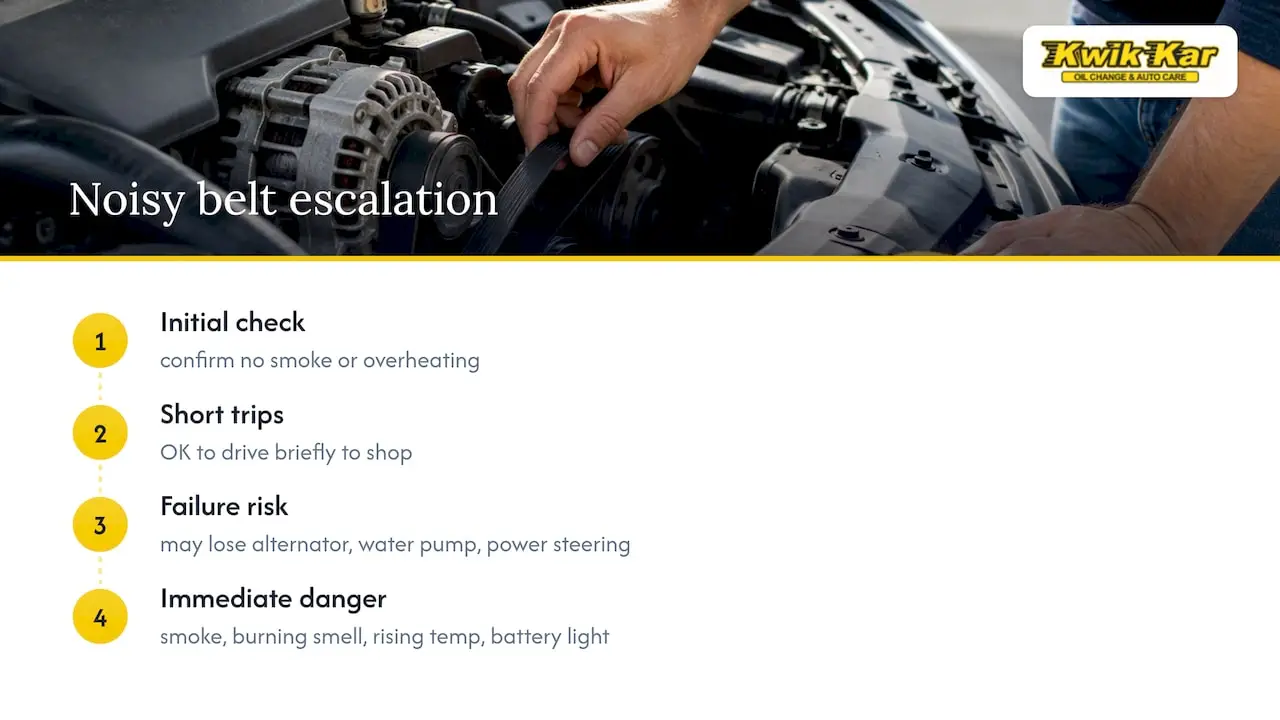
Stop driving and call for a tow if you see smoke, smell burning rubber, notice the temperature gauge climbing, or watch your battery warning light come on and stay on. Those are signs the belt or a component it drives is failing right now, not just making noise about it.
What a repair visit typically costs and includes
Belt-only replacements tend to run less than jobs that also involve a tensioner or pulley, and the exact range depends heavily on your vehicle’s make, model, and accessory layout, according to RepairPal’s cost estimator. A straightforward belt swap is usually the cheaper end of that range, while adding tensioner or pulley replacement raises both parts and labor costs.
A thorough shop visit for belt noise generally includes:
- A visual inspection of the belt for glazing, cracking, and contamination.
- A hand check of every pulley and the tensioner for roughness or play.
- A short test drive to confirm the noise, and sometimes a water test to narrow down the cause.
Digital inspection photos and a written warranty give you something concrete to compare against the estimate, rather than taking a verbal explanation on faith.
Keeping belt noise from coming back
A little attention at every oil change goes a long way toward catching belt problems before they start making noise. Ask your technician to check belt condition and tensioner function as part of your factory scheduled maintenance visits, not just when something sounds off.
If the ribs show wear or glazing, or the belt is approaching the age and mileage your vehicle’s manufacturer recommends, replacing it proactively costs less than waiting for a breakdown. When a new belt does go on, pulleys should be cleaned and alignment verified first. Installing a fresh belt over a misaligned pulley just sets up the same chirp all over again.
Why we always check the whole system, not just the belt
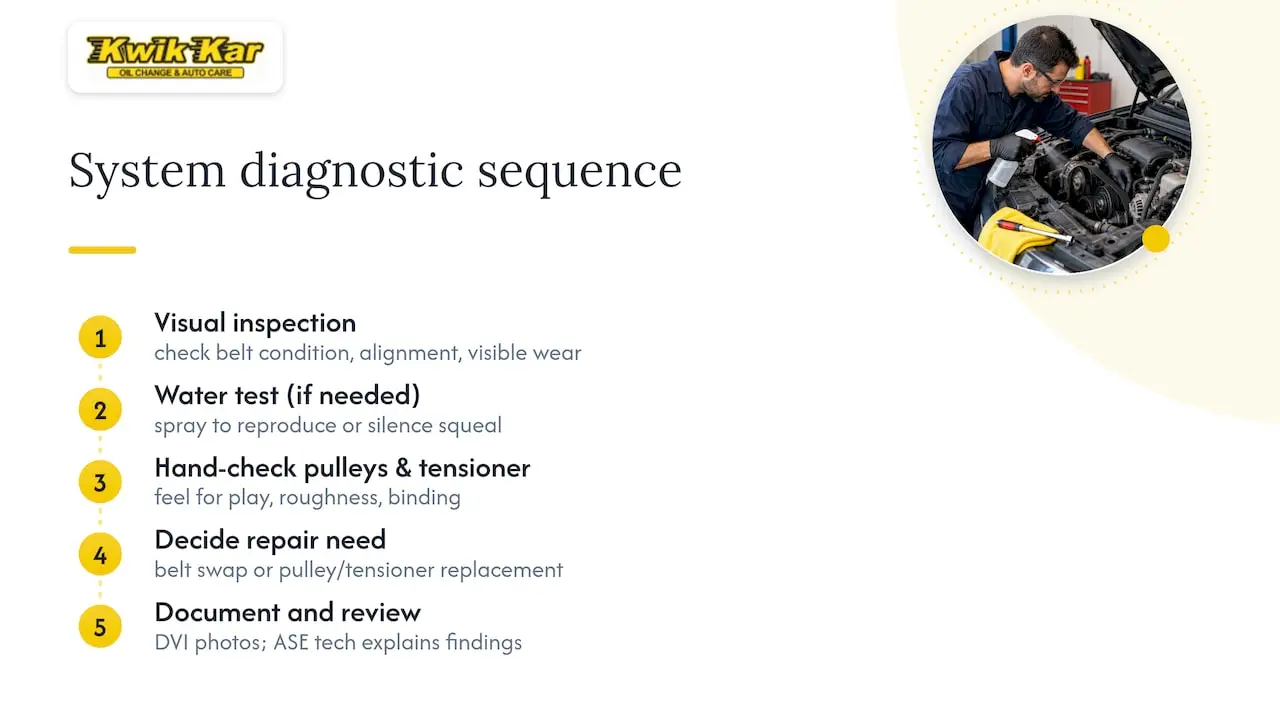
A noisy belt is rarely about the belt alone, which is why our diagnostic process starts broader than most owners expect. We run a visual inspection, a water test when needed, and a hand check of every pulley and the tensioner before we ever recommend a part. That sequence tells us whether we’re looking at a simple belt swap or a tensioner and pulley issue hiding behind it.
Every finding gets documented through our Digital Vehicle Inspection, with photos you can see for yourself, and our ASE-certified technicians walk you through what they found before any work begins. We’d rather replace one worn pulley now than sell you a belt that squeals again in a month.
— Kwik Kar
Get your belt noise checked the right way
A chirp or squeal rarely fixes itself, and guessing at the cause tends to cost more than finding it. We’d rather run the water test, spin the pulleys, and show you the photos than have you spend money twice on the same problem.

Our technicians document every check through a Digital Vehicle Inspection, so you see exactly what we found before you approve any work. We offer convenient options to help fit a diagnostic visit into a busy week.
Ready to get that noise sorted? Schedule a diagnostic inspection with us, or browse our full list of auto repair services to see what else we can take care of while your car is in the bay.
FAQ
What does a bad serpentine belt sound like?
A bad serpentine belt noise usually appears as either a short, repetitive chirp, commonly caused by misalignment, or a longer squeal that increases with engine speed, usually caused by slip or contamination. The water test can help you tell the two apart.
Can I drive with a noisy serpentine belt?
Short, careful trips to a repair shop are generally fine once you’ve ruled out smoke, overheating, or a charging warning light. A belt that keeps slipping risks sudden failure of the alternator, water pump, or power steering, so it’s worth getting it checked soon rather than putting it off, according to Dayco.
What is the average cost to replace a serpentine belt?
Replacement costs vary by vehicle and depend on whether only the belt needs attention or the tensioner and pulleys do too, according to RepairPal’s estimator. A belt-only job is typically the cheaper end of that range, while tensioner or pulley work adds both parts and labor. We can give you an exact quote after a diagnostic inspection.
Can I spray WD-40 on a serpentine belt?
No. Spray lubricants and belt dressings only mask the noise temporarily and can soften or swell the belt’s rubber, making the real problem worse over time, according to Dayco. A proper diagnosis of the pulleys, tensioner, or belt condition fixes the cause instead of covering up the symptom.
Sources
- How to Fix Serpentine Belt Noise — Dayco
- Diagnosing belt noise — Dayco webinar (PDF)
- Tensioner 101 — Gates
- Serpentine belt replacement cost — RepairPal