



Your BMW’s Maintenance Service Display and the VIN specific Maintenance Booklet are the schedule that matters, not a generic mileage chart you find online. Common items you’ll see on the display include engine oil, a full vehicle check, brake fluid, the cabin microfilter, engine air filter, and spark plugs. When the display shows a date and a mileage figure, follow whichever one arrives first.
TL;DR:
- Oil service often appears around 5,000 to 10,000 miles, filters around 20,000 to 30,000 miles, and gasoline spark plugs around 60,000 miles.
- Brake fluid follows a calendar schedule, while the display may not flag brake pads until roughly 2,000 miles before replacement, so inspect wear separately.
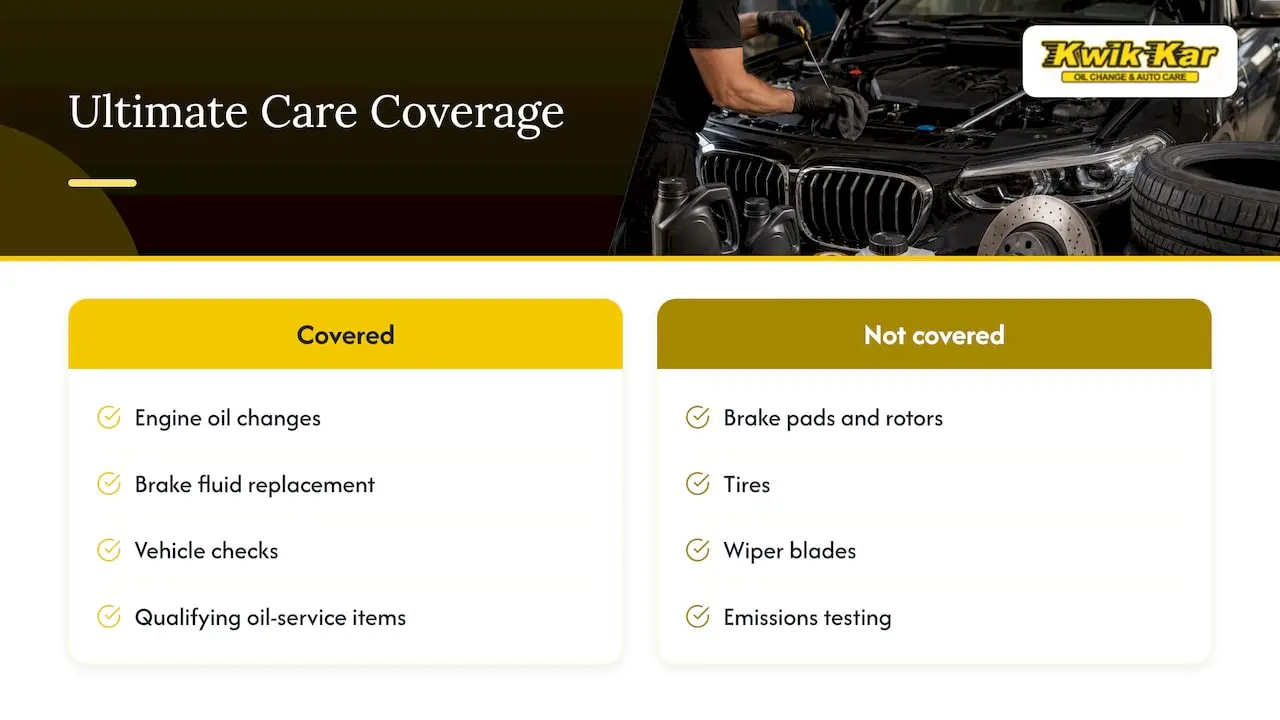
- Ultimate Care covers eligible new BMWs for 3 years or 36,000 miles, but excludes brake pads, rotors, tires, wipers, and emissions testing; check VIN eligibility.
- Short trips, cold starts, stop and go traffic, towing, and frequent high engine speeds can bring service forward, so check the display more often.
Table of Contents
- How BMW’s Maintenance Service Display Forecasts Your Service Needs
- What Typically Comes Up at Each Mileage Milestone
- What BMW Ultimate Care Covers, and Where It Stops
- Finding the Exact Schedule for Your Specific BMW
- How Your Driving Habits Shorten Intervals
- Simple Habits That Keep You Ahead of the Schedule
- Why Following the Schedule Protects Your BMW Long Term
- Factory Scheduled Maintenance for Your BMW at Kwik Kar
- FAQ
- Sources
How BMW’s Maintenance Service Display Forecasts Your Service Needs
BMW built the Maintenance Service Display around more than just odometer numbers. The system factors in mileage, elapsed time, and your actual driving profile, pulling sensor data to judge how hard your engine, brakes, and fluids are working day to day. That’s why two identical BMWs driven differently can show different service dates.
According to BMW’s 2026 maintenance booklet, the display forecasts tasks by a future date, remaining miles, or both, and it can flag engine oil service, a vehicle check, brake fluid replacement, the cabin microfilter, engine air filter, spark plugs, and brake pad wear. Some of these combine with your scheduled oil service, while others like brake fluid run on their own time based clock regardless of mileage.
The practical rule is simple: whichever threshold the display reaches first, date or mileage, is the one you act on. Checking the display regularly, especially before a road trip or a change in your driving routine, helps you catch a service window before it becomes a dashboard warning.
What Typically Comes Up at Each Mileage Milestone
While your BMW’s actual intervals depend on the VIN specific schedule, owners tend to see a familiar rhythm of tasks show up around these approximate milestones, according to BMW’s maintenance booklet:
- Around 5,000 to 10,000 miles: a vehicle check and, on many models, the first engine oil service.
- Around 20,000 miles: engine oil service again, often paired with a cabin microfilter replacement.
- Around 30,000 miles: engine oil, vehicle check, and the engine air filter frequently come due together.
- Around 60,000 miles: the same core items repeat, and spark plugs commonly enter the rotation on gasoline models.
- 90,000 miles and beyond: expect another full round of oil, filters, and a closer look at brake pad wear, since friction material naturally thins with age and mileage.
A few patterns are worth keeping in mind as you plan ahead:
- Cabin microfilters and engine air filters are usually bundled with an oil service rather than scheduled separately.
- Spark plugs appear on gasoline powered BMWs only when the display flags them, not on a fixed yearly basis.
- Brake fluid runs on a time based clock, so it can come due even on a car with low annual mileage.
- Brake pad status often isn’t visible on the display until wear is within roughly 2,000 miles of the replacement point, so a clean display today doesn’t guarantee pads will last another full interval.
If you drive under severe conditions, several of these milestones will arrive sooner than the averages above suggest. We’ll cover exactly which conditions make the biggest difference in a moment.
What BMW Ultimate Care Covers, and Where It Stops
BMW Ultimate Care provides factory scheduled maintenance coverage for eligible new vehicles, typically running 3 years or 36,000 miles on many recent model years, according to BMW’s Ultimate Care program page. Covered services generally include engine oil changes, brake fluid replacement, vehicle checks, and qualifying combine with oil items identified by the Maintenance System.
Ultimate Care does not cover everything, though. Brake pads and rotors, tires, wiper blades, and emissions testing fall outside the program even when the display flags them. Coverage terms can also differ for older model years, so it’s worth verifying your specific eligibility by VIN and confirming details with an authorized BMW service center before assuming a visit is fully covered.
Finding the Exact Schedule for Your Specific BMW
Your 17-digit VIN unlocks the real answer. BMW’s Digital Owner’s Manual system lets you enter that VIN to pull model-specific intervals rather than relying on a generic chart, and the Maintenance Booklet that ships with your car works directly with the display to track what’s due.
Powertrain matters here too. Gasoline, plug-in hybrid, and battery-electric BMWs don’t share identical task lists, since items like spark plugs simply don’t apply to an electric drivetrain. M models carry one extra wrinkle: a 1,200-mile running-in service that’s unique to that line.
Once you’ve pulled your VIN-specific maintenance summary, save it or print it and bring it with you to your service appointment. It saves time and keeps the technician working from your car’s actual requirements.

How Your Driving Habits Shorten Intervals
Short trips, cold starts, stop-and-go traffic, towing, and frequent high engine speeds all count as severe driving conditions, and BMW’s maintenance documentation specifically calls these out as factors that can pull service dates earlier. Engine oil breaks down faster under these patterns, filters clog sooner, and brake components wear at a quicker pace.
If your daily routine includes a lot of short errands or stop-and-go commuting, it’s worth checking the Maintenance Service Display more often than you might otherwise. A car that looks like it has plenty of mileage left on paper can still be closer to its next service than the odometer alone suggests.
Simple Habits That Keep You Ahead of the Schedule
A few consistent habits make BMW ownership a lot less stressful:
- Check the Maintenance Service Display before road trips and at least once a month during normal driving.
- Save or screenshot your VIN-specific maintenance summary so you have it ready for any shop visit.
- Ask your service center to run a VIN campaign and warranty check alongside routine maintenance.
- Keep every service receipt and log your mileage and dates, since BMW’s warranty documentation notes that maintenance records can matter if a warranty claim is ever questioned.
- Bring your car in right away for warning lights, unusual noises, or fluid leaks, regardless of what the display shows.
Pro Tip: Snap a photo of your Maintenance Service Display screen before every visit. It gives your technician an exact reference point and speeds up the check-in process.
Why Following the Schedule Protects Your BMW Long Term
European vehicles often suffer consequences when flagged services are skipped because the car “still feels fine.” Small gaps compound, and a BMW’s precision engineering doesn’t forgive neglected oil or ignored brake fluid as easily as some other vehicles do. Technicians can use digital vehicle inspections so you can see exactly what was found, not just take their word for it. Bringing your VIN-specific summary allows the shop to build an accurate, honest estimate around it.
— Kwik Kar
Factory Scheduled Maintenance for Your BMW at Kwik Kar
We perform factory scheduled maintenance on BMWs with the same VIN-aware approach the Maintenance Service Display relies on, so the work we recommend matches what your specific car actually needs, not a generic chart. Our ASE-certified technicians document every finding with a digital vehicle inspection, giving you photos and clear notes instead of a vague checklist.

Appointments are scheduled to accommodate your timing needs. A few things worth doing before you book:
- Confirm your BMW Ultimate Care eligibility by VIN if your car is still within the coverage window.
- Bring your VIN-specific maintenance summary so we can scope the visit accurately.
- Ask us about any non-covered maintenance, like brake pads or tires, while the car is already in the bay.
Ready to get started? Visit our services page or explore our European repair expertise to schedule your BMW’s next service.
FAQ
What kind of maintenance does a BMW need?
A BMW typically needs recurring engine oil service, periodic vehicle checks, brake fluid replacement, cabin microfilter and engine air filter changes, and spark plug replacement on gasoline models, all tracked through the Maintenance Service Display. Brake pads wear gradually and get flagged separately as they approach replacement. Exact tasks and timing vary by model, powertrain, and driving profile.
Who owns 50% of BMW?
This question falls outside what BMW’s owner-facing maintenance and warranty documentation covers, and we don’t have a sourced answer to offer here.
What is the break-in period for a new BMW?
BMW M vehicles have a documented 1,200-mile running-in service that’s listed separately from the standard maintenance schedule, according to BMW’s maintenance booklet. Non-M gasoline and electric models don’t carry this same dedicated running-in service in BMW’s documentation. Check your VIN-specific summary to see if this task applies to your car.
How much is BMW scheduled maintenance?
BMW Ultimate Care covers scheduled maintenance tasks like engine oil, brake fluid, and vehicle checks for eligible new vehicles, generally for 3 years or 36,000 miles depending on model year. Items like brake pads, tires, and emissions testing fall outside that coverage and come at an added cost. We provide estimates based on your car’s actual VIN-specific needs when you bring it in.