


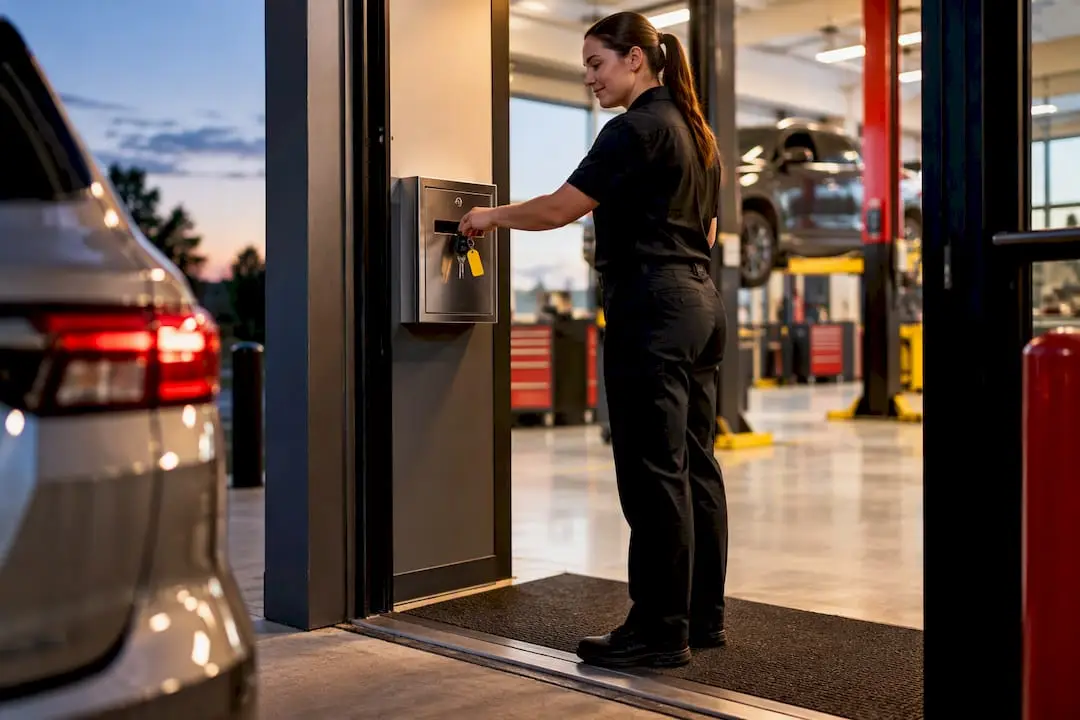
After-hours drop-off lets you leave your car and keys at a repair shop outside normal business hours, using a secure drop box, envelope, or lockbox. The shop inspects the vehicle and runs diagnostics once staff arrive, then must contact you with a written estimate before starting any paid repair. The real safeguards you need are simple: a written authorization limit, your contact information clearly attached to the keys, and confirmation the shop won’t touch anything beyond an agreed dollar amount without calling first.
TL;DR:
- Leaving your vehicle overnight requires documenting pre-existing damage, mileage, and taking timestamped photos to protect yourself in disputes.
- Clearly label all keys and notes about special fobs, and use the shop’s official intake form to ensure proper handling and authorization limits.
- Shops should record vehicle conditions, run diagnostics, and only proceed with repairs after you approve a detailed, written estimate.
- Using digital vehicle inspections with photo and video records helps settle disputes faster and provides proof of current vehicle conditions.
- For unsafe vehicles, arrange for towing directly to the shop, providing exact details and keeping all receipts and documentation for security.
Table of Contents
- What After Hours Drop Off Means for You and the Shop
- Before You Drop Off: A Step-by-Step Checklist
- Labeling Keys and Paperwork So Staff Can Handle Your Vehicle Right
- What the Shop Should Do Next
- Security, Liability, and Valuables: Reducing Your Risk
- Fleet Drop-Offs: Pre-Authorization Saves Time and Money
- When You Shouldn’t Drive the Car In: Towing and Roadside Guidance
- A trustworthy after-hours drop-off should include safeguards such as documentation of every vehicle with a Digital Vehicle Inspection, transparent communication of findings, and clear warranty and service policies to ensure peace of mind when dropping off your car at night.
- Ready to Use Kwik Kar’s After Hours Drop Off?
- Sources
- FAQ
What After Hours Drop Off Means for You and the Shop
You leave your vehicle and keys, usually in a secure drop box or a labeled envelope through a night slot, and the shop’s team documents the vehicle’s condition when the next business day starts. That inspection is separate from any repair work. Federal Trade Commission guidance is clear that a shop should give you a written estimate before performing repairs, and that estimate should spell out the condition found, the parts needed, the labor involved, and the point at which the shop needs your approval to go further.
Here’s how the sequence typically breaks down:
- Keys go into a drop box or envelope; the vehicle sits in the lot until staff can log it in.
- Staff record mileage, visible damage, and basic condition once the shop opens.
- Diagnosis happens next, separate from any authorization to actually fix anything.
- You get a call or message with a written estimate before repairs that exceed your approved limit begin.
Before You Drop Off: A Step-by-Step Checklist
A rushed after-hours car drop off is where most mix-ups start. Spend five minutes on this checklist before you hand over the keys, and you’ll avoid the most common headaches.
- Write down your full contact information. Name, best phone number, email, plus your VIN or license plate and the vehicle’s year, make, and model.
- State the problem or the service you want. “Oil change and tire rotation” is different from “grinding noise when braking,” and vague descriptions slow everything down.
- Note your preferred completion timing. If you need the car back by a specific day, say so on the form.
- Set a written authorization limit. Either a dollar amount (“do not exceed $300 without calling”) or a flat instruction like “contact me for any repairs” before work starts.
- Take timestamped photos. Shoot the exterior from all four sides, the interior, and the dashboard showing mileage and any warning lights.
- Remove valuables from the car. Take out anything you don’t want sitting in an unattended vehicle overnight.
Pro Tip: Text yourself the photos right after you take them. The timestamp on a text message thread is an easy, second record if you ever need to prove what the car looked like before drop-off.
Labeling Keys and Paperwork So Staff Can Handle Your Vehicle Right
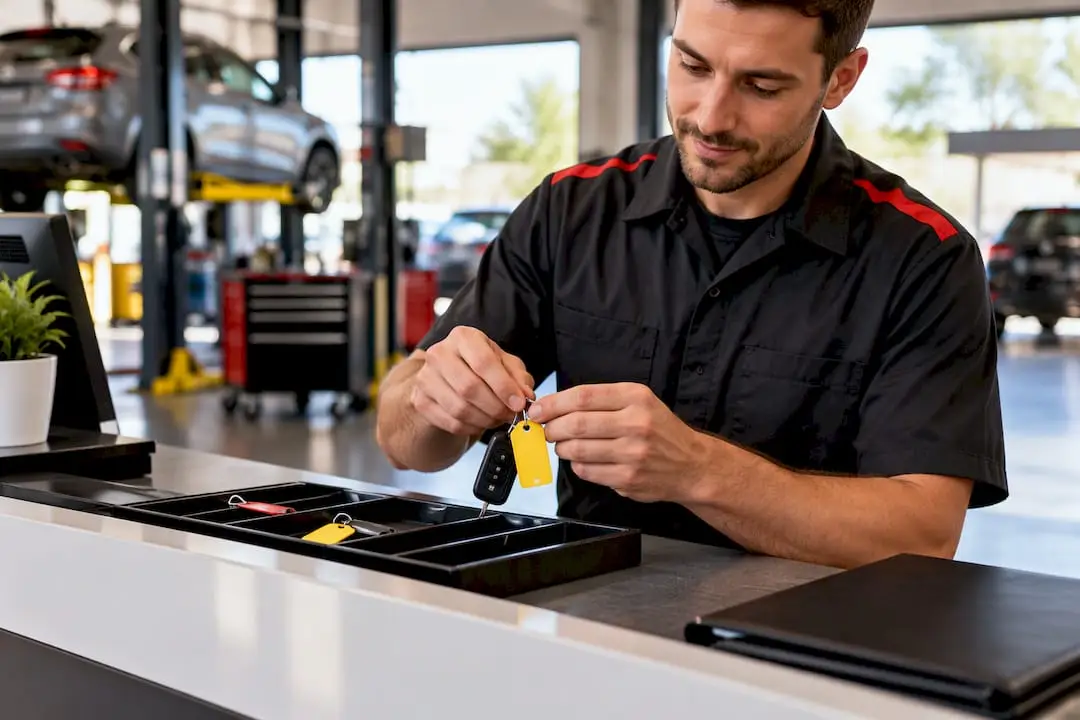
A key with no name on it is a problem waiting to happen. Label every key clearly, and if you’re leaving a wheel-lock adapter, valet key, or a second remote fob, note where it is and what it’s for.
Most shops that offer evening drop off services provide their own official envelope or digital intake form. Use it. If the shop hands you nothing, build your own simple form with:
- Your name, phone number, and email
- VIN or license plate
- The requested work or the symptoms you’re seeing
- Your authorization limit in writing
It’s worth asking two direct questions before you leave: does the shop require you to leave a spare key or fob, and does it run a Digital Vehicle Inspection (DVI) on intake? A DVI creates a photo and video record of your car’s condition and the technician’s findings, which cuts down on “it wasn’t like that when I dropped it off” disputes later. Ask for a copy.
What the Shop Should Do Next
Once your car is logged in, the shop’s job is documentation first, diagnosis second, and repair only after you say yes. ASE’s own service-consultant guidance calls for recording customer and vehicle information, the stated concern, completion expectations, and the vehicle’s condition at intake, all before a wrench touches anything.
A shop that’s doing this right will typically:
- Document mileage, damage, and warning lights during the next business period
- Run diagnostics and prepare a written estimate listing parts and labor
- Contact you before authorizing anything past your stated limit
- Attach DVI photos or video to the estimate so you can see what they found
One insight worth remembering: shops that use DVI records tend to resolve disputes over pre-existing damage faster, simply because there’s a timestamped photo trail instead of two people arguing from memory. Keep every text, email, and receipt tied to the visit. If a disagreement comes up later, that paper trail is what settles it.
Security, Liability, and Valuables: Reducing Your Risk
An unattended vehicle overnight is a different risk profile than one parked in your driveway, so it pays to ask a few pointed questions before you commit to a nighttime package drop of your keys.
- Photograph pre-existing damage, current mileage, and the fuel gauge before you leave.
- Ask whether the lot is lit and camera-monitored overnight.
- Ask if there’s a written policy covering vehicles left after hours.
- Get any special liability arrangements in writing, not a verbal promise.
- Note the name of whoever processes your drop-off, and keep your receipt or envelope stub.
Pro Tip: If the shop’s after-hours drop box requires you to fill in a form on-site, snap a photo of your completed form before you leave the lot. It’s your only copy if the original goes missing.
If a dispute ever comes up, the FTC recommends going to the shop manager first, armed with your dated photos, receipts, and copies of communications, before escalating to a consumer protection office.
Fleet Drop-Offs: Pre-Authorization Saves Time and Money
Fleet managers juggling multiple vehicles need a tighter system than an individual owner does, since a missed authorization on a work van can mean a day of lost billable hours.
- Include the unit number and driver contact on every drop-off form, not just the VIN.
- Add a PO or billing code so invoices route to the right department without a follow-up call.
- Set a standing authorization threshold for routine maintenance, so oil changes and inspections don’t need a phone call every time.
- Name a rapid-approval contact who can say yes or no within the hour for anything above that threshold.
- Document warranty and service-contract rules upfront, especially if a third-party warranty holder needs to pre-approve certain repairs.
- Flag high-downtime units for priority handling so the shop knows which vehicles need to move first.
A short standing-authorization letter, kept on file with the shop, eliminates most of the back-and-forth that slows down fleet service scheduling.
When You Shouldn’t Drive the Car In: Towing and Roadside Guidance
If the vehicle isn’t safe to drive, don’t risk it just to make a drop-off window. Call for towing instead, and have it taken directly to your chosen shop rather than trying to nurse it there yourself.
- Give the tow operator the shop’s exact name and address, not just a general area.
- Describe the vehicle, including the license plate, so there’s no confusion at drop-off.
- Mention any special handling needs, like low clearance for lifts or specific towing points for an electric vehicle.
- Keep every towing receipt and any documentation of authorization.
- Check whether your insurance or roadside assistance covers the towing and any overnight storage fees.
Skipping these details is exactly how vehicles get damaged in transport, especially with lower-clearance cars or EVs that need specific lift points.
A trustworthy after-hours drop-off should include safeguards such as documentation of every vehicle with a Digital Vehicle Inspection, transparent communication of findings, and clear warranty and service policies to ensure peace of mind when dropping off your car at night.
— Kwik Kar
Ready to Use Kwik Kar’s After Hours Drop Off?
Kwik Kar of Celina gives you a genuine alternative to rearranging your whole day around a repair shop’s hours. You leave your car overnight, we handle the intake, diagnostics, and a written estimate before touching anything beyond what you’ve approved, and you still get our complimentary ride service if you need to get moving in the morning.
Scheduling is straightforward: visit our services page to see what we cover, from diagnostics to brake repair, and let us know you’d like to use after-hours drop-off. Before you come by, jot down your contact information, set your authorization limit in writing, take a few photos of the car’s condition, and confirm where our night drop-off is located. That’s the whole checklist. Our team backs every repair with a 2-year/24,000-mile warranty, and our Digital Vehicle Inspections mean you’ll see photos and notes on exactly what we found, not just a bill. If your car has any special equipment, like a locking wheel adapter, or needs sensor recalibration after glass work, our partners at Auto Glass Kings cover what that process involves so you know what to expect. Reach out through our services page to get your after-hours drop-off scheduled.
Sources
- Auto Repair Basics | Consumer Advice
- ASE Automobile Service Consultant study guide
- AAA Auto Repair & AAA Approved Auto Repair | Find a Shop
- What to expect when you get towed (AAA)
FAQ
Is After-Hours Drop-Off Safe for My Car?
It’s generally safe when the shop documents your vehicle’s condition and has clear lot security, but you should ask about lighting, cameras, and written policies for overnight vehicles. Taking your own timestamped photos before you leave adds a second layer of protection.
Will the Shop Start Repairs Without Calling Me First?
No reputable shop should. The FTC recommends getting a written estimate and setting a clear authorization limit so the shop must contact you before any work that exceeds it.
What Should I Write on the Drop-Off Envelope or Form?
Include your full name, phone number, email, VIN or license plate, the requested service or symptoms, and a specific authorization limit. ASE’s intake guidance recommends these exact fields to avoid delays.
Does Kwik Kar Offer After Hours Drop Off?
Yes, Kwik Kar of Celina offers after-hours drop-off along with Digital Vehicle Inspections and a 2-year/24,000-mile warranty on covered repairs. Details on services and how to schedule are available on our services page.
What if My Car Isn’t Safe to Drive to the Shop?
Call for towing directly to your chosen repair shop instead of driving an unsafe vehicle. Give the tow operator the shop’s exact address and any special handling notes, and keep your towing receipt for your records.