


If you plan to keep your car for three or more years, a remanufactured transmission is usually the safer bet. It comes with a stronger warranty and fewer surprises down the road. If you’re driving an older, lower-value car or just need it running for another year or two, a local rebuild or a used unit often makes better financial sense. Warranty coverage and repair depth drive that split. The framework below will help you match your situation to the right choice.
TL;DR:
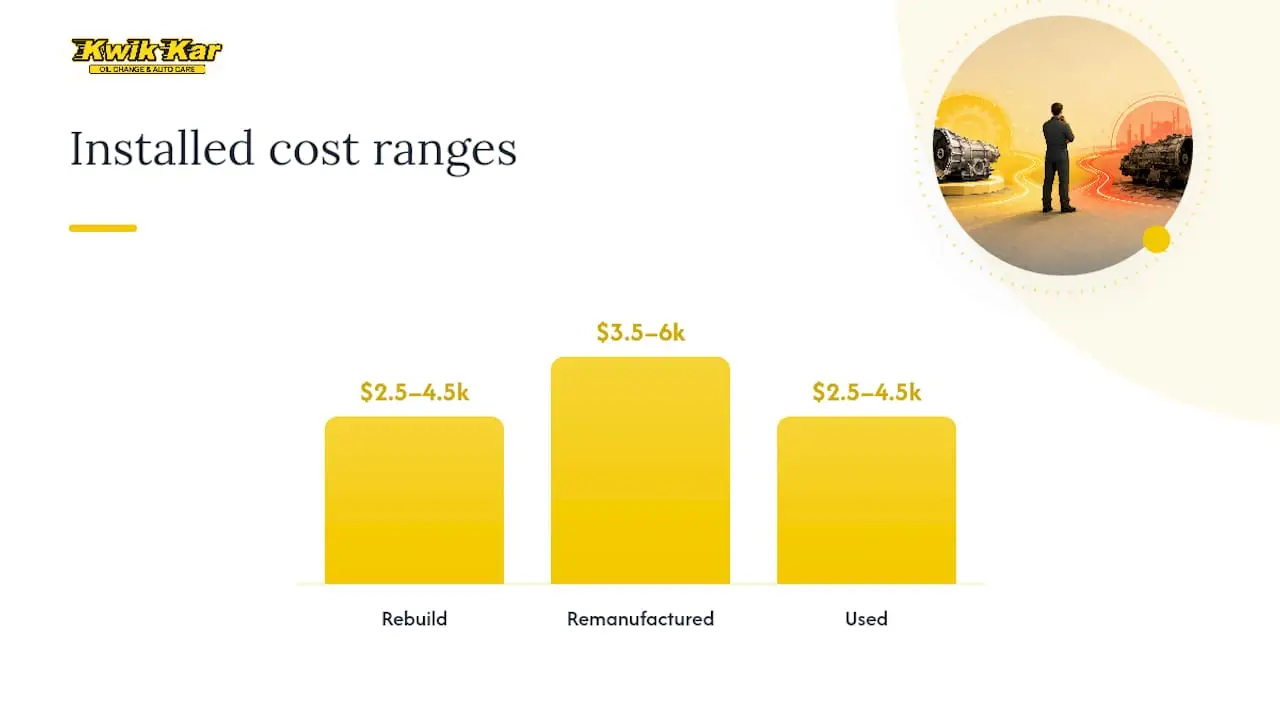
- Rebuilt transmissions typically cost between $2,500 and $4,500 with a one-year warranty, but outcomes heavily depend on the technician’s thoroughness.
- Remanufactured units cost more, usually $3,500 to $6,000, and offer a longer nationwide warranty of three years or more, enhancing reliability.
- Used transmissions are the cheapest option at $2,500 to $4,500, but they carry the highest risk due to uncertain mileage and history.
- The decision between rebuild or replacement hinges on damage severity, vehicle value, and your long-term ownership plans; local coverage matters less if you travel often.
- Prioritize a full diagnostic with documentation before repairs to avoid unnecessary costs from incomplete repairs or under-equipped shops.
Table of Contents
- Transmission Rebuild vs Replace: Three Questions That Decide It
- What Happens During a Transmission Rebuild
- Remanufactured, New, or Used: Your Replacement Options
- Transmission Rebuild Cost vs Replacement Cost: What to Expect
- How to Choose a Transmission Shop You Can Trust
- How Kwik Kar Approaches Transmission Diagnosis and Repair
- Our Take: Why the “Cheapest Fix” Question Is the Wrong One
- Get a Straight Answer Before You Spend a Dollar
- Sources
- FAQ
Transmission Rebuild vs Replace: Three Questions That Decide It
You don’t need a mechanical engineering degree to make this call. You need three honest answers about your car and your plans.
1. What’s the car worth, and how long are you keeping it?
If your transmission repair bill approaches or exceeds the car’s trade-in value, that changes the math fast. A car worth $6,000 doesn’t usually justify a $6,000 remanufactured unit. But if you’re keeping the vehicle five years or more, a remanufactured replacement often makes more financial sense over time because the warranty absorbs the risk of a repeat failure.
2. Is the damage localized or catastrophic?
A worn solenoid, a clogged filter, or a tired torque converter is a contained problem a skilled shop can fix with a rebuild. Metal shavings in the pan, a cracked case, or debris that’s traveled through the whole system point toward replacement, since a rebuild can’t undo contamination that’s already spread.
3. Do you need a nationwide warranty, or is local coverage enough?
If you travel often or might move, a shop-limited rebuild warranty can leave you stranded outside its service area. If you’re a one-shop, one-town driver who trusts your mechanic, that limitation matters less.
Answer those three questions honestly and the decision usually makes itself: contained damage plus a short ownership window points to rebuild or used; catastrophic damage plus long-term ownership points to remanufactured or new.
What Happens During a Transmission Rebuild
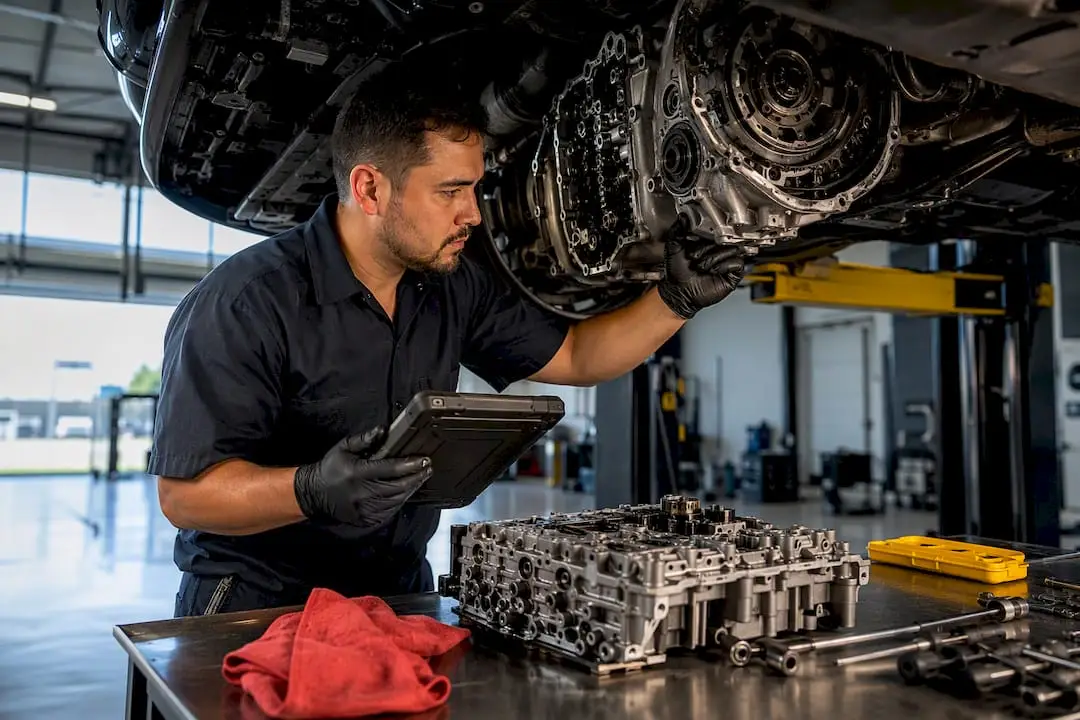
A proper rebuild starts with a full bench teardown, not a quick patch job. The technician pulls the transmission, disassembles it completely, and inspects every internal component under good light, not just the parts that are obviously failing.
Parts commonly replaced during a full rebuild:
- Clutch packs and friction materials
- Seals, gaskets, and O-rings
- Bands and bushings
- Filters and fluid
Parts often reused if they test clean:
- Valve body (unless electronic issues are found)
- Case and housing
- Some electronic components
That reuse decision is exactly where rebuilds can go wrong. Invisible valve body wear, solenoid issues, and cumulative heat damage don’t always show up in a visual inspection, and a rebuild that skips deeper testing can fail again within a year.
Pro Tip: If a shop quotes a “full rebuild” for under $2,000, ask exactly what’s included. Legitimate full rebuilds rarely come in that cheap, and a suspiciously low price often means shortcuts on parts or labor.
The upside of a well-done rebuild is lower upfront cost. The downside is variability. Outcomes depend heavily on the technician’s skill and thoroughness, more than with a factory remanufactured unit.
Remanufactured, New, or Used: Your Replacement Options
Replacing the transmission entirely opens up three distinct paths, and they don’t carry equal risk.
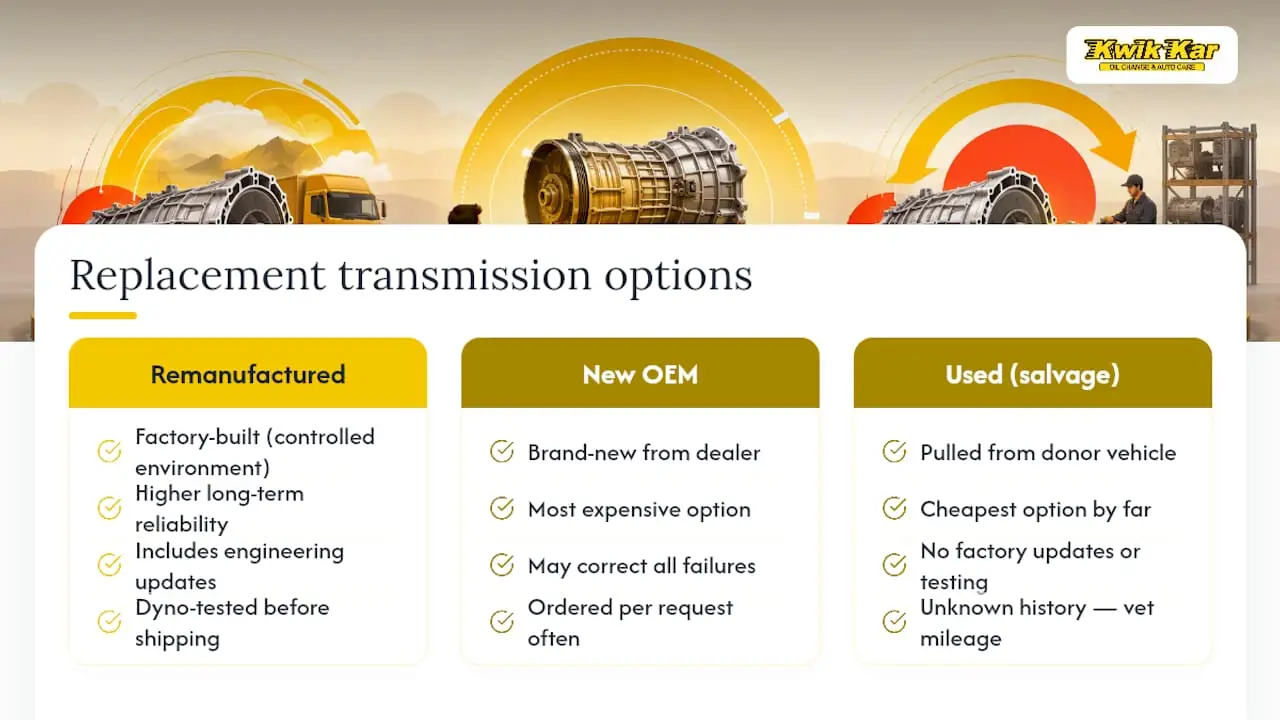
Remanufactured transmissions are built in a controlled factory environment rather than on a shop floor. Manufacturers typically incorporate engineering updates that address known weak points in that transmission model, then dyno-test the finished unit before it ships. That process is why reman units tend to outperform rebuilds on long-term reliability. Remanufactured units are engineered to correct system-level failures like valve body wear and heat damage that a standard rebuild might leave untouched.
New OEM transmissions exist for some vehicles, particularly newer models still in production. They’re the most expensive route and often have longer lead times, since dealers frequently order them per request rather than stocking them.
Used transmissions pulled from salvage vehicles are the cheapest option by far. They make sense for older, lower-value cars where you just need a working transmission and don’t expect to own the car long. Careful vetting of donor mileage and the seller’s return policy matters here more than with any other option, since you’re buying an unknown history.
Availability varies by option. A reman unit already in a distributor’s warehouse can be installed within days; a new OEM part or a hard-to-find used unit might take weeks.
Transmission Rebuild Cost vs Replacement Cost: What to Expect
The price gap between these options is real, and so is the warranty gap that comes with it.
| Option | Typical Installed Cost | Typical Warranty | Risk Level |
|---|---|---|---|
| Rebuild | $2,500–$4,500 | ~12 months, often shop-limited | Moderate, depends on shop skill |
| Remanufactured | $3,500–$6,000 | Often 3 years or more, frequently nationwide | Lower, factory-tested |
| Used | $2,500 to $4,500 | Minimal to none | Highest, unknown history |
These installed price ranges reflect both parts and labor, and they can shift based on your transmission type and regional labor rates.
The warranty gap is the number that matters most for planning ahead. Remanufactured units commonly carry three-year-or-longer nationwide coverage, while rebuild warranties often run around 12 months and may only be honored at the original shop.
For cars worth under $5,000 that you plan to sell or retire soon, a rebuild or used unit usually fits the budget. For cars you’re keeping long term, or ones worth $10,000 or more, the remanufactured route’s warranty coverage tends to outweigh the higher upfront cost.
How to Choose a Transmission Shop You Can Trust
The shop you pick matters as much as the option you choose. A skilled, specialized shop can deliver a rebuild that outlasts a sloppy remanufactured installation, so vetting the shop is not optional.
- Ask if the shop specializes in transmissions and whether its technicians hold ASE certification specific to transmission repair, not just general automotive credentials.
- Request a detailed diagnostic report, including teardown photos or a Digital Vehicle Inspection, before you approve any work.
- Get a full parts list and labor breakdown in writing, and ask what the core deposit and return policy look like if a reman unit doesn’t fit right.
- Ask specific warranty questions: How long is coverage? Is it nationwide or limited to this shop? Who pays for towing if it fails on the highway? What actions void the warranty?
- Get a second opinion if a quote seems unusually low or the shop can’t explain what a “full rebuild” actually includes.
Pro Tip: A shop that hesitates to show you the actual worn parts they pulled from your transmission is a shop you should question. Transparency about what failed and why is a good sign you’re dealing with people who know their trade.
Walk away from any shop that won’t put warranty terms in writing or that pushes you toward a decision before running a real diagnostic.
How Kwik Kar Approaches Transmission Diagnosis and Repair
At Kwik Kar of Celina, we start every transmission concern with a real diagnostic, not a guess. Our Digital Vehicle Inspection process documents exactly what our ASE-certified technicians find, with photos and plain-language notes, so you see the same evidence we do before deciding anything.
Whether a rebuild or transmission replacement makes more sense usually comes down to the same factors covered above: how contained the damage is and how long you plan to keep the car. We back our work with a 2-year/24,000-mile warranty, and we offer after-hours drop-off and complimentary ride service so a transmission repair doesn’t derail your whole week.
Our Take: Why the “Cheapest Fix” Question Is the Wrong One
Most drivers ask, “What’s the cheapest way to fix my transmission?” That’s the wrong first question. The right one is, “What’s the cheapest way to fix it that I won’t have to pay for twice?”
A rebuild that skips deep inspection of the valve body or electronics can look like a bargain for six months, then fail again right after the warranty expires. That’s not a hypothetical. It’s a documented pattern among shops that cut corners on teardown depth. A remanufactured unit costs more upfront specifically because the factory process is built to catch those weak points before they leave the assembly line.
Where conventional advice falls short is treating this as a simple price comparison. It isn’t. It’s a bet on how long you’ll own the car and how much risk you’re willing to carry after the invoice is paid. Prioritize getting an honest, documented diagnosis first. Everything else, cost, warranty length, even which shop you choose, should follow from what that diagnosis actually shows.
— Kwik Kar
Get a Straight Answer Before You Spend a Dollar
Our shop provides a documented, photo-backed diagnosis before you commit to either path, so you’re deciding based on what your transmission actually needs, not a guess over the phone.

If your transmission is slipping, hesitating, or throwing warning lights, the smartest first step is a real diagnostic, not a repair estimate pulled out of thin air. Our team runs a full Digital Vehicle Inspection so you can see exactly what’s worn, what’s failing, and what your realistic options are, backed by our 2-year/24,000-mile warranty on covered repairs. Whether the right move turns out to be a rebuild or a full transmission replacement, you’ll have the evidence in hand before you spend a cent. Browse our full service offerings or give us a call to schedule your inspection today.
Sources
- Thehowmuch
- Rebuilt vs Remanufactured Transmissions: What’s the difference? – Gearstar
- Rebuild vs Replace Transmission: Real Costs, Risks, and What Actually Lasts – Monster Transmission
FAQ
How Long Does a Rebuilt Transmission Last?
A quality rebuild can last as long as the original transmission did if the shop replaces all worn components and tests it thoroughly, but outcomes vary more than with a remanufactured unit since some rebuilds leave hidden wear like valve body damage unaddressed.
How Much Does It Cost to Rebuild a Transmission?
A full transmission rebuild typically costs $2,500 to $4,500 installed, depending on your vehicle and the extent of the damage.
Is a Rebuilt Transmission Worth It?
It’s worth it for lower-value vehicles or shorter ownership windows, especially when a skilled, transmission-specialized shop handles the work. For long-term ownership, a remanufactured unit’s stronger warranty usually offers better value.
Is Rebuilding a Transmission Cheaper Than Replacing It?
Yes, rebuilds generally cost less upfront than remanufactured replacements, which run $3,500 to $6,000 installed, but that gap narrows when you factor in the shorter, often shop-limited warranty that comes with most rebuilds.
Should I Get a Second Opinion Before Approving Transmission Work?
Yes. A second diagnostic, ideally one backed by a Digital Vehicle Inspection, helps confirm whether the damage is localized enough for a rebuild or serious enough to justify a full transmission replacement.