


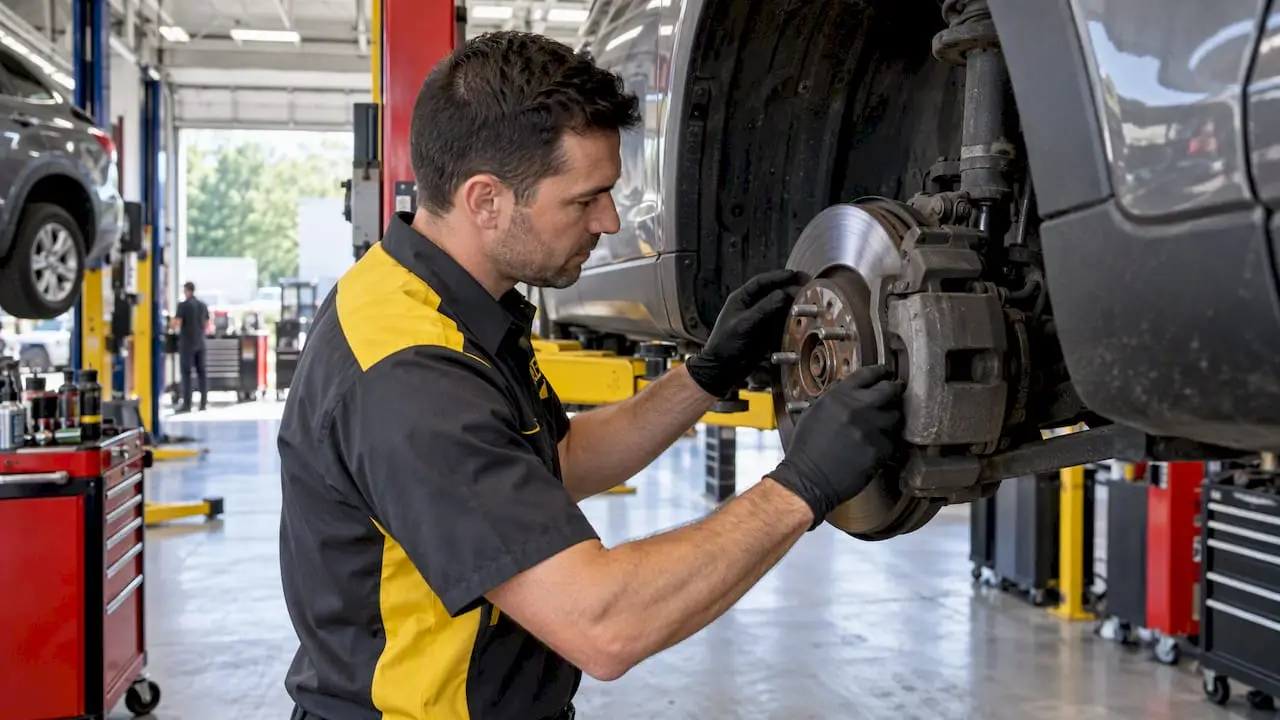
Most brake squeal comes down to one of five things: worn pads nearing their wear indicator, moisture or light surface rust, glazed pads or rotors, loose or dry hardware, or a sticking caliper. If the noise shows up only after rain or a wash, it’s usually temporary. Grinding, a soft pedal, or a lit brake warning light means you should get your brakes inspected right away.
TL;DR:
- A squeal after rain or washing that fades after a few stops usually comes from surface rust; persistent noise after hard braking may indicate glazing.
- Grinding, vibration, pulling, longer stopping distances, reduced braking, or a warning light require prompt inspection; do not continue driving with impaired stopping performance.
- At the curb, park on level ground, set the parking brake, inspect pad thickness and rotor grooves through the spokes, and note whether gentle stops change the sound.
- Never spray lubricant on pads or rotors because it reduces braking grip; have a technician lubricate only nonfriction hardware contact points.
- A hum that grows with speed or changes while turning, even when you are not braking, may signal a wheel bearing issue.
Table of Contents
- 1. Common Causes of Brake Squeal
- 2. How Do You Know If It’s Temporary or a Real Problem?
- 3. Quick, Safe Checks You Can Do at the Curb
- 4. What Not to Do When Your Brakes Squeak
- 5. Preventing Brake Squeal Through Routine Maintenance
- 6. When to See a Pro: Inspection Checklist and What a Shop Will Do
- 7. How Brake Dust Buildup Affects Noise and Performance
- 8. Why Humidity and Temperature Change the Way Brakes Sound
- 9. Why Brake Adjustment and Alignment Matter
- 10. Can a Bad Wheel Bearing Cause Brake-Like Noise?
- Why We Believe in Fixing the Cause, Not Just the Noise
- How Our Brake Service Keeps You Moving Safely
- FAQ
- Sources
1. Common Causes of Brake Squeal
Brake noise almost always traces back to friction, hardware, or moisture, and each cause leaves its own clues.
Worn brake pads are the most frequent reason behind that persistent squeal. Most pads include a steel acoustic wear indicator, a small tab designed to touch the rotor and make noise once the friction material wears thin. According to CRC Industries, this indicator activates when the friction material wears thin. That noise is a built-in warning, not a malfunction, and it’s telling you to replace the pads before the rotor surface takes damage.
Moisture and light surface rust cause a different kind of squeal, usually a sharp, high-pitched sound that shows up after rain, a car wash, or an overnight dew. A thin layer of rust forms on the rotor surface whenever brakes sit unused in damp air, and the first few stops scrape it off. This type of noise typically clears up within a handful of stops and isn’t a sign of trouble.
Glazed pads or rotors tell a different story. When brakes get too hot, repeatedly riding the pedal down a long hill or towing a heavy load, the friction material can harden and develop a smooth, glassy surface. That glazing changes how the pad grips the rotor and tends to produce a steady squeal that doesn’t go away with a few stops.
Loose or missing hardware is another common culprit. Brake pads rely on clips, shims, and slider pins to stay seated correctly and move smoothly. Power Stop’s guidance on squealing brakes points to damaged clips, insufficient lubrication, and loose hardware as recurring causes, and recommends careful lubrication of non-friction contact points during pad installation.
A sticking caliper or seized slider pin can cause continuous noise along with uneven pad wear, since the pad doesn’t retract evenly between stops.
New brakes can squeal too if the bed-in procedure wasn’t followed or if the pads and rotors aren’t properly matched.
Here’s a quick rundown of what to listen for:
- Worn pads: a steady, high-pitched squeal that gets louder as you brake, tied to the wear indicator.
- Moisture or rust: a sharp squeal right after rain or washing that fades within a few stops.
- Glazing: a persistent squeal that shows up after hard or repeated braking.
- Loose hardware: rattling or intermittent squeal, often worse over bumps.
- Sticking caliper: constant noise paired with uneven wear or pulling.
- Trapped debris: a brief, scratchy squeak that comes and goes as small stones or sand work their way out.
2. How Do You Know If It’s Temporary or a Real Problem?
Not every squeal means something’s wrong, but a few signals separate a nuisance noise from a genuine safety concern.
- Check the timing. A squeal that only appears after your car sat in rain, snow, or heavy dew, and clears up after a few stops, usually points to surface rust rather than a mechanical fault.
- Listen to the sound quality. A quick, high-pitched squeal is generally harmless. Grinding or a metal-on-metal scraping sound is not, and it often means the pad material is gone and metal is contacting metal.
- Watch for other symptoms. Vibration in the steering wheel or brake pedal, the car pulling to one side, a noticeably longer stopping distance, or a lit brake warning light all call for an inspection without delay.
- Look for visual clues. If you can see the pad through the wheel spokes and it looks thin, or the rotor surface shows deep grooves or flaking rust, that supports a wear-related cause.
- Apply the wear indicator rule. When the friction material wears thin, the built-in indicator is designed to make noise, and CRC Industries notes that replacement helps avoid rotor damage.
When the squeal is paired with any of those warning symptoms, treat it as a reason to get your brakes checked rather than wait it out.
3. Quick, Safe Checks You Can Do at the Curb
A few simple observations can help you and a technician narrow down the cause before you ever set foot in a shop.
- Park on level ground and set the parking brake. A stable, secure vehicle is the first condition for any safe visual check.
- Look at the pad thickness through the wheel. On most wheels you can see the outer pad pressed against the rotor; a pad that looks like a thin sliver rather than a solid block needs attention soon.
- Check for visible debris or buildup. Small stones, sand, or heavy dust around the caliper and rotor edge can cause transient squeaks that clear on their own once dislodged.
- Run a short, low-speed test. On a quiet street, make a few gentle stops from low speed and note whether the noise happens every time, only on the first stop, or only after the brakes have warmed up.
- Avoid touching hot components. Rotors and calipers can stay hot long after driving, so if you’re not confident removing a wheel safely, skip it and let a technician handle the inspection.
Pro Tip: Snap a quick photo of the pad thickness and rotor surface with your phone. It gives a technician a useful starting point and makes it easier to track wear over time, something a Digital Vehicle Inspection does as a matter of course.
4. What Not to Do When Your Brakes Squeak
A few instinctive fixes can make squealing brakes more dangerous rather than less.
- Never spray WD-40 or any lubricant on the rotor or pad surface. Lubricant on the friction surface reduces the grip your brakes depend on and can seriously compromise stopping power.
- Don’t keep driving on reduced braking performance or a lit warning light. Continuing to drive in that condition risks a more serious failure down the road.
- Skip sound-damping shortcuts like adhesive patches or temporary pad inserts that mute the noise without addressing what’s causing it.
- If you must drive to a shop, keep it low-risk. Limit your speed, avoid towing or carrying heavy loads, and head directly to a qualified technician rather than running errands first.
5. Preventing Brake Squeal Through Routine Maintenance
A handful of maintenance habits go a long way toward keeping brakes quiet and reliable.
- Follow the bed-in procedure on new pads and rotors. A proper break-in cycle, a series of controlled stops from moderate speed, helps the friction material seat evenly and reduces the odds of squeal later.
- Know that friction material affects noise. Research on brake friction materials shows that friction properties and contact conditions influence stick-slip behavior, which is the vibration pattern behind squeal, as detailed in SAE technical research on friction properties. Ceramic, semi-metallic, and low-metal pads each behave differently under heat, which is part of why some vehicles run quieter than others.
- Keep hardware clean and lubricated. Backing plate contact points and slider pins should be checked and lubricated during routine service to prevent the rattling and drag that cause noise.
- Don’t overlook brake fluid. Fluid condition affects overall brake feel and performance, and it’s worth asking your shop to check it during any brake inspection, as outlined in RepairPal’s brake system inspection guidance for the 2025 BMW 430i xDrive Gran Coupe. A brake fluid flush on a regular schedule helps avoid fade and keeps the system responsive.
6. When to See a Pro: Inspection Checklist and What a Shop Will Do
Certain symptoms mean it’s time to stop troubleshooting on your own and get a technician involved.
- Red flags that call for an inspection right away: grinding noise, noticeably reduced stopping power, the car pulling to one side, or a lit brake warning light. RepairPal’s cost estimate guidance for the 2025 Kia Seltos brake system inspection notes that any of these symptoms warrants inspection because the underlying issue can progress toward failure if ignored.
- What a technician checks: pad thickness, rotor surface condition for scoring or glazing, caliper slide and piston movement, hardware and shim placement, and brake fluid and line condition. RepairPal describes this as starting with a complaint-driven test drive followed by a full physical inspection.
- Common repairs that follow: cleaning and lubricating hardware, replacing pads and rotors when thickness or scoring calls for it, servicing or replacing a sticking caliper, and performing a proper bed-in with a test drive before handing the car back.
- Ask for documentation. A written estimate and photos, the kind provided through a Digital Vehicle Inspection, give you a clear picture of what’s worn and what’s optional before you approve any repair. For rotor-specific guidance, signs it’s time for new brake rotors walks through the visual cues technicians look for.
7. How Brake Dust Buildup Affects Noise and Performance
Brake dust is a normal byproduct of friction material wearing down against the rotor, and it accumulates on wheels, calipers, and backing plates over time. A light coating is cosmetic, but heavy buildup around the pad and caliper can interfere with how smoothly the pad moves and seats against the rotor.
When dust mixes with road grit and gets packed into corners of the caliper bracket, it can contribute to uneven pad contact and a gritty or scratchy noise during light braking. It can also mask early signs of wear, making it harder to spot a thin pad or a scored rotor just by looking.
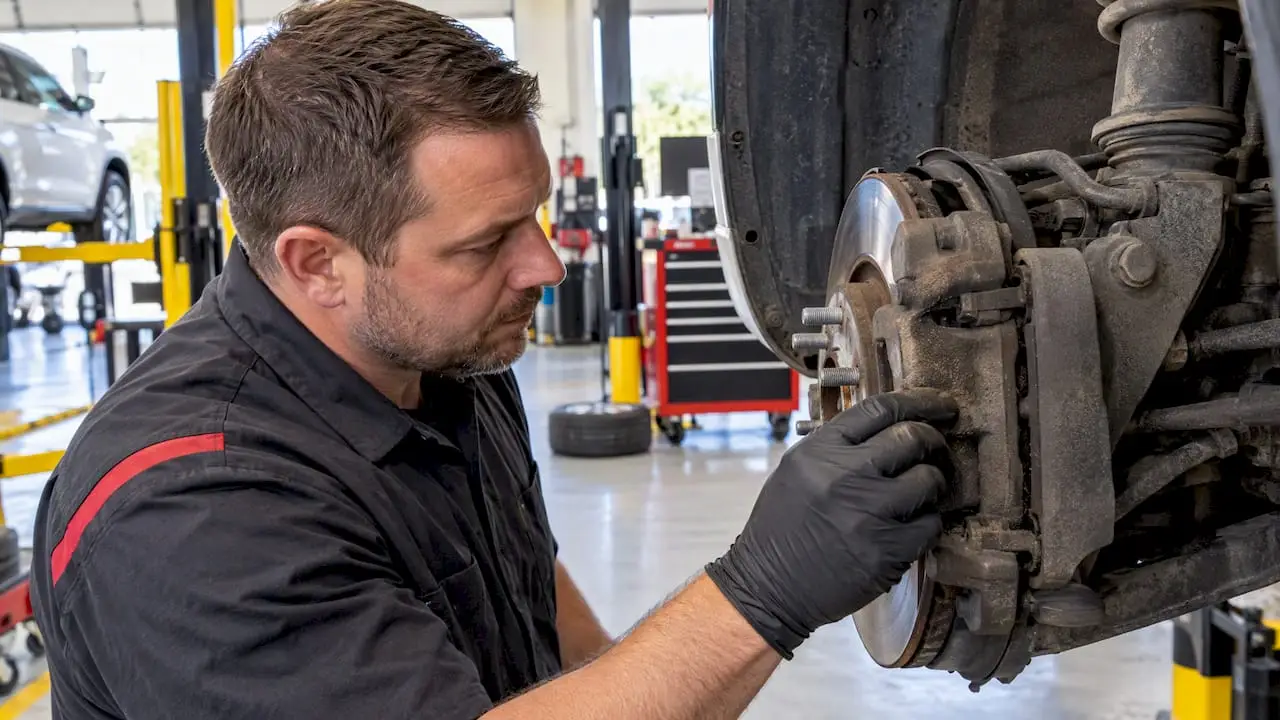
Routine cleaning during tire rotations or oil changes helps keep dust from building up to the point where it affects pad movement. If you notice heavy dust buildup paired with a new noise, it’s worth having a technician take a closer look rather than assuming it’s just cosmetic residue.
8. Why Humidity and Temperature Change the Way Brakes Sound
Weather plays a bigger role in brake noise than most drivers realize. Humid mornings, overnight dew, and rainy drives all leave a thin film of moisture on the rotor surface, which oxidizes into light surface rust within hours. The first several stops after that kind of exposure often produce a sharp squeal as the rust scrapes away, something that’s completely normal in damp climates or after a car wash.
Temperature swings matter too. Research into the thermal behavior of friction materials shows that pad compounds change their elastic properties as they heat up, shifting the frequencies at which the brake assembly vibrates and, in turn, affecting whether squeal occurs, a pattern described in SAE research on thermal behavior and brake squeal. That’s part of why some vehicles squeal more on cold mornings and quiet down once the brakes warm up during a longer drive, or the reverse, depending on the pad material installed.
9. Why Brake Adjustment and Alignment Matter
Brakes that aren’t properly adjusted or aligned don’t just wear unevenly, they’re also more prone to noise. When a caliper isn’t centered correctly over the rotor, one pad can contact before the other, creating uneven pressure and a vibration that shows up as squeal.
Alignment issues elsewhere in the vehicle can compound the problem. A caliper bracket that’s slightly out of position, or hardware that’s been reinstalled without proper torque, changes how evenly the pad presses against the rotor during every stop. Over time, that uneven contact accelerates wear on one side of the pad and can introduce the kind of vibration that drivers describe as a pulsing or grinding squeal rather than a clean tone.
Proper adjustment during a brake service, checking that calipers move freely and sit square to the rotor, is part of what keeps the whole system quiet and wearing evenly on both sides.
10. Can a Bad Wheel Bearing Cause Brake-Like Noise?
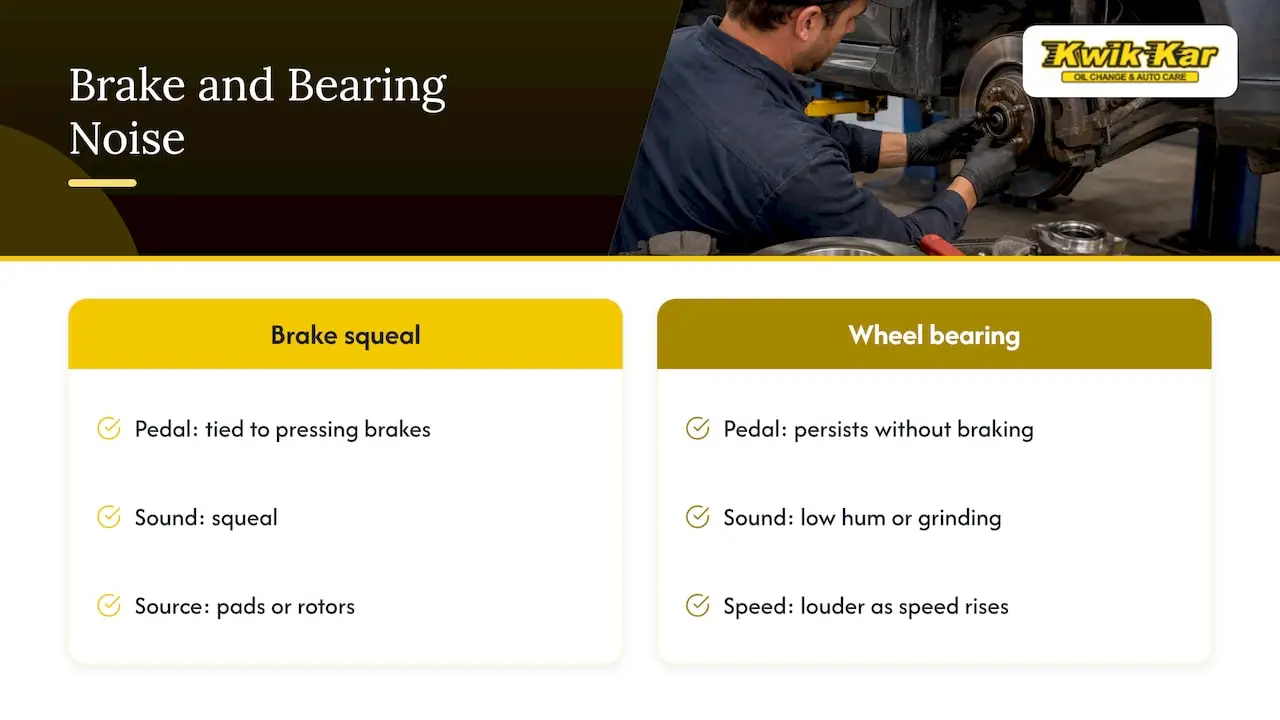
A failing wheel bearing can produce noise that’s easy to mistake for brake squeal, which is why it’s worth ruling out when the sound doesn’t match the usual pad or rotor pattern. Bearing noise typically changes with vehicle speed rather than brake pedal pressure, often described as a low humming or grinding that gets louder the faster you drive and may shift in pitch when turning.
The key difference is that true brake squeal almost always ties directly to pressing the pedal, while a bearing issue tends to persist whether you’re braking or not. If you notice a hum that grows with speed, along with any looseness or vibration felt through the steering wheel, it points toward the wheel bearing rather than the brake pads or rotors, and it’s worth mentioning to your technician alongside any brake noise so they can check both during the same inspection.
Why We Believe in Fixing the Cause, Not Just the Noise
Our technicians treat brake squeal as a diagnostic question, not just an annoyance to silence. We document pad thickness, rotor condition, and hardware wear, so you can see what’s driving the noise before deciding on repairs.
We’d rather explain what’s actually happening with your brakes than mask a sound that might be telling you something important. Choosing a shop that documents its findings and walks you through your options, instead of guessing, makes it easier to trust the recommendation you get.
— Kwik Kar
How Our Brake Service Keeps You Moving Safely
A squeal that won’t quit is frustrating, but getting it checked doesn’t have to disrupt your week. Our brake repair service in Celina gives you a clear look at your pads, rotors, and hardware instead of a vague verdict.
- We stand behind our brake work.
- After-hours drop-off and complimentary ride service mean you can get your brakes looked at without rearranging your whole schedule.
- If your brakes are squealing, grinding, or feel different under your foot, it’s worth getting ahead of it before a minor fix turns into a bigger repair.
If any of the red flags in this guide sound familiar, from persistent squeal to reduced stopping power, schedule a brake inspection with our team and we’ll walk you through exactly what we find.
FAQ
How do I get my brakes to stop squealing?
Start by identifying the cause: clean off surface rust with a few gentle stops, or have a technician clean and lubricate hardware if the noise is tied to loose clips or slider pins. If the squeal comes from worn pads nearing the wear indicator, replacing the pads is the only lasting fix.
Is it okay to drive with squealing brakes?
A brief squeal after rain or washing is generally fine to drive through, since it often clears up on its own. If the noise is constant, paired with grinding, vibration, reduced stopping power, or a lit brake warning light, you should have your brakes inspected before continuing to drive.
How much will it cost to fix squeaky brakes?
Cost depends on the cause: cleaning and lubricating hardware costs far less than replacing pads and rotors, and pricing varies by vehicle and shop. Ask for a written estimate before approving any work so you know exactly what you’re paying for and why.
Can you spray WD-40 on brakes to stop squeaking?
No, spraying WD-40 or any lubricant on the rotor or pad friction surface reduces the grip your brakes need to stop safely and should never be used as a fix. If hardware needs lubrication, it belongs only on non-friction contact points like slider pins and backing plate tabs, and that’s a job best left to a technician.
Sources
- Why Are My Brakes Squeaking? Causes & How to Fix It
- 2019-01-2132: The Analysis of Brake Squeal Noise Related to the Friction Properties of Brake Friction Materials – Technical Paper
- 2025 BMW 430i xDrive Gran Coupe Brake System Inspect Cost Estimate
- What Causes Brake Squeal and How To Solve It