



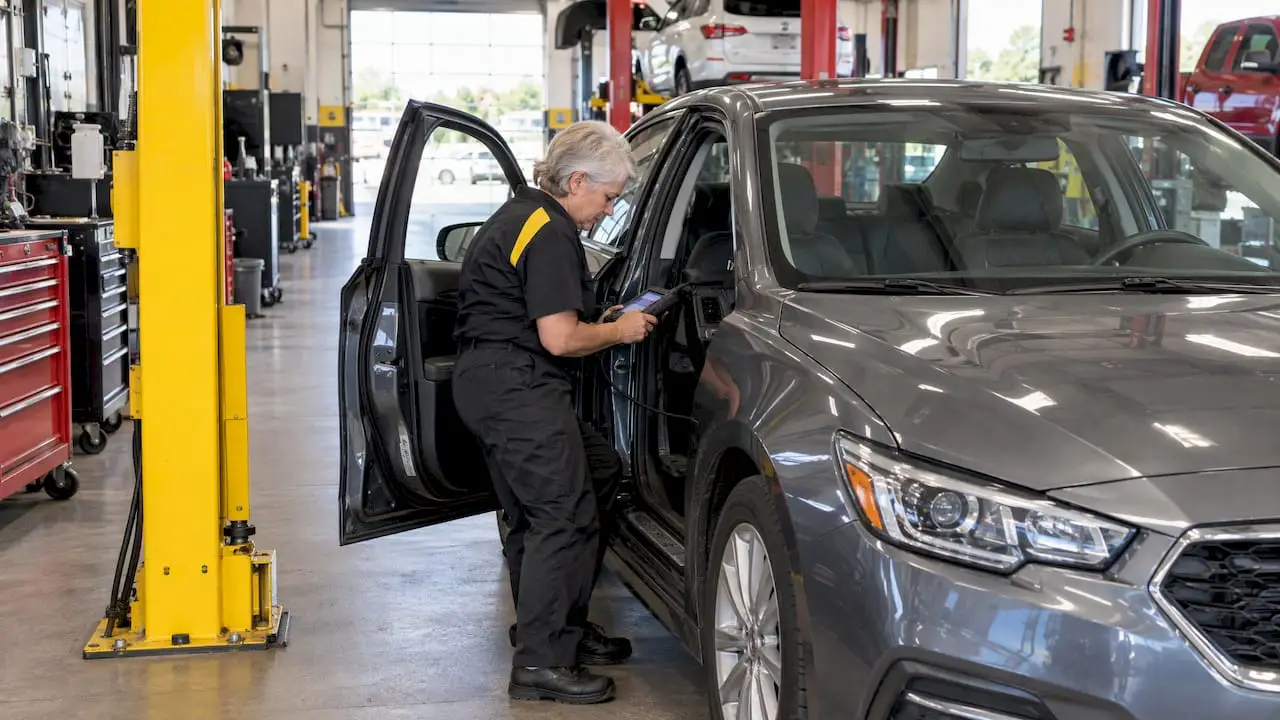
Yes. Collin County is one of the Texas emissions counties, so most gasoline vehicles registered here still need a passing emissions test before the registration can be renewed. Texas dropped annual safety inspections for most noncommercial vehicles on January 1, 2025, and that change is the source of most of the confusion. The emissions test was not part of it.
At Kwik Kar of Celina, we hear this question from Celina, TX drivers every renewal season. Below we explain who needs the test, what it checks, what it costs, and what to do if your vehicle fails.
TL;DR
- Collin County requires an annual emissions inspection for gasoline vehicles 2 through 24 years old.
- Most noncommercial vehicles in Texas no longer need an annual safety inspection as of January 1, 2025. Qualifying vehicles in Collin County still need emissions testing.
- A passing emissions result comes before registration renewal, so the test is part of your registration routine.
- A failed vehicle gets one free retest at the same station within 15 days if you bring a completed repair form.
- Commercial vehicle inspection rules differ from noncommercial rules.
Table of Contents
- Does Collin County require emissions testing in 2026?
- What changed in Texas on January 1, 2025?
- Which vehicles need the test?
- When do you need to get the test done?
- What does an emissions test check?
- How much does the emissions test cost in Collin County?
- What happens if your vehicle fails?
- What should you do before the test?
- A trouble code is a clue, not a verdict
- Do commercial vehicles follow the same rules?
- Where Kwik Kar of Celina fits in
- FAQ
- Sources
Does Collin County require emissions testing in 2026?
Yes. The Texas Department of Public Safety (DPS) lists Collin among the affected counties. Its criteria page says gasoline-powered vehicles 2 through 24 years old registered in emissions counties receive the OBDII test.
OBDII stands for On-Board Diagnostics, second generation. It is the computer system built into modern vehicles that monitors the engine and emissions equipment. The test station connects to it and reads what it reports.
The Texas Commission on Environmental Quality (TCEQ) says enhanced emissions inspections began in Collin, Dallas, Denton, Harris and Tarrant Counties on May 1, 2002. So this is a long-running program, not a new rule. Bexar County’s enhanced inspections are scheduled to begin November 1, 2026, per the same TCEQ page.
What changed in Texas on January 1, 2025?
House Bill 3297 ended the comprehensive safety inspection for noncommercial vehicles. A January 2026 DPS news release confirms that safety inspections were eliminated on January 1, 2025, but that Texans with vehicles registered in emissions counties still need an emissions test before registration.
The state also kept a fee. A TxDMV bulletin explains that the $7.50 annual charge continues as the Inspection Program Replacement Fee, and it is $16.75 for a new vehicle’s first two years. You pay it at registration. It is separate from the test fee a station charges.
The short version for a Collin County driver:
- No yearly safety inspection for most noncommercial vehicles.
- Yes to the yearly emissions test if your vehicle qualifies.
- Yes to the replacement fee at registration.
We cover the broader picture in our Texas vehicle inspection checklist, and our TX State Inspections page describes that service.
Which vehicles need the test?
TCEQ’s quick facts say gasoline vehicles from 2 to 24 model years old are inspected annually, starting with the vehicle’s second anniversary. The same page says electric vehicles, diesel vehicles, motorcycles and mopeds are not required to be inspected.
Here is how that plays out in a driver’s real life:
| Vehicle | Emissions test required in Collin County? |
|---|---|
| Gasoline car, truck or SUV, 2 to 24 years old | Yes |
| Brand-new vehicle in its first year or so | Not until its second anniversary |
| Gasoline vehicle older than 24 years | Not under the 2 to 24 year rule |
| Electric vehicle | No |
| Diesel vehicle | No |
| Motorcycle or moped | No |
The Collin County Tax Assessor’s title transfer page also lists exemptions, including 1996 or newer vehicles with under 50,000 miles, along with diesel, motorcycle, antique, title-only and dual-fueled vehicles. That list applies to title transfers, so ask the Tax Assessor’s office if your situation involves a sale or title change.
Not sure which category your vehicle falls in? Check the model year on your registration or door-jamb label and count from there. If it is a gasoline vehicle between 2 and 24 years old, plan on the test.
When do you need to get the test done?
Texas uses a program called Two Steps, One Sticker, which began March 1, 2015. Under it, you pass the emissions inspection first, then renew your registration. TCEQ says vehicles registered in Collin County cannot renew if the vehicle has not passed or complied with program requirements.
The Collin County Tax Assessor’s motor vehicle page says to have the vehicle inspected within 90 days before your sticker expires. Check that page and your renewal notice for your own timeline.
A practical routine looks like this:
- Note your registration expiration month when the notice arrives.
- Start about two to three months ahead, inside the 90-day window.
- Deal with any dashboard warning light before the test, not after.
- Take your passing result to renew online, by mail or in person.
If you are new to Texas, the county asks you to register within 30 days of moving here. The sequence on its new resident page is: Texas insurance, an emissions inspection in the county where the vehicle will be registered, registration with the County Tax Assessor, then a Texas driver’s license.
One detail worth knowing: the DPS locator notice says a vehicle presented for inspection in an emissions county gets an emissions test regardless of the county where it is registered.
What does an emissions test check?
The test is mostly a computer read, not a tailpipe probe. The station plugs into your vehicle’s OBDII port and looks at what the onboard computer reports. DPS lists the emissions items checked: the catalytic converter system, EGR system, evaporative emissions control system, exhaust system, gas cap, intake system and PCV system, along with the OBDII test.
A few plain-language definitions:
- Catalytic converter: part of the exhaust that converts harmful gases into less harmful ones.
- EGR system: recirculates some exhaust back into the engine to reduce emissions.
- Evaporative emissions system: keeps fuel vapors from escaping the tank and fuel lines. The gas cap is part of this.
- PCV system: vents pressure from inside the engine back into the intake.
The DPS inspector study guide notes that OBD II protocol began in 1996, and it describes the test’s purpose as making sure vehicles emit the minimum level of pollutants through their useful life.
What are readiness monitors and why do they matter?
Your vehicle’s computer runs self-checks on its emissions systems. Those self-checks are called readiness monitors. If you recently disconnected the battery or cleared a trouble code, the monitors can show “not ready,” and a station may not be able to complete the test.
The reasonable approach is to fix the real problem, then drive normally for a while so the monitors complete on their own. Our guide on OBD readiness monitors explains what they are and how they set.
How much does the emissions test cost in Collin County?
Stations may charge up to $18.50 for the emissions test in Dallas-Fort Worth area counties, including Collin. That is a maximum, so a station can charge less. The $7.50 replacement fee is a separate charge paid at registration.
So your total yearly cost has two parts: the station’s test fee, and the state’s fee when you register. Fees can change, so confirm the amount with the station before you go.
What happens if your vehicle fails?
A failed test blocks your registration renewal until the vehicle passes. It does not mean something catastrophic. It means the computer or the equipment found something outside the allowed range.
Here is what the rule gives you. Under Texas Administrative Code, the test fee includes one free retest if all three conditions are met:
- The retest is at the same station.
- You submit a properly completed vehicle repair form showing emissions-related repairs.
- The retest happens within 15 days of the first test.
The 15-day clock is the part drivers miss. If a repair needs a part that takes longer to arrive, ask the station how to handle it before the window closes.
Are there waivers or extensions?
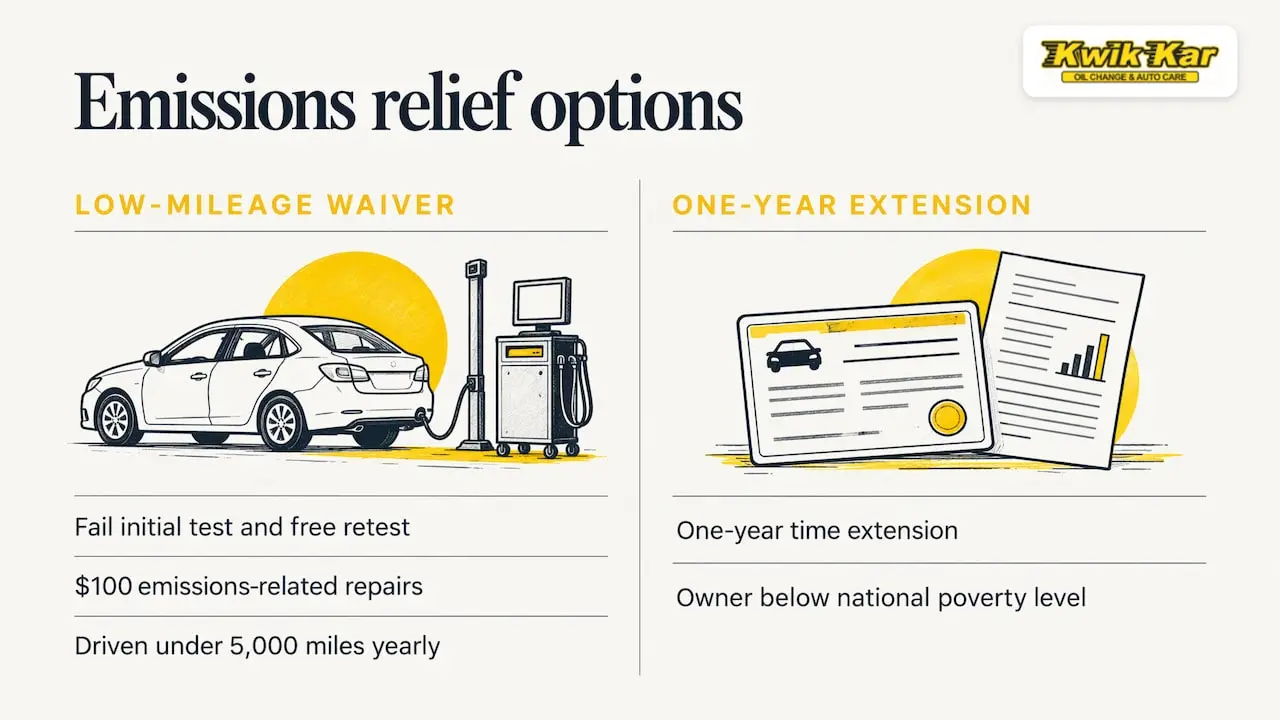
Only in limited cases. The DPS study guide describes a low-mileage waiver: the vehicle fails the initial test and the free retest, the owner has spent $100 on emissions-related repairs, and the vehicle is driven less than 5,000 miles a year. It also describes a one-year time extension for low-income owners below the national poverty level. Not every failing vehicle qualifies.
Why do vehicles fail?
Common reasons trace back to the list of items checked:
- A check engine light that is on, with stored fault codes.
- A loose, damaged or wrong gas cap that lets fuel vapor escape.
- An aging catalytic converter. Our page on catalytic converter failure symptoms lists what to watch for.
- Exhaust leaks or a failing oxygen sensor.
- Readiness monitors that have not completed.
What should you do before the test?
A little preparation avoids a wasted trip and a failed result on your record.
- Look at the dashboard. If the check engine light is on, get it diagnosed first.
- Check the gas cap. Tighten it until it clicks, and replace it if the seal looks cracked.
- Do not clear codes right before the test. Clearing them resets the readiness monitors to “not ready,” which can cause a second failure for a different reason.
- Drive the vehicle normally for a few days after any battery work or repair.
- Bring your registration and insurance.
A trouble code is a clue, not a verdict
When the check engine light comes on, the computer stores a diagnostic trouble code. That code tells you which system reported a problem. It does not prove which part has failed.
An oxygen sensor code, for example, can come from the sensor itself, from wiring, or from an exhaust or fuel issue that makes the sensor read badly. Replacing parts based on the code alone can cost money and still leave the light on. We explain why in our article on checking OBD II live data before replacing an oxygen sensor, and our overview of the OBD-II diagnostic test covers the process.
If your vehicle is on the borderline for a model-specific issue, the right fix depends on the make, engine and mileage. Qualify any advice you read online with your own vehicle’s details.
Do commercial vehicles follow the same rules?
No. Commercial vehicle inspection rules differ from noncommercial rules. The DPS inspection page notes that all commercial vehicles are still required to be inspected, so the 2025 change does not apply to them in the same way.
If you manage a business fleet in Collin County, confirm which of your vehicles are classed as commercial and which as noncommercial. The mix matters for scheduling. For a broader look at how inspections tie into fleet safety, see this overview of commercial vehicle inspections in fleet safety. Our fleet maintenance checklist helps keep vehicles ready between inspections.
Where Kwik Kar of Celina fits in
The test itself is a short appointment. The hard part is what comes before and after: a warning light that will not go away, or a failed result you need to turn into a passing one.
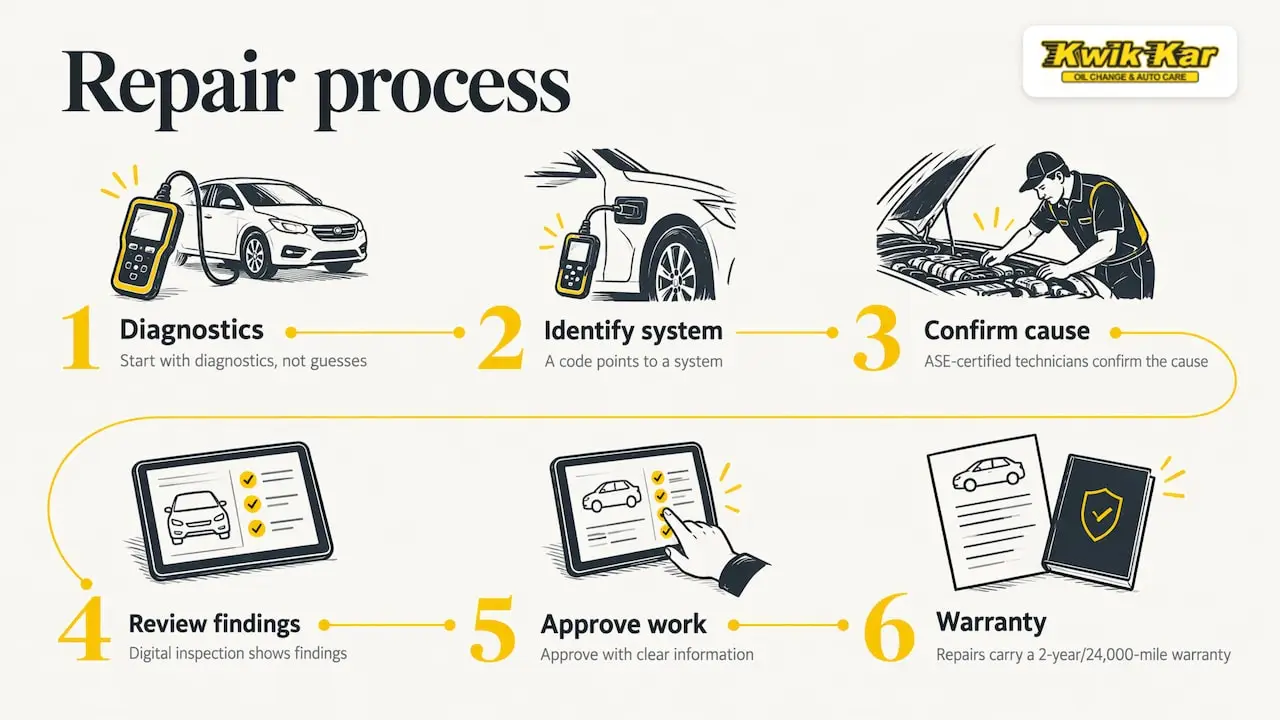
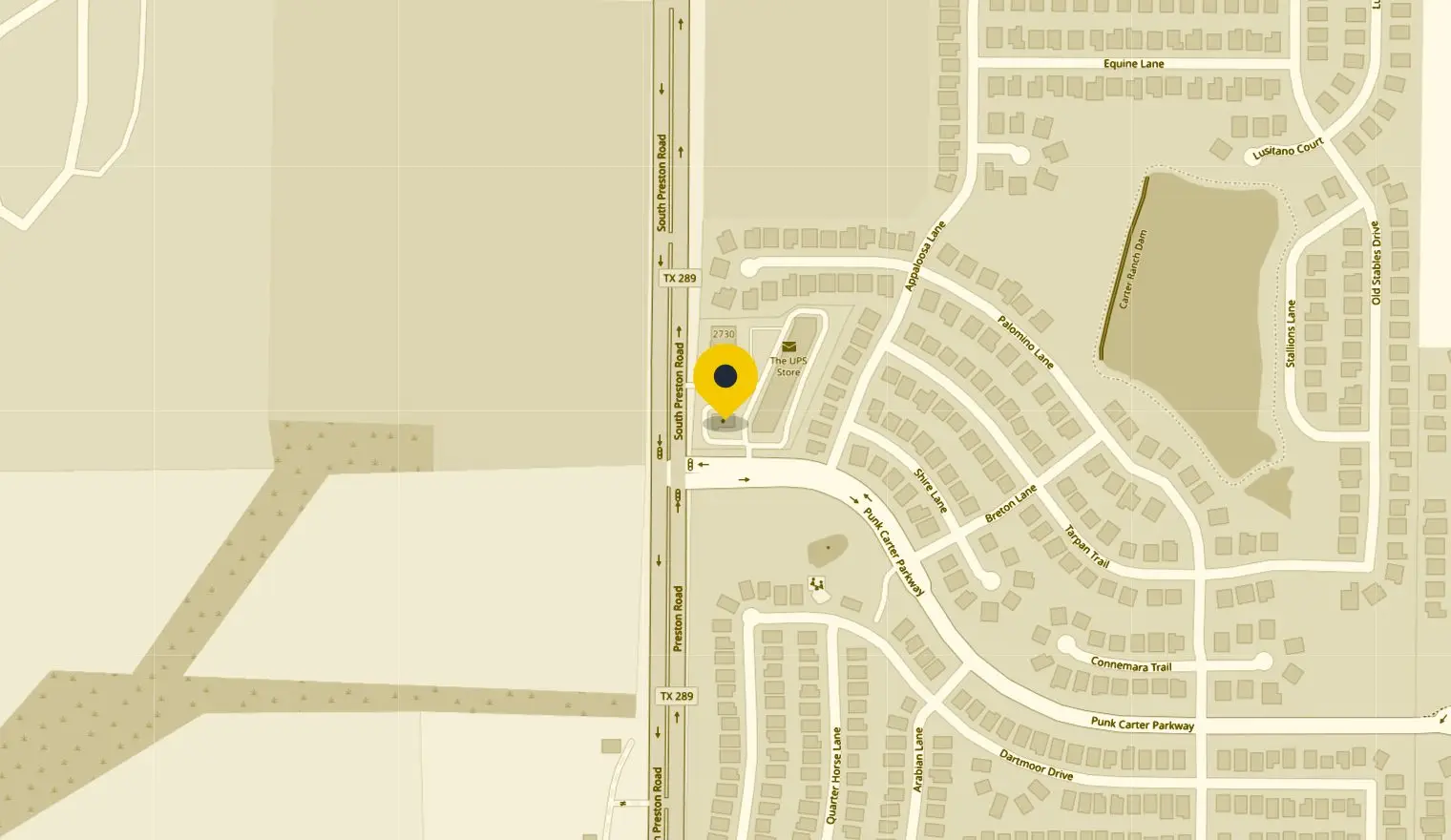
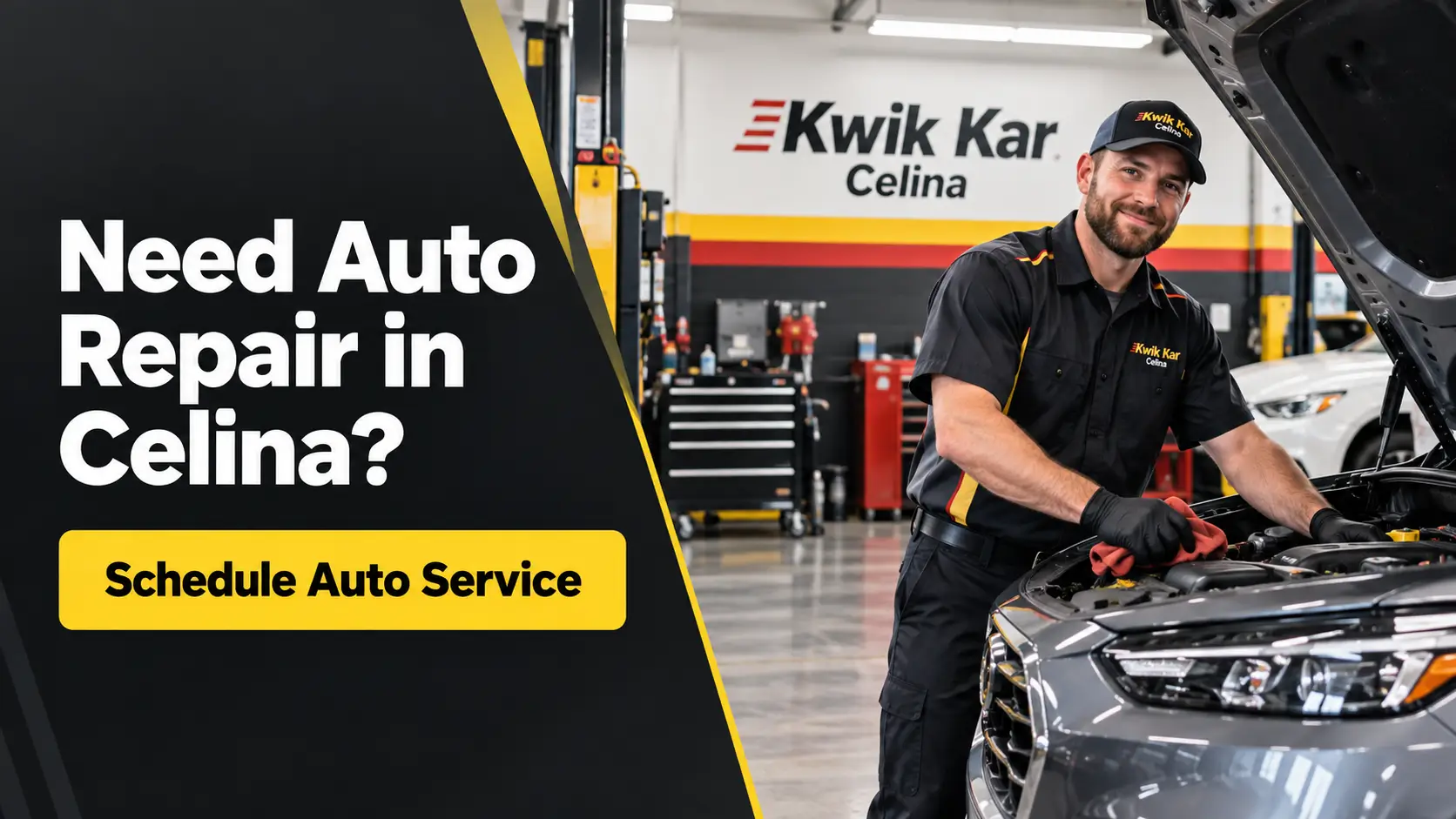
Kwik Kar of Celina in Celina, TX offers diagnostics and exhaust system repair, two of the areas that most often sit behind an emissions failure. Our ASE-certified technicians use Digital Vehicle Inspections, so you can see what we see and decide with clear information. Repairs carry a 2-year/24,000-mile warranty.
Busy schedule? We offer after-hours drop-off and a complimentary ride service, so a repair does not have to cost you a workday. European car owners can also bring their vehicles to us through our European repair service.
You can see everything we handle on our services page.
Our perspective
We think emissions season goes best when it is treated as maintenance, not a surprise. A check engine light that has been on for months is the most common reason we see drivers worry about a test, and it is usually something that can be diagnosed calmly and fixed properly.
That is why we start with diagnostics rather than guesses. A code points us to a system. Our ASE-certified technicians then confirm the cause, and a Digital Vehicle Inspection lets you see the findings for yourself. You approve the work with clear information, and our 2-year/24,000-mile warranty stands behind the repair.
For Celina, TX drivers, families and fleet managers alike, we believe honest recommendations and fair pricing make registration renewal one less thing to dread.
Kwik Kar
FAQ
Do I need an inspection to renew my registration in Collin County?
Yes, if your vehicle is subject to emissions testing. TCEQ says vehicles registered in Collin County cannot renew if they have not passed the annual emissions inspection or complied with program requirements. The old safety inspection is gone for most noncommercial vehicles, but the emissions test is still part of renewal.
Does Texas still require annual safety inspections?
Not for most noncommercial vehicles. As of January 1, 2025, the comprehensive safety inspection ended for them under House Bill 3297. Qualifying vehicles in Collin County still need emissions testing, and commercial vehicle rules differ.
Are diesel and electric vehicles tested in Collin County?
No. TCEQ states that electric vehicles, diesel vehicles, motorcycles and mopeds are not required to be inspected under the emissions program. Gasoline vehicles 2 to 24 years old are the ones tested.
What if my vehicle fails the emissions test?
You have one free retest at the same station within 15 days if you submit a completed vehicle repair form showing emissions-related repairs. Get the underlying problem diagnosed and repaired first, then let the vehicle complete its readiness monitors before returning. If you want help finding the cause, contact Kwik Kar of Celina.
If your registration renewal is coming up, or your check engine light is already on, we are glad to take a look. Call or stop by Kwik Kar of Celina in Celina, TX, or schedule service when it suits you.
Sources
- Inspection Criteria for Emission Inspection, Texas DPS
- Vehicle Emissions Inspections in Texas, TCEQ
- DPS news release on emissions test requirement, January 2026
- TxDMV bulletin on vehicle inspection changes
- Collin County Tax Assessor, title transfer
- Collin County Tax Assessor, new resident registration
- 30 Tex. Admin. Code § 114.53
- DPS Emissions Inspector Study Guide (VI-81)
- TxDPS Vehicle Inspection Locator
- Texas counties that still require emissions testing