



A bad PCV valve usually shows up as a rough idle, a hissing or whistling sound from the engine bay, rising oil use with bluish-gray smoke, new oil leaks, or a milky residue under the oil cap, often paired with codes like P0171, P0174, or P0300. If your check engine light is flashing, oil is dripping onto a hot exhaust, or the dipstick gets pushed out, stop driving and arrange a tow; mild symptoms with a steady light usually mean it is safe to drive carefully to a shop.
TL;DR:
- Lean codes P0171 or P0174, whistling, and rough idle suggest a stuck open valve; fresh leaks or sludge point toward a clogged, stuck closed valve.
- With the engine cool and off, shake the removed valve; no rattle suggests sticking, while idle suction and an OBD II scan can help identify airflow trouble.
- Thick sludge under the oil cap suggests prolonged poor ventilation, but light residue can follow short trips; skip checks on hot engines or integrated valve covers.
- Cleaning may provide temporary relief, but replacement is more reliable; choose a valve matched to the engine, since integrated designs may require a new valve cover and more labor.
Table of Contents
- Symptom checklist: what to look for and how you’ll notice it
- Why symptoms differ: stuck open vs stuck closed
- Quick on-car diagnostic checks you can do safely
- Urgency and safety: when to drive to the shop vs stop and tow
- Repair options and cost expectations: when replacement beats cleaning
- Kwik Kar of Celina: how we diagnose and fix PCV issues
- FAQ
- Sources
Symptom checklist: what to look for and how you’ll notice it
A rough or unstable idle is often the first clue, since a leaking or stuck PCV valve pulls in extra unmetered air right when the engine needs the most precise fuel mixture. You might feel the engine shudder at stoplights or notice it stalling when you come to a stop.
A hissing or whistling noise from the engine bay points to a vacuum leak, and it typically gets louder or changes pitch as you press the gas. Rising oil consumption paired with blue-gray smoke, especially at startup or when idling after a highway drive, suggests oil is being pulled past the valve and burned in the combustion chamber.
Watch for oil leaks that reappear after a gasket replacement. A blocked PCV valve raises crankcase pressure, which pushes oil past seals that were otherwise fine, so the same leak you just paid to fix can come right back.
Pulling the oil cap and finding a sludgy or mayonnaise-like residue is another strong signal. According to Brake & Front End, a properly working PCV system removes moisture and blow-by gases that would otherwise mix with oil and form this sludge, so its presence usually means ventilation has stalled somewhere in the system.
A scan tool often fills in the rest of the picture. Common related codes include:
- P0171 or P0174 (system too lean), often tied to a stuck-open valve pulling unmetered air.
- P0300 (random or multiple cylinder misfire), which can follow a vacuum leak disrupting the air-fuel mix.
- P052E or similar crankcase ventilation codes, which point more directly at the PCV system itself.
A properly functioning PCV valve clears blow-by gases and moisture from the crankcase, which helps prevent the sludge buildup described above, according to Brake & Front End’s testing guidance.
Why symptoms differ: stuck open vs stuck closed
A PCV valve fails in one of two directions, and each produces a distinct set of symptoms. Recognizing which pattern you are seeing narrows down the likely cause before you even open the hood.
- Stuck open: unmetered air floods the intake, often triggering lean codes like P0171 or P0174, along with whistling and oil being drawn into the combustion chamber and burned off as blue-gray smoke.
- Stuck closed or clogged: crankcase pressure builds with nowhere to vent, forcing oil past gaskets and seals and encouraging sludge to form inside the valve cover and intake passages.
A stuck-open valve tends to show up first as a performance problem: rough idle, a lean code, maybe a slight loss of power. A stuck-closed or clogged valve tends to show up first as a mess: a fresh oil leak, a fouled spark plug, or sludge under the cap, according to The Motor Guy. If you are chasing a lean code with no visible leak, lean toward stuck open; if you have oil appearing in new places with no new codes, lean toward stuck closed.
Quick on-car diagnostic checks you can do safely
Before booking a shop visit, a few simple checks can tell you whether the PCV valve deserves the blame.
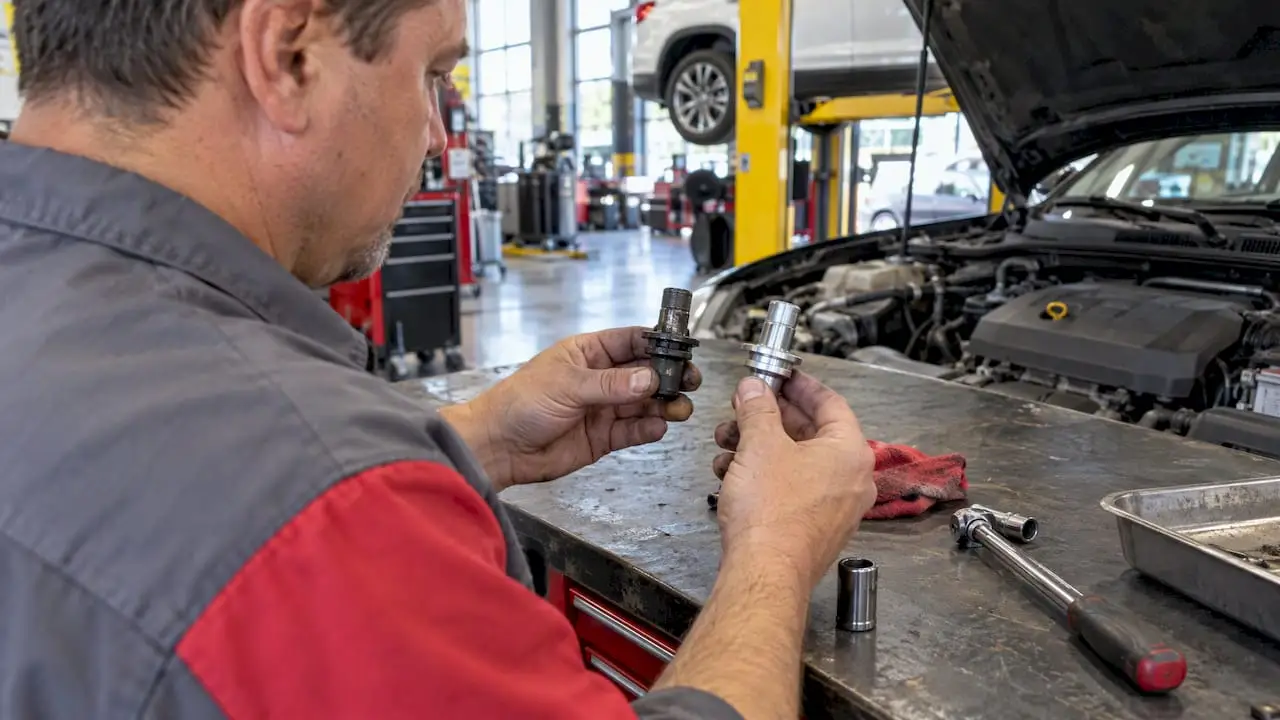
- Shake test: with the engine off and cool, pull the valve and shake it. A healthy valve rattles because the internal plunger moves freely; a silent valve is likely stuck.
- Fingertip or paper test: with the engine running at idle, place a finger or a small piece of paper over the valve opening. You should feel steady suction; weak or absent vacuum suggests a clog, while a paper that flutters wildly can suggest the valve is stuck open.
- Oil-cap inspection: remove the oil cap and look for tan, milky, or sludgy residue. Light residue is common in short-trip driving, but a thick buildup points to prolonged poor ventilation.
- Visual check of hoses and airbox: look for oil pooling in the breather hose or airbox, which signals oil mist being pulled into the intake and is worth tracing back to the PCV separator.
- OBD-II scan: pull codes and match them against the patterns above, since a lean code paired with a rattle-free valve points strongly toward PCV failure.
Pro Tip: An RPM-drop test, where you briefly block the valve’s fresh-air side and watch for an idle drop of roughly 40 to 80 RPM, can confirm the valve is still flowing air correctly.
Skip these checks if the engine is hot, since components near the valve cover can burn you, and hold off if your vehicle uses a PCV valve integrated into the valve cover itself, since those systems often require more disassembly than a quick driveway test allows.
Urgency and safety: when to drive to the shop vs stop and tow
Mild symptoms, like a faint whistle or slightly higher oil use with no visible dripping and a steady check engine light, usually mean a careful drive to a shop is reasonable. Keep speeds moderate and avoid long highway stretches until a technician takes a look.
Stop driving and arrange a tow if you notice any of the following, since these point to active damage rather than a developing issue:
- A flashing check engine light, which signals an active misfire that can damage the catalytic converter.
- Visible oil dripping onto a hot exhaust component, a fire risk that should not wait.
- A dipstick forced partway out of its tube, a sign of serious crankcase overpressure.
- A strong burning oil smell inside or around the vehicle.
While you wait for service, check your oil level, avoid high RPM or highway driving, and recheck the dipstick and smell every so often to see if things are getting worse.
Repair options and cost expectations: when replacement beats cleaning
A standalone PCV valve on an older engine is one of the less expensive parts to replace, while engines with the valve built into the valve cover take more labor time and cost more to service. Cleaning a dirty valve might clear symptoms temporarily, but the internal spring and plastic housing fatigue with heat and age, so replacement is the more reliable long-term fix, a point mechanics commonly raise when owners ask about cleaning versus swapping the part.
A professional diagnostic visit typically includes a digital inspection, an OBD-II scan, and a check of the related hoses and grommets, which catches problems a driveway test might miss. Our diagnostics service follows this same pattern, pairing a visual inspection with a full code scan before recommending any repair.
When it comes time to replace the valve, matching the correct flow specification matters. J.D. Power notes that PCV valves are engine-specific, and an incorrect replacement can disrupt airflow and hurt drivability, which is why OEM or OEM-equivalent parts are worth the small premium over a generic match.
| Repair approach | What it involves | Best suited for |
|---|---|---|
| Valve replacement | Swap the standalone valve, often a quick job | Most engines with an accessible valve |
| Integrated valve-cover service | Replace cover assembly with built-in PCV components | Engines where the valve is molded into the cover |
| Cleaning | Temporary clearing of residue from the existing valve | Short-term relief only, not a lasting fix |
Kwik Kar of Celina: how we diagnose and fix PCV issues
When a vehicle comes in with PCV-related symptoms, technicians start with a Digital Vehicle Inspection alongside an OBD-II scan, then check the hoses, grommets, and valve itself for wear before recommending a repair. We often find that a leaking gasket or sludge buildup traces back to the PCV system rather than the part that was originally suspected.
After-hours drop-off and ride services may be offered to help customers manage their schedules, and repairs can be backed by a warranty.
FAQ
Is it okay to drive with a bad PCV valve?
Driving with mild symptoms, like a faint whistle or slightly higher oil use, is usually fine for a short trip to a shop. You should stop and avoid driving if the check engine light is flashing, oil is dripping onto the exhaust, or the dipstick is being forced out, since these signal active damage.
How do I know if I need a PCV valve?
Watch for a rough idle, hissing from the engine bay, rising oil consumption with blue-gray smoke, new oil leaks, or milky residue under the oil cap. A quick shake test, a fingertip vacuum check, and an OBD-II scan for codes like P0171, P0174, or P0300 can confirm whether the PCV system is the likely source.
Can I clean a PCV valve instead of replacing it?
Cleaning can offer short-term relief, but the internal spring and plastic components wear and become brittle over time, so the symptoms often return. Replacement is generally the more reliable choice for lasting results.
How often should a PCV valve be changed?
Replacement intervals vary by engine design, with some manufacturers suggesting inspection roughly every few tens of thousands of miles. Checking the valve during routine oil changes is a practical way to catch a failing valve early.
Sources
- Tech Tip: Don’t ‘Blow By’ PCV inspections — Brake & Front End
- 7 symptoms of a bad PCV valve — The Motor Guy