



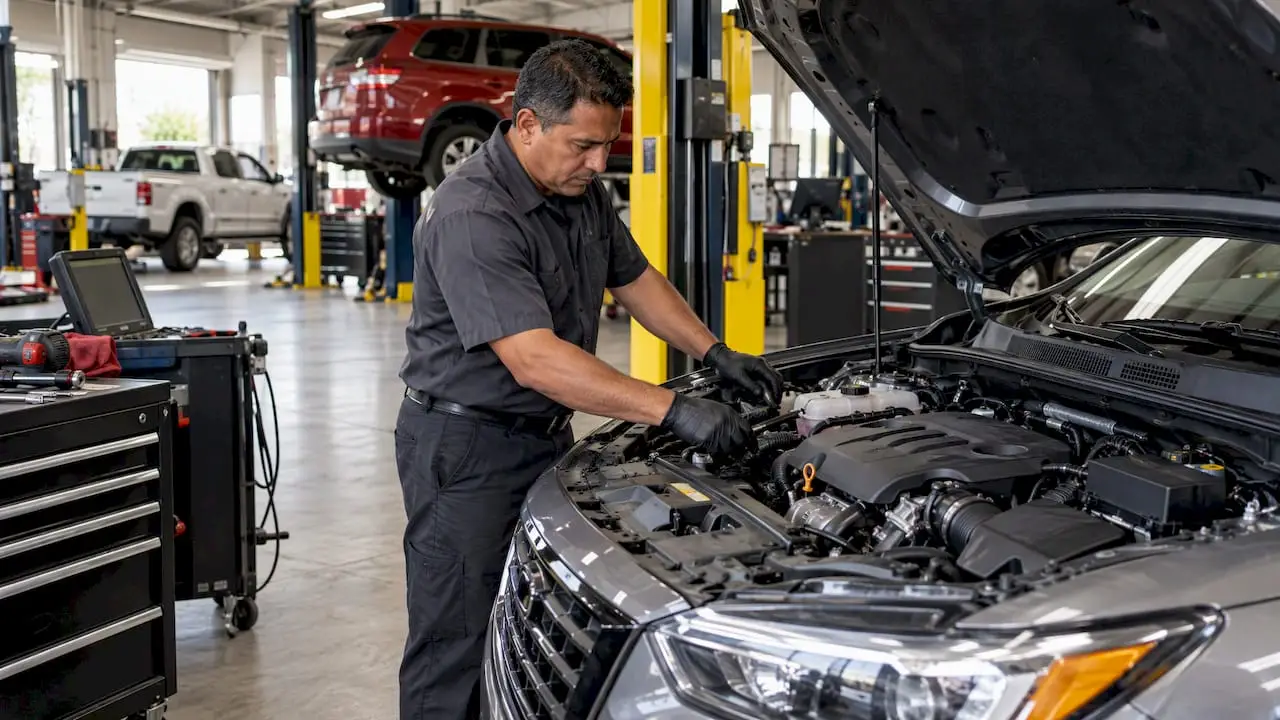
An auto repair warranty is a shop’s promise to stand behind the parts and labor on a specific repair. It is not the same thing as your factory warranty, and it is not an extended warranty you buy from a third party. At Kwik Kar of Celina, we back our work with a 2-year/24,000-mile warranty. Below we explain how repair warranties work, what to ask before you pay, and how to avoid the coverage that only sounds helpful.
TL;DR
- A repair warranty covers the specific work a shop did. A factory warranty covers defects from the manufacturer. A service contract is a separate product you pay extra for.
- Before you approve any repair, ask how long the warranty lasts, in months and miles, what it covers (parts, labor or both), and where you can get warranty work done.
- Calls and mailers saying your warranty is about to expire are usually sales pitches for third-party service contracts, not notices from your manufacturer.
- Kwik Kar of Celina, in Celina, TX, offers a 2-year/24,000-mile warranty, and Digital Vehicle Inspections let you see what we found before you decide.
Table of Contents
- What is an auto repair warranty?
- How is a repair warranty different from a factory warranty or service contract?
- What does a good repair warranty cover?
- What is covered by Kwik Kar of Celina’s warranty?
- How can you tell what your car actually needs before the warranty matters?
- Does a repair warranty make sense for transmission, engine and other big jobs?
- Are third-party extended warranties worth it?
- How do you spot an auto warranty scam call?
- What should you ask any shop before approving a repair?
- Do Texas inspection rules affect warranty or repair decisions?
- Our perspective: a warranty is only as good as the repair behind it
- Where to get repairs backed by a warranty in Celina, TX
- FAQ
- Questions about a repair or a warranty?
- Sources
What is an auto repair warranty?
An auto repair warranty is a written or verbal promise from a shop that the repair it performed will hold up for a set time or distance. If the part fails or the work was done incorrectly within that window, the shop fixes the problem.
It is tied to the job, not to the car. If we replace a water pump, the warranty speaks to that water pump and the labor to install it. It does not promise that the rest of your cooling system will never have a problem.
Three questions tell you almost everything:
- How long? Look for both a time limit and a mileage limit. The earlier one usually ends the coverage.
- What is covered? Parts only, or parts and labor?
- Where is it honored? Some warranties work only at the shop that did the repair. Others work across a network.
Get the answers in writing, on your invoice or in the shop’s warranty terms. A promise you cannot find later is hard to use.
How is a repair warranty different from a factory warranty or service contract?
People mix these three up, and sellers sometimes count on it.
| Repair warranty | Factory warranty | Service contract (“extended warranty”) | |
|---|---|---|---|
| Who provides it | The repair shop | The vehicle manufacturer | Usually a third-party company, sometimes the dealer |
| What it covers | One specific repair: parts and labor, per the shop’s terms | Defects present when the vehicle was built, per the manufacturer’s terms | Whatever the contract lists, minus its exclusions |
| Cost | Typically included with the repair | Included with a new vehicle | Costs extra |
| Where to use it | Per the shop’s terms | Per the manufacturer’s terms | Often restricted to certain shops |
The Federal Trade Commission notes that service contracts are optional and sold separately from the vehicle, and are not warranties as defined by federal law. That is why the label “extended warranty” can mislead. It is a contract, and the details live in the fine print.
If you are weighing a contract on a used car, a dealer-side explanation of extended warranties for used cars can help you see who is actually offering the coverage and what the repair-risk math looks like.
What does a good repair warranty cover?
Terms differ from shop to shop, so read yours. In general, a repair warranty should answer these points clearly:
- Parts and labor. If a new part fails because it was defective, who pays for the part and who pays for the time to replace it again?
- The same repair. Coverage normally applies to the repaired system or part, not to unrelated problems that show up later.
- Wear items. Brake pads, tires and wipers wear down with use. Shops commonly treat normal wear differently from a failed repair, so ask how it is handled.
- Misuse and outside damage. Accidents, neglect or work done by another shop afterward can affect coverage.
- What you must do. Some warranties ask you to return to the original shop, keep your invoice, or call before you start any warranty work elsewhere.
None of this is unusual. It is the same logic as any product guarantee. The point is to know the rules before you need them, not after your car is already on a tow truck.
What is covered by Kwik Kar of Celina’s warranty?
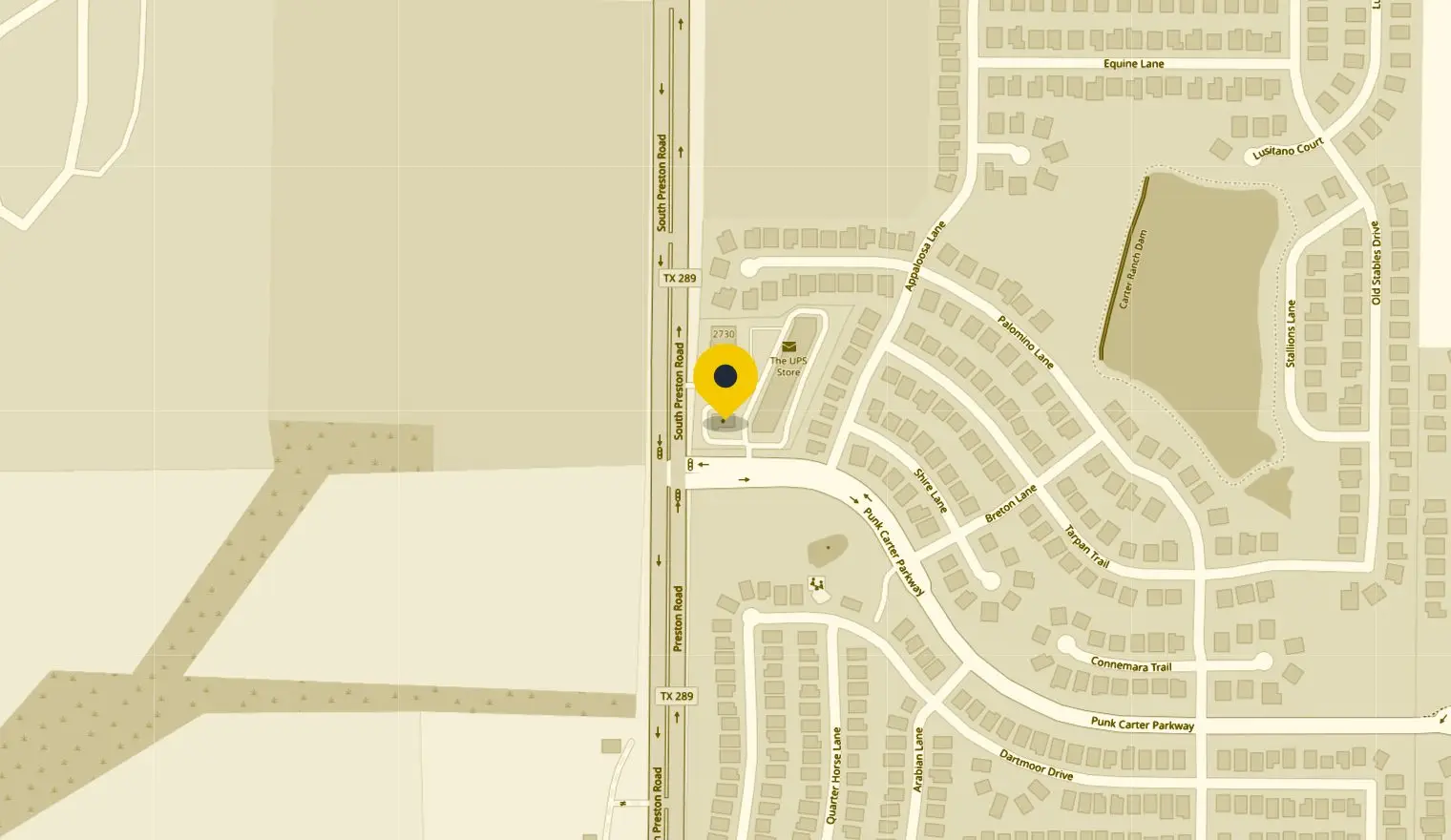
We offer a 2-year/24,000-mile warranty on our work at our shop in Celina, TX. Our ASE-certified technicians handle everything from routine maintenance to complex engine and transmission repair, so the warranty is part of how we stand behind the full range of services we offer.
For the exact terms on a specific repair, including what is covered and how to make a claim, ask us when you drop off the vehicle. We would rather you hear it from us in plain language than guess from a brochure.
We do not publish prices for these services, so we will not quote any here. When you bring your vehicle in, we give you the recommendation and the cost before the work begins.
How can you tell what your car actually needs before the warranty matters?
A warranty helps after something goes wrong. The better outcome is to repair the right thing the first time.
That starts with an accurate diagnosis. A dashboard warning light or a trouble code tells you where to look. It does not prove a specific part has failed. A code from the on-board diagnostic system (OBD-II) points to a circuit or a system that is reporting an out-of-range reading. The cause might be the part named, a wire, a connector, a sensor or something upstream. That is why we treat a code as the start of testing, not the end of it. Our diagnostics work is built around that idea, and our guide to the OBD-II diagnostic test explains how it avoids unnecessary parts swaps.
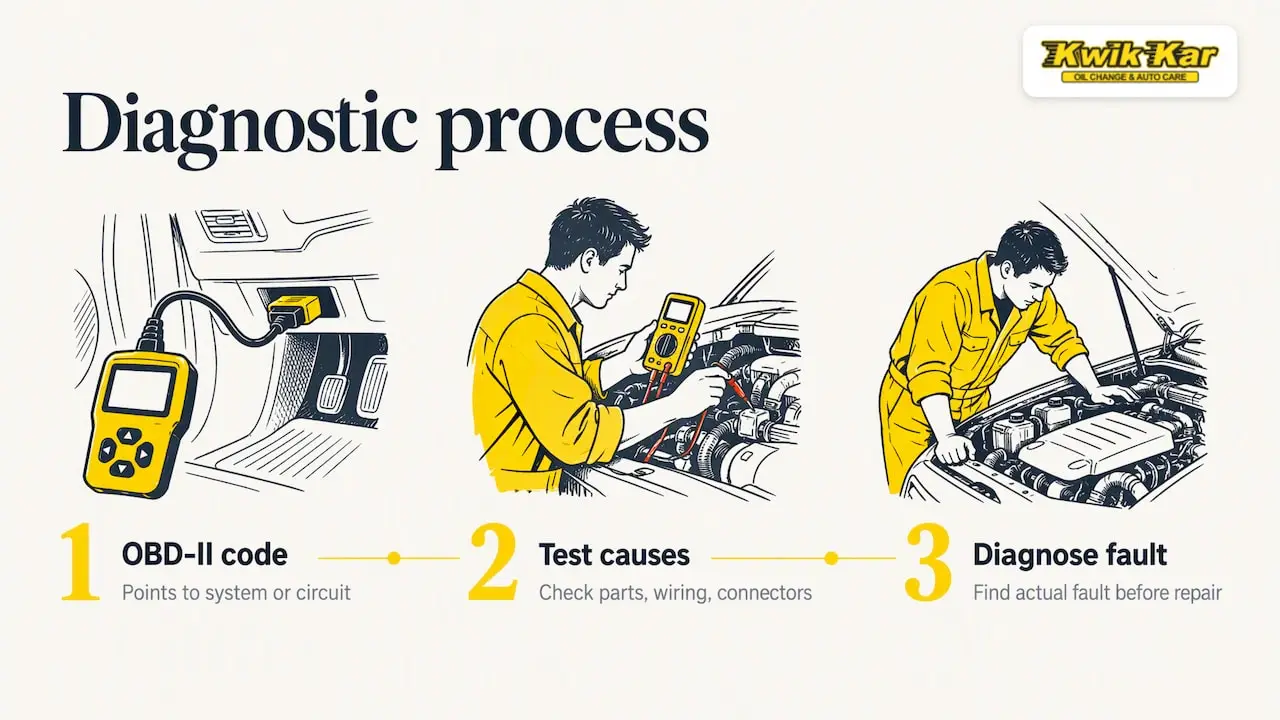
We also use Digital Vehicle Inspections. You see what our technician found and can ask questions before approving anything. If a recommendation does not make sense to you, say so. A shop that is confident in its work welcomes that conversation.
Does a repair warranty make sense for transmission, engine and other big jobs?
It matters most on the expensive ones. A transmission or engine repair can be one of the larger bills a vehicle owner faces, so the length and terms of the warranty are worth comparing before you commit.
Before a major repair, ask:
- What exactly failed, and how was that confirmed?
- Is the recommendation a repair, a rebuild or a replacement? Our article on rebuild or replace for a transmission lays out the questions that decide it.
- What does the warranty cover on the new or repaired components?
- Are there maintenance steps I need to keep up so the warranty stays valid?
For symptoms like slipping gears, a closer look at common causes of transmission slipping can help you describe the problem accurately to a technician. Engine concerns are covered in our piece on engine repair.
Are third-party extended warranties worth it?
Sometimes, but not as often as the marketing suggests, and the decision deserves a slow read of the contract.
The FTC advises that before buying an extended service contract, you check for exclusions, deductibles and whether the provider requires repairs at specific locations. Prices vary widely, often from hundreds to thousands of dollars, and the contracts typically do not cover wear-and-tear items or accident damage.
A few practical checks before you sign:
- Confirm what you already have. A new or recent vehicle may still be under its manufacturer’s coverage. A service contract can duplicate coverage you already have. Check your owner’s manual or ask your dealership.
- Read the exclusions first. The list of what is not covered tells you more than the list of what is.
- Find the deductible. Learn whether you pay per visit or per repair.
- Learn where repairs are allowed. If the contract limits you to certain locations, make sure one is convenient to you.
- Check the company. Research its reputation and confirm it has a real physical business presence, as the FTC recommends.
If you do choose a service contract, ask whether the shop you trust will work with the provider. Policies vary, and we would rather you ask than assume.
How do you spot an auto warranty scam call?
The FTC says to be highly skeptical of unsolicited “warranty” solicitations. Real notices about your coverage come from your manufacturer, while mass-marketed “extended warranty” offers are almost always third-party sales pitches.
Watch for these signs:
- A call or mailer claiming your warranty is “about to expire” when you never contacted anyone.
- Pressure to decide today.
- No clear answer about who the company is, where it is located or what the contract excludes.
- Vague promises such as “bumper to bumper” with no written terms.
If you get one, do not give out personal or vehicle information. Check your owner’s manual or call your dealership to learn the real status of your coverage. A repair shop you already know can also help you read any paperwork you are unsure about.
What should you ask any shop before approving a repair?
The FTC suggests looking for a repair shop before you need one so you are not rushed into a last-minute choice, and asking people you trust for recommendations. We agree. A calm conversation beats a roadside decision.
Here is a short list worth keeping in your phone:
- Are your technicians ASE certified?
- Can I see what you found, with photos or an inspection report?
- Will you give me the recommendation and cost before starting work?
- What is the warranty on this repair, in months and miles?
- What does the warranty cover, parts, labor or both?
- Where can I use the warranty if I am away from home?
- Can you save the old parts, or show me what failed?
A straight answer to each one is a good sign. A shop that gets defensive is worth a second look.
Do Texas inspection rules affect warranty or repair decisions?
They can, because inspection results often trigger repairs.
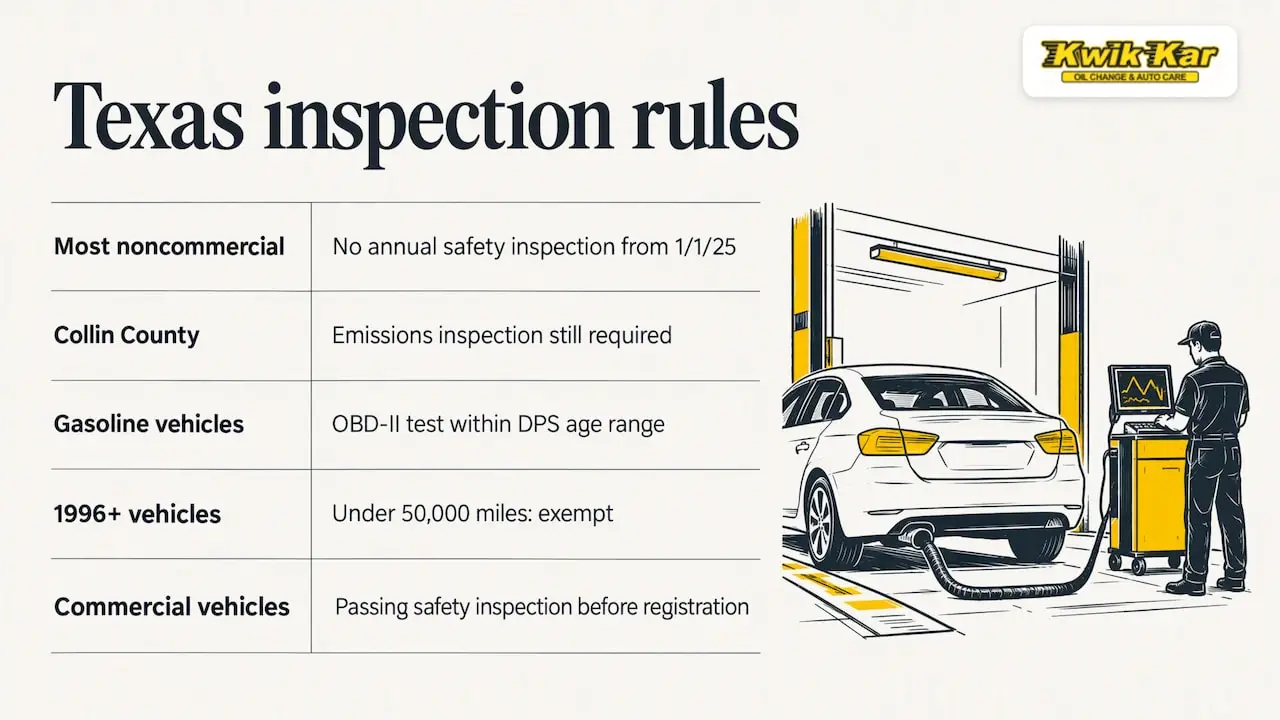
As of January 1, 2025, most non-commercial vehicles in Texas no longer require an annual safety inspection for registration. However, qualifying vehicles in Collin County, where Celina is located, still need an emissions inspection. Collin County is one of the counties on the Texas Department of Public Safety’s emissions list. Gasoline-powered vehicles within the age range DPS sets receive an OBD-II test, and TxDMV notes that vehicles 1996 or newer with fewer than 50,000 miles are exempt.
Commercial vehicle inspection rules differ from the non-commercial rules. TxDMV states that commercial vehicles must still get a passing safety inspection before registration. If you manage a fleet, confirm which rules apply to each vehicle.
Why this matters for warranties: a failed emissions test can point to a problem such as an engine, sensor or exhaust issue. A good diagnosis finds the real cause. Replacing parts based on a code alone can cost you money and leave the problem in place. You can read about our TX state inspections if you have questions about what applies to your vehicle.
Our perspective: a warranty is only as good as the repair behind it
We see it this way. A long warranty is reassuring, but it should be the backup plan, not the plan. The best thing we can do for you is find the real problem, explain it in plain language, and fix it right the first time.
That is why we pair a 2-year/24,000-mile warranty with Digital Vehicle Inspections and ASE-certified technicians. You get to see what we see. You decide what to approve. And if a covered repair does not hold up, you are not left arguing with a stranger on the phone.
We also know many drivers in Celina work long days. That is why we offer after-hours drop-off and a complimentary ride service, so getting a repair done does not mean rearranging your week.
One last point. We think a warranty should be easy to understand. If you ever feel a shop is using warranty language to hurry you, slow down and ask for it in writing.
— Kwik Kar
Where to get repairs backed by a warranty in Celina, TX
If your vehicle needs work, start with the service that matches the symptom:
- Brake repair for grinding, squealing or a soft pedal.
- AC repair when the air is not cold enough for a Texas summer.
- Cooling system service for overheating or a climbing temperature gauge.
- European repair for owners who want dealership-quality care for their import.
- Transmission service for slipping, delayed shifts or leaks.
Kwik Kar of Celina also serves businesses with fleet vehicle services. Our full list of services shows everything we handle.
FAQ
How long is the warranty on car repairs?
It depends on the shop and the repair, so ask for the terms in months and miles before you approve the work. At Kwik Kar of Celina, our warranty is 2 years or 24,000 miles. Ask us about the details on your specific repair.
Is there a warranty for car repairs?
Many shops offer one, but there is no single rule that applies to every shop. Look for the length, what is covered and where it is honored. Get it in writing on your invoice or the shop’s terms.
Are auto repair warranties worth it?
A shop’s repair warranty is usually included with the work, so it is worth understanding. A separately sold service contract is different. The FTC advises checking exclusions, deductibles and repair location rules before you pay extra for one.
Is a nationwide auto repair warranty better than a local shop’s warranty?
It depends on how you drive. A nationwide plan may help if you travel often, but check which shops accept it and what the contract excludes. A local shop’s warranty is simple if you do most of your driving near home. Ask any provider how claims work when you are far away.
Does a warranty cover routine maintenance like oil changes?
Usually not. Factory warranties and service contracts generally cover failures, not routine upkeep, and the FTC notes that service contracts typically leave out wear-and-tear items. Your owner’s manual lists the maintenance your specific vehicle needs, and keeping records of it can help if you ever make a claim.
Questions about a repair or a warranty?
If you want a second opinion on a recommendation, or you would like to know how our warranty applies to your vehicle, contact Kwik Kar of Celina or schedule service. We are happy to walk through the details with you in plain language, with no pressure.
Sources
- FTC: Auto Warranties and Auto Service Contracts
- FTC: What to know about auto service contracts and extended warranty scams
- FTC: Extended Warranties and Service Contracts
- FTC: Auto Repair Basics
- TxDMV: Texas vehicle inspection changes
- TxDMV: Vehicle Title and Registration Information for New Texans
- Texas DPS: Inspection Criteria for Emission Inspection