



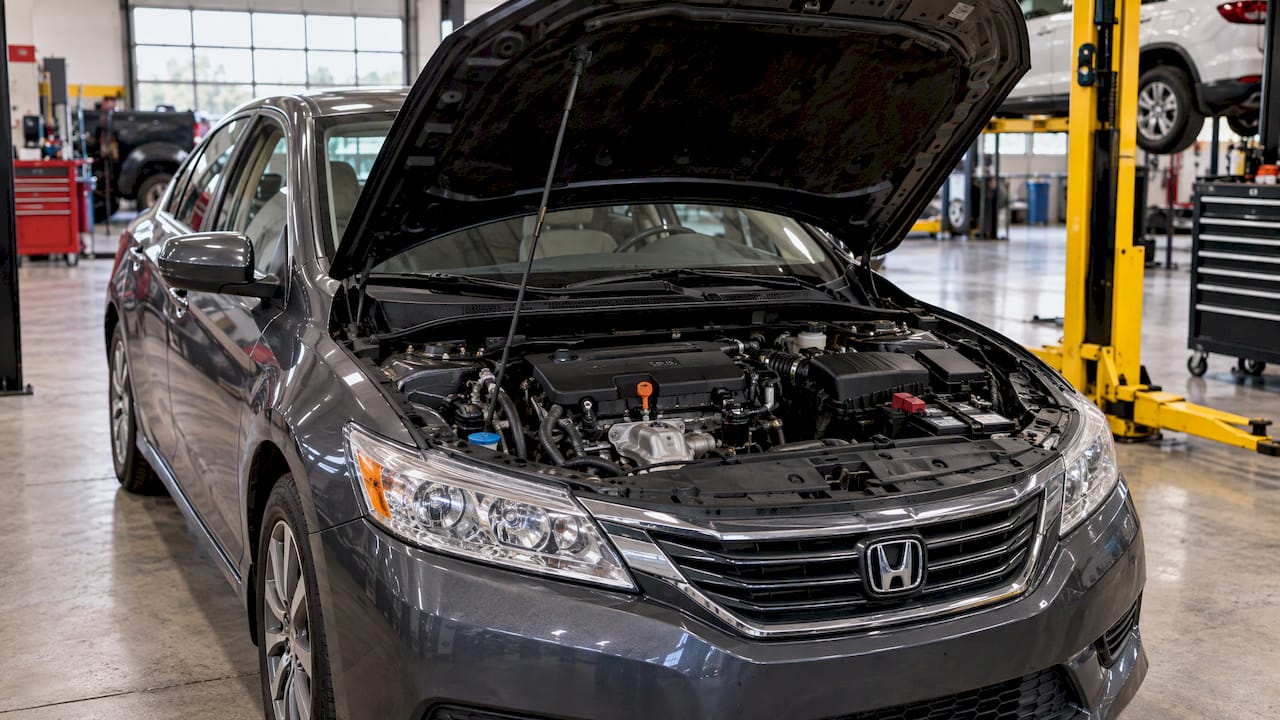
A rough idle usually comes from one of a few places: a vacuum leak, a worn ignition part, a dirty or weak fuel and air path, a faulty sensor, or a worn engine mount. The engine cannot keep combustion steady at low speed, so you feel shaking, stumbling, or an RPM needle that wanders. At Kwik Kar of Celina, we see it often, and the fix is usually simple once the real cause is found. This guide helps you sort out the likely causes and know when to stop driving.
TL;DR
- A rough idle means the engine is not burning air and fuel evenly at low RPM. Vacuum leaks, spark plugs, ignition coils, dirty throttle components, fuel injectors, sensors, and engine mounts are the usual suspects.
- A flashing Check Engine light, stalling, or severe vibration means you should get the car checked promptly, not at your next oil change.
- A trouble code points the shop toward a system. It does not prove a part is bad, so ask for testing before parts are replaced.
- Oil grade matters less than most drivers think here, but always use the viscosity your owner’s manual lists.
- If the car shakes at idle but feels smooth once you are moving, mounts and idle-speed control are worth checking first.
Table of Contents
- What does a rough idle actually feel like?
- What are the most common causes of a rough idle?
- Is my rough idle really a misfire?
- What does a vacuum leak sound and feel like?
- Why does my car shake at idle but smooth out while driving?
- Can a bad oxygen sensor cause a rough idle?
- Do 0W-20 and 5W-30 oil affect rough idle?
- When is a rough idle an emergency?
- How do you diagnose a rough idle step by step?
- Perspective: why we test before we replace
- What about Texas inspections and emissions?
- Get your rough idle checked in Celina, TX
- FAQ
- Sources
What does a rough idle actually feel like?
A rough idle is when a vehicle vibrates, shakes, or runs unevenly while stopped because the engine cannot maintain stable combustion. Drivers describe it in different ways:
- A steady shake you feel in the steering wheel or seat at a red light
- RPM that rises and falls on its own
- A stumble or sense the engine might quit
- Surging, where the idle jumps up and then drops
- A cold start that runs lumpy and then smooths out as the engine warms
The pattern is a clue. Write down when it happens: cold or warm, in Park or in Drive, with the A/C on or off. That one note can save a technician real diagnostic time.
What are the most common causes of a rough idle?
Across the repair world, the same list comes up. Common causes include vacuum leaks, worn spark plugs, ignition coil failures, dirty fuel injectors, throttle body deposits, and faulty sensors. Engine mounts and mechanical problems can also be involved. Here is how each one tends to show up.
Worn spark plugs
Spark plugs light the air-fuel mixture. When the electrodes wear, the spark gets weaker and some cylinders burn poorly. You may feel a shake at idle, weaker acceleration, and lower fuel economy. Plug replacement intervals depend on the plug type and the vehicle, so follow your owner’s manual rather than a rule of thumb.
Failing ignition coils
Each coil turns battery voltage into the spark a plug needs. A weak coil causes a misfire in one cylinder, which feels like a rhythmic stumble. We cover this in detail in our guide to ignition coil failure symptoms.
Vacuum leaks
Your engine relies on carefully measured air. A cracked hose, a loose connection, or a worn intake gasket lets in extra, unmetered air. The mixture runs lean, the idle gets uneven, and the engine may surge. See the vacuum leak section below for what to listen for.
A dirty throttle body
The throttle body controls how much air enters the engine. Carbon and grime can build up around the throttle plate and restrict the small amount of air the engine needs at idle. The result is a low, hunting, or stumbling idle, especially after a cold start.
Dirty or faulty fuel injectors
Injectors spray fuel in a fine pattern. When one clogs or leaks, that cylinder gets too little or too much fuel. Expect a rough idle, hesitation, and sometimes a fuel smell.
Airflow and oxygen sensor problems
Sensors tell the engine computer how much air is coming in and how the exhaust looks, and the computer adjusts fuel from that. Faulty sensors, including oxygen sensors, can cause rough idle, and sensor problems may also come with hesitation, poor fuel economy, or RPM fluctuation. Before replacing one, it helps to look at live data first. We explain why in Oxygen Sensor Failure? Get an OBD II Live Data Check First.
Worn engine mounts
Sometimes the engine runs fine and the cabin simply feels it more. A useful diagnostic distinction is whether the engine itself runs unevenly or runs normally while transmitting excess vibration into the cabin, which may point to a mount. A manufacturer bulletin for certain Chevrolet and GMC trucks also lists engine mount pre-load among several potential causes of rough idle or vibration at idle. That is model-specific, so do not assume it applies to your vehicle.
Bad or old fuel
Gasoline does not last forever. AAA notes that bad or old gasoline can cause rough idling, stalling, and a Check Engine light. If the car sat for months, or the roughness started right after a fill-up, mention it to your technician.
Mechanical problems
Low compression, a worn timing component, or valve train trouble can also cause a rough idle. These are less common than the items above, which is why a good shop checks the simple things first and then moves deeper. Some are vehicle-specific: one federal service bulletin describes certain Mazda models where a stuck foreign object on an oil control valve led to low oil pressure and later rough idle. It shows how a rough idle can have an unexpected root cause.
Is my rough idle really a misfire?
Often, yes. An engine misfire happens when one or more cylinders fail to fire properly. Signs include shaking or jerking, popping or spitting sounds, reduced performance, poor fuel economy, and a Check Engine light. Misfire symptoms can also include a rough idle or stutter during acceleration, lower fuel economy, and increased emissions.
The good news is that misfires leave a trail. OBD II codes can indicate which cylinder is misfiring, which directs inspection to that cylinder’s spark plug, wire, coil, or injector. If you want to understand how stored, pending, and permanent codes differ, this explainer on stored and permanent fault codes is a clear read.
What about engine hesitation?
Hesitation is a brief lag or stumble when you press the accelerator. It shares causes with rough idle: weak ignition, dirty injectors, airflow sensor trouble, and air leaks. If you notice both, the same underlying fault may be behind them, so describe both symptoms when you bring the car in.
What does a vacuum leak sound and feel like?
A vacuum leak is unmetered air entering the intake after the airflow sensor. The engine computer cannot account for it, so the mixture goes lean.
What drivers commonly notice:
- A hissing or sucking sound from the engine bay, often louder at idle
- A high or surging idle
- A rough idle that improves a little as you accelerate
- A Check Engine light, often with lean-related codes
- Hesitation or poor fuel economy
Diagnosis is not guesswork. A technician inspects hoses and intake connections and may use smoke testing or live fuel trim data to find the leak. Spraying flammable products around a running engine is a fire risk, so we do not recommend trying that at home.
Why does my car shake at idle but smooth out while driving?
This is one of the most common questions drivers ask. A few explanations fit that pattern:
- Engine mounts. At idle, the engine is the only thing moving, and a worn mount lets vibration reach the body. At speed, other forces and noises mask it.
- Low idle speed or idle control issues. A dirty throttle body or faulty idle control can let RPM sag below where the engine runs smoothly.
- A weak cylinder. A misfire can be most obvious at low RPM and fade as load and speed increase.
- Fuel delivery problems. A partly clogged injector often shows up at idle first.
Temperature can complicate things. The manufacturer bulletin mentioned earlier notes that rough-idle vibration in Drive on the covered vehicles can be temperature-dependent and difficult to recreate. If your car only does it when hot, tell the technician so they can test under the same conditions. Our post on hard starting when hot covers a related heat-related pattern.
Can a bad oxygen sensor cause a rough idle?
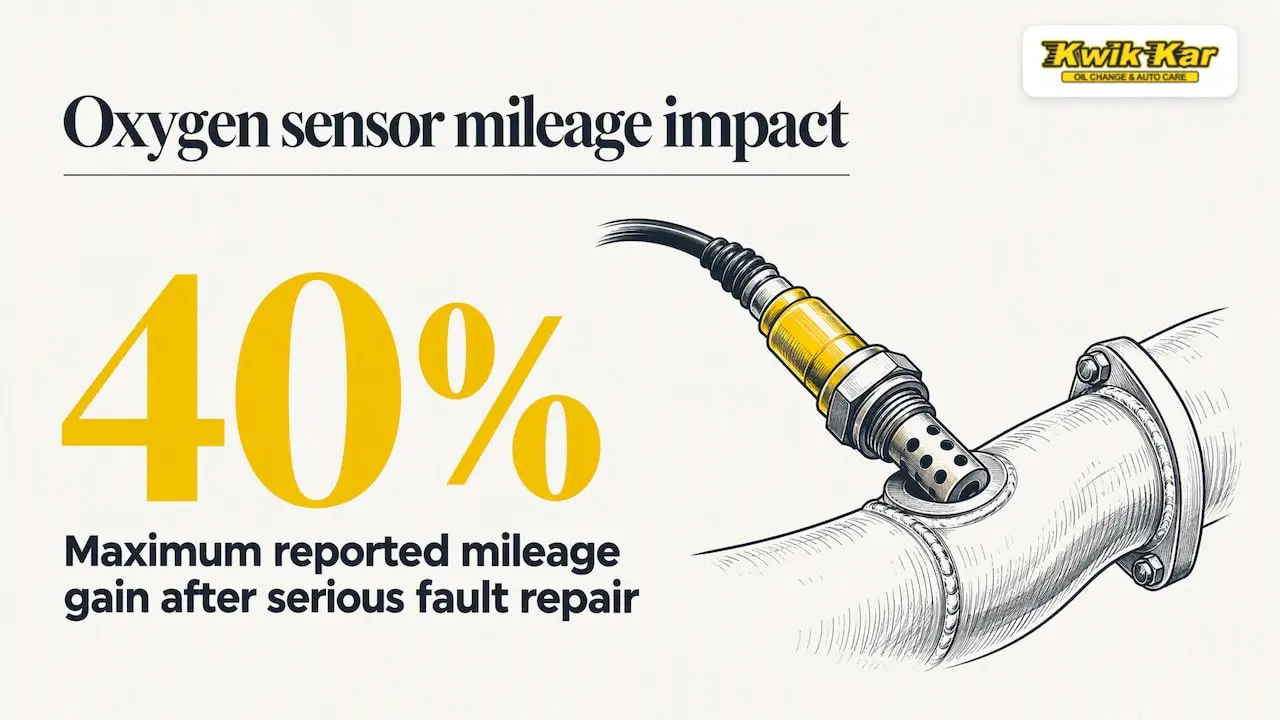
It can, but it is not the first thing we would blame without data. Oxygen sensors report exhaust content so the computer can adjust fuel. A slow or failing sensor can lead to a poor mixture, rough running, and weaker mileage. Car Care Council materials note that fixing a serious maintenance problem such as a faulty oxygen sensor can improve mileage by as much as 40 percent, though results vary by vehicle and condition.
The catch: a vacuum leak, a misfire, or a dirty airflow sensor can make the oxygen sensor readings look wrong. The sensor then gets blamed for a problem it is only reporting. That is why we recommend looking at live data before replacing anything.
Do 0W-20 and 5W-30 oil affect rough idle?
Drivers search this a lot, so here is the plain answer. The numbers describe viscosity. In 5W-30, the first number indicates viscosity at a cold temperature and the second at operating temperatures. A 0W-20 flows more easily when cold than a 5W-30, and a 5W-30 is thicker once warm.
What that means in practice:
- Use what your owner’s manual calls for. Engines are designed around a specific viscosity, including tight clearances and, in some cases, oil-pressure-driven parts such as variable valve timing.
- Switching grades is not a typical cause of rough idle, but it is not a risk-free swap either. Whether 5W-30 is acceptable in an engine specified for 0W-20 depends on the vehicle and manufacturer approval, so check the manual or ask us before changing.
- Old, low, or sludgy oil is a bigger concern. Low oil pressure can affect valve timing components and create a rough idle in some engines.
If you are unsure which grade your vehicle needs, our oil change service in Celina, TX starts with the manufacturer-specified oil for your car.
When is a rough idle an emergency?
Some rough idles can wait for a scheduled visit. Others cannot. Prompt professional attention is warranted if the Check Engine light is flashing, the engine stalls, or the vibration becomes severe. A flashing light signals a problem that is happening right now and needs immediate attention. A serious misfire can send unburned fuel into the exhaust and cause expensive damage to the catalytic converter, so pulling over safely and arranging a tow is cheaper than driving on.
Also get the car checked soon if:
- The idle roughness comes with overheating or a temperature gauge climbing
- You smell fuel or exhaust inside the car
- The engine stalls at stops (see engine stalls at idle)
- Power drops noticeably when you accelerate
For a steady Check Engine light, our guide on what to do when the light comes on in the fall walks through the first steps.
How do you diagnose a rough idle step by step?
Here is the order we follow, and what you can do before you arrive.
- Note the symptoms. Cold or warm, Park or Drive, A/C on or off, any warning lights, any noises.
- Scan for codes. A code gives direction. It is not a verdict. A misfire code, for example, tells us which cylinder to inspect, not whether the plug, coil, or injector is at fault.
- Inspect the basics. Air filter and intake connections, hoses, spark plugs, and visible wiring.
- Check live data. Fuel trims, sensor readings, and misfire counts show how the engine is behaving in real time.
- Test the suspect system. Coil testing, injector checks, smoke testing for leaks, or mount inspection, depending on what the data suggests.
- Repair, then confirm. Clear codes, road test, and recheck so the fix is verified.
Our OBD-II diagnostic test article explains why this process avoids costly parts swaps.
Perspective: why we test before we replace
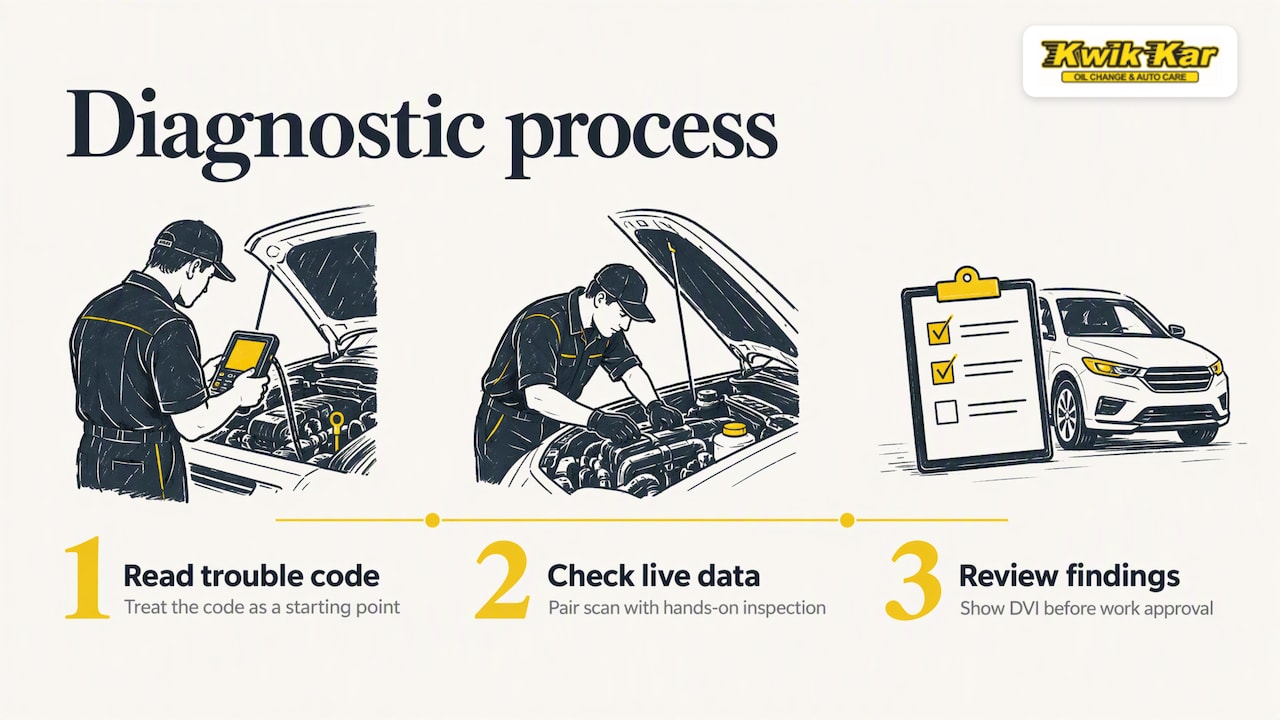
In our shop, the most common mistake we see is the parts-cannon approach: a code appears, a part gets replaced, and the rough idle returns. A diagnostic trouble code is a starting point, because one fault, like a vacuum leak, can trigger several codes that seem to point elsewhere. That is why our ASE-certified technicians pair a scan with live data and a hands-on inspection, and why we use Digital Vehicle Inspections so you can see what we see before you approve work.
We also believe in telling you when something is minor. A dirty throttle body or a worn plug is a very different conversation from a misfiring cylinder at highway speed, and you deserve to know which one you have. Texas heat adds stress to hoses, belts, and rubber mounts, so a car that idled fine in spring can start shaking by late summer.
— Kwik Kar
What about Texas inspections and emissions?
A Check Engine light and rough running can matter at inspection time. As of January 1, 2025, most noncommercial vehicles in Texas no longer require annual safety inspections under House Bill 3297. However, qualifying vehicles in emissions counties, which include Collin County, still need emissions testing, and the Texas DPS notes that emissions tests are different from safety inspections. An active Check Engine light can be a problem for that test.
Commercial vehicle inspection rules differ from the noncommercial rules, so fleet managers should confirm requirements for their vehicles with the state. If you have questions about what applies to you, see our TX State Inspections page.
Get your rough idle checked in Celina, TX
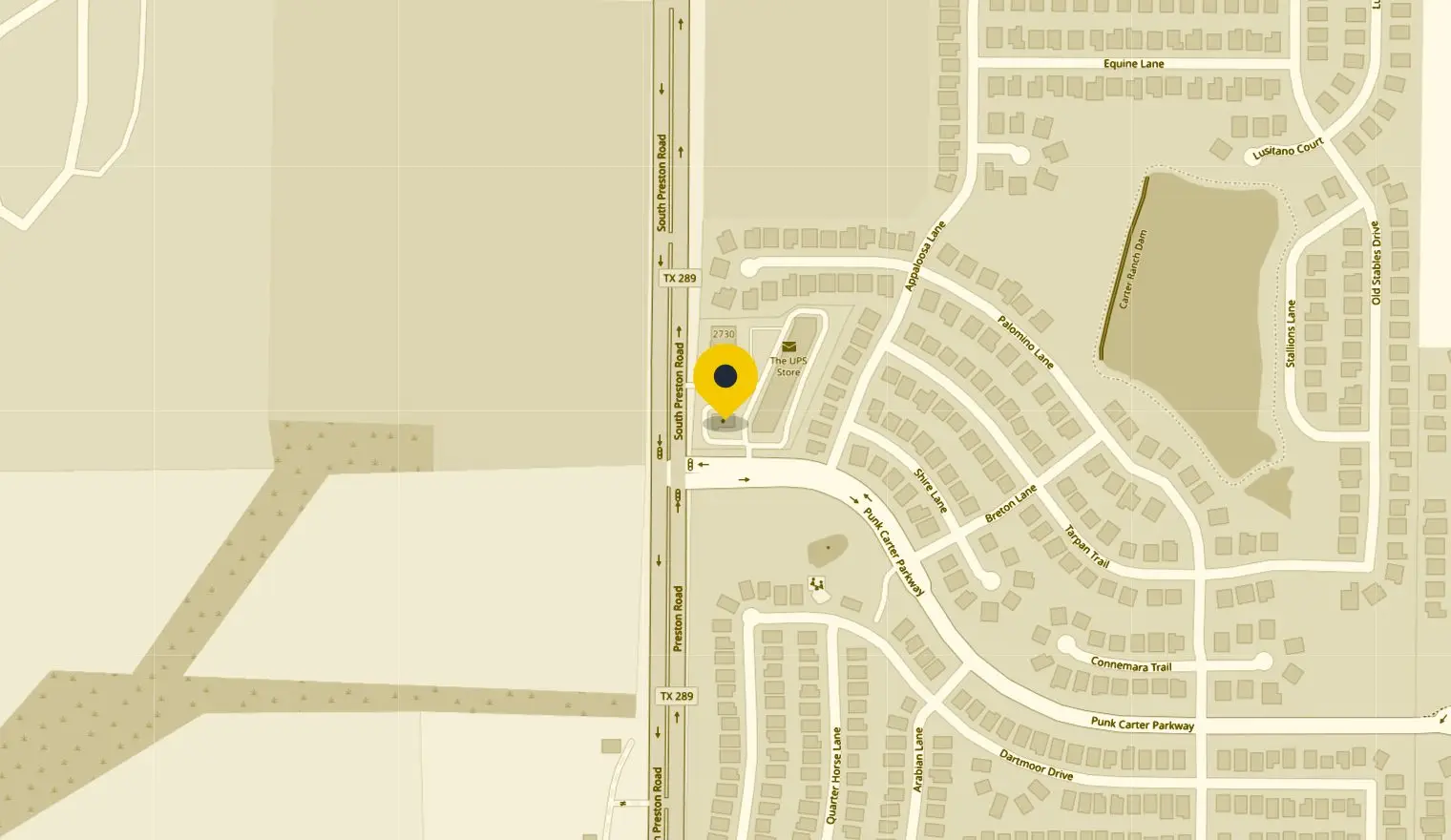
If your engine is shaking, stumbling, or hunting for an idle, Kwik Kar of Celina can diagnose it. We offer engine repair and diagnostics, and we work on European vehicles too. Convenient options such as after-hours drop-off and a complimentary ride service help if you cannot spend the day waiting, and our work carries a 2-year/24,000-mile warranty. See everything we handle on our services page.

FAQ
What is the most common cause of a rough idle?
There is no single answer, but worn spark plugs, failing ignition coils, and vacuum leaks come up most often. Dirty throttle bodies, fuel injectors, and sensors follow. Because the symptoms overlap, testing is the reliable way to tell them apart.
Can I drive with a rough idle?
It depends on the severity. A mild, steady roughness can usually wait a short time for an appointment. If the Check Engine light is flashing, the engine stalls, or the vibration is severe, stop driving and get professional help.
Can a bad oxygen sensor cause a rough idle?
Yes, faulty sensors can contribute to rough idle, hesitation, and poor fuel economy. But a leak or misfire can make a good sensor read badly, so live data should come first. Replacing a sensor without testing may not fix the problem.
Is 5W-30 or 0W-20 better for my engine?
Neither is better in general. The right oil is the grade your manufacturer specifies for your engine. If you are thinking of changing grades, check your owner’s manual or ask a technician first.
Does a rough idle mean I need a new engine?
Almost never. Most rough idles trace back to ignition, air, fuel, or sensor issues that cost far less than an engine. Mechanical problems are possible, but they are the last thing a good diagnosis rules in.
If your car is idling rough and you want a straight answer, contact Kwik Kar of Celina or schedule a visit. We will tell you what we find and what can wait.
Sources
- Rough Idle: Causes, Symptoms, Diagnosis & Fixes Explained
- Engine Rough Idle Symptoms: What They Mean and What to Check
- NHTSA service bulletin, rough idle and engine mounts
- NHTSA service bulletin, oil control valve and rough idle
- AAA: Does Gasoline Go Bad?
- Engine Misfire: Causes and Signs
- What Is an Engine Misfire and What Causes It?
- Car Care Council: Simple Car Care and Savings
- Car Care Council: Fall Car Care Month Checklist
- Mobil 5W-30 viscosity oils
- Texas DPS: Vehicle Safety Inspection Program Changes